Car Infographic of the Week | Tire Maintenance for Vehicle Fleets
Read this infographic to learn how tightening up your tire maintenance policies could help your fleet run more smoothly and cost-effectively.
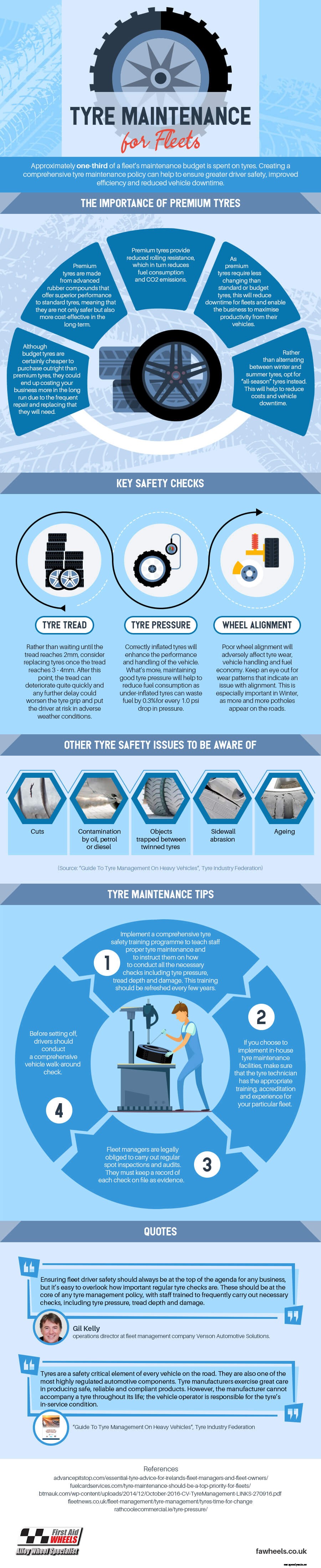
Tire upkeep is a critical part of maintaining a vehicle’s roadworthiness. A failure to properly maintain tires across a fleet can have a negative effect on the bottom line by increasing the frequency of vehicle downtime and reducing productivity. What’s more, sub-standard tires can even endanger the lives of your drivers.
What Are the Top Issues to
Look Out For?
Tire Tread –
Ideally, you should replace tires once the tread reaches 3 – 4mm.
Waiting any longer can be quite dangerous as the tread will
deteriorate quite quickly after this point. Worn-out tires could
worsen the vehicle’s grip, thereby putting the driver at risk in
poor weather conditions.
Tire Pressure –
Ensuring that tires are correctly inflated will help boost the
vehicle’s handling and ability to stop quickly. It will also prove
to be more cost-effective in the long-run as vehicles with good tire
pressure are likely to consume less fuel.
Wheel Alignment – Poor wheel alignment will adversely affect tire wear, vehicle handling, and fuel economy. This is especially crucial during the winter, as more potholes appear on the road.
Other Issues – Some additional tire issues to look out for include cuts, trapped objects, sidewall abrasion, and aging.
Implementing A Tire
Maintenance Policy
Spot checks and vehicle
inspections are a good way to ensure a good standard of tire upkeep.
Education is also key. You should also hold regular training sessions
for drivers in which you cover essential safety checks and warning
signs.
Learn More About Tire
Maintenance for Fleets
If you would like to learn more about how your fleet could improve its tire maintenance policies, then we recommend that you check out the below infographic from the team at First Aid Wheels.