
Why should you choose All-wheel Drive cars rather than all those other variants available in the market?
This question can only be answered if we know about all other options available today. After knowing the different types of drives available, you will be able to understand that whether you really need an All-wheel Drive car or not.
Despite the number stated above, still most passenger cars that are sold in the US today has a two-wheel drive system in which all of the drive package – the engine, transmissions, differential and the wheels that are driven by the engine are present in front of the vehicle. This type of driving system is known as Front-wheel drive. FWD can be seen everywhere since the late 1970’s.
Trucks, SUVs, and some cars still work on the Rear-wheel drive systems, in which a long driveshaft supplies power from the engine present in front to the rear tires. The driveshaft is bent to the 90 degrees so that it could reach the rear wheels and supply them power to run. These types of cars are known as Rear wheel drive vehicles.
Now the question arises, with all of these choices what is more suitable for you and what should you opt for?
For instance, a car with low ground clearance with Rear wheel drive system is of no use to you, if you live at the top a steep hill that is accessible only through a road full of dirt, pebbles that are usually occupied with ice and snow all winters and with piles of mud in the spring.
On the other hand, a car with high ground clearance with four-wheel drive system with huge tires is not suitable for the persons who regularly travel through nice paved highway from a suburban house to an office in a metropolitan area.
Now let’s differentiate between different systems available in the market.
Front wheel drives as compared to rear wheels drive to reduce the production cost and weight of the vehicle. It also has far better fuel economy and delivers better traction as compared to Rear wheel drives.
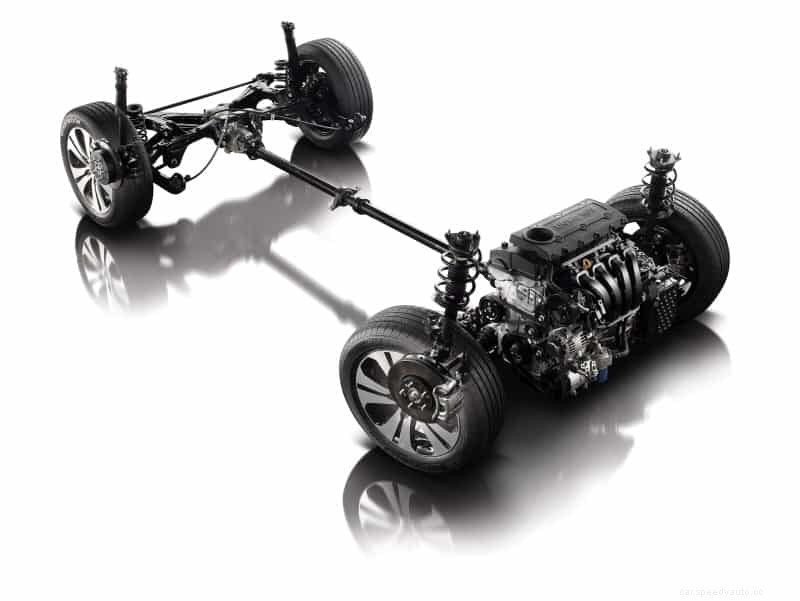
Rear wheel driving system is important in trucks because the back of the truck is lighter and if the entire system is front driven then it is nearly impossible to drive the truck. With the advancement of anti-lock braking and traction control systems, two wheel drive system handling has far more improved.
Despite two-wheel drive, four wheels and All-wheel Drive has much more to offer. Four wheel drives and all wheel drives offer increased handling capabilities. The driver that often travels on slick, loose or slippery surfaces, all wheel drives is a better option. ALL-WHEEL DRIVE systems can direct power to the wheel that has the most traction.
Now let’s discuss some of the factors of All-Wheel drives or Four-wheel drives:
In most of the cases, a vehicle’s tires are much more important than the driving system equipped with them. For instance, Many of the All-wheel Drive vehicles boasts about the good dry traction but comes equipped with tires made for summers that make them horrible to use in winter conditions although they have four wheels working. Therefore, it is necessary to buy the extra set of tires with ALL-WHEEL DRIVE vehicles to make it worth. On the other hand, there are tires that are specially made for all seasons. You can choose ALL-WHEEL DRIVE equipped with these types of tires for a better experience.
Sometimes people buy All-wheel Drive four wheel drive vehicles for occasional purposes like off road trips or ski trips, despite the fact that most of the times they are either struck in the metropolitan traffic or using them on well-maintained pavements. We suggest that these types of drivers must have TWD vehicles to be used for daily purposes and rent All-wheel Drive vehicles for these kinds of trips. This will not only save their money of buying the car but also saves a lot more of cash spent on the maintenance and fuel.
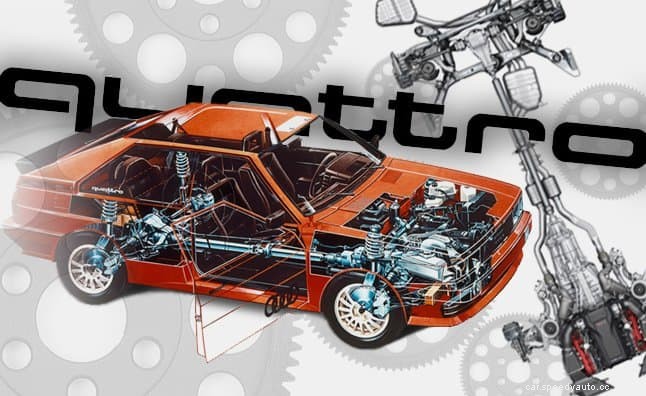
Few years back differentiating All-wheel Drive and Four Wheel Drive used to be very much simple. One was for the sporty car to be driven on pavements, and one was for trucks and SUVs to be driven on rugged mountain trails. But now technically there is no clear line of difference between All-wheel Drive and four wheel drives.
All-wheel Drive system vehicles come in two styles. There are vehicles that have part time or automatic All-wheel Drive system in which the vehicle basically runs in front-wheel drive mode and can deliver power to all wheels when needed automatically. And then there are full time all wheel drives that deliver power to all of the wheels every time.
Some All-wheel Drive system also offers torque vectoring that helps the engine to provide power to that wheel which has the most traction, regardless of the side of the wheel. ALL-WHEEL DRIVE cars are typically designed to work on almost every type of roads and terrain.
Now you must be clear about whether to buy All Wheel Drive vehicles or not.
