
Do you feel it’s high time you gave a touch-up to your car in spite of the care you give daily? Has your car become dull in appearance and lost its charm? Don’t worry, that’s exactly when the process of how to buff your car comes into play.
The exterior finish of the cars will be lost over time as it is exposed to detrimental environmental elements like acid rains or other contaminants. The constant exposure to sun and other pollutants will cause the car’s paint to corrode and fade with time. In the long run, it loses its luster and glory.
For those who are new to the term ‘Buffing;’ it’s slightly different from the term Polishing. To give you an idea, your car’s paint is covered with a hardened surface called clear coat, and this prevents the paint from becoming damaged due to continuous exposure to contaminants and UV rays of the sun.
How To Buff Your Car Properly? 1. Manual Buffing2. Power BuffingWhen the surface becomes dull, Buffing can be done to remove a thin layer of paint from the surface of your, car exposing a fresher layer of paint from beneath. This makes the surface shiny again. Buffing, in fact, will help to restore the clear coat for cars and will help you reinstate the original luster and thus improves the overall appearance of your car.
Apart from the fact that buffing will make your car look all new again, there are further advantages like it will give a long lasting finish to the car, and it will help to remove minor blemishes and scratches if they are not deep. Buffing of your cars should be done every 2 to 3 months for yielding better results.
Now we will go into the details, let’s gather the required materials before starting the process of buffing:
Materials required: Bucket of warm water, buffing compound, polishing pads, car wash soap, and Microfiber cloth.
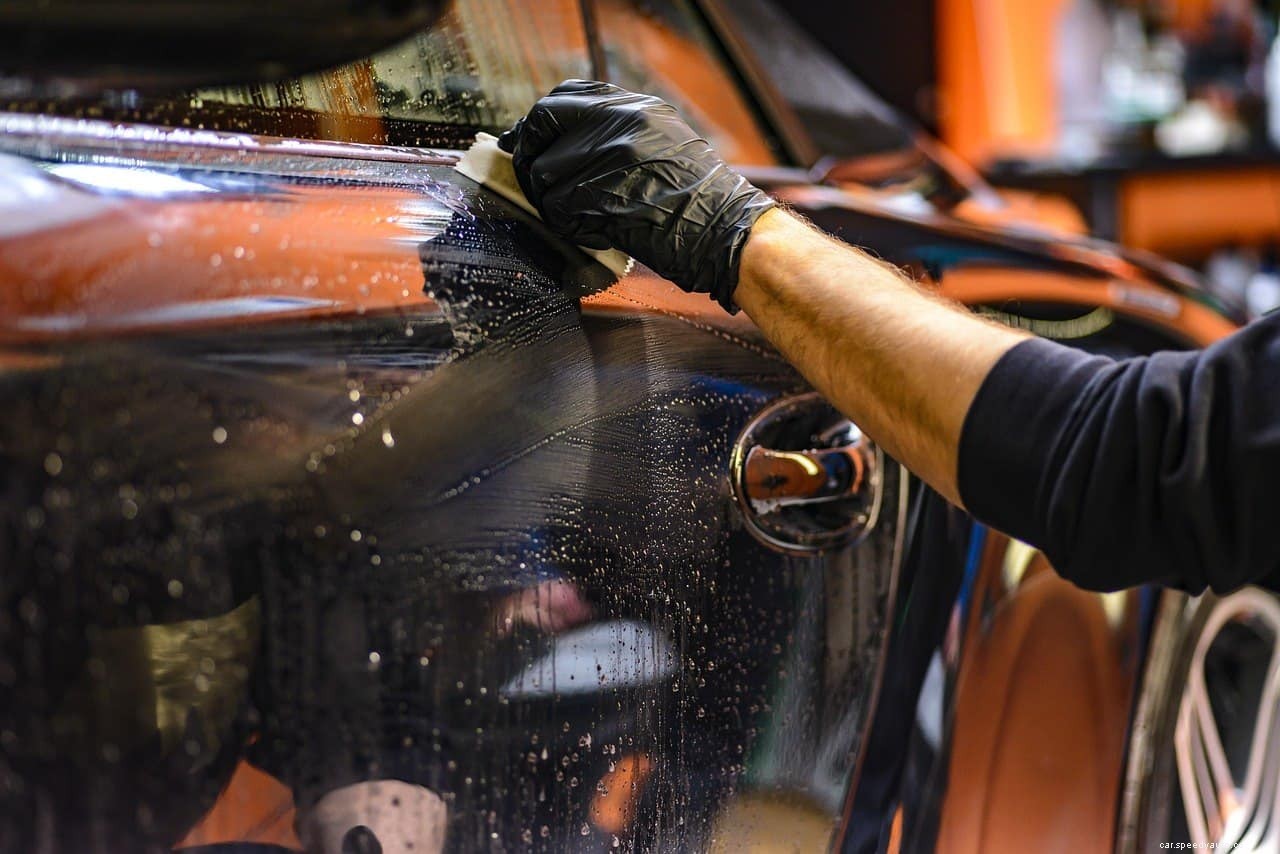
Photo Credit: https://carsavvier.com/zen-buffing-car/
Remember that a low-quality buffer can make your car’s paint appear cloudy. Always go for high-quality buffers. One of the best car buffers available is Meguiar’s M205 mirror glaze ultra finishing polish. You can redo buffing if you are not happy with the gloss obtained after buffing once.
There is an element of risk associated with manual buffing as it is labor intensive, time-consuming and the result also depends on many factors. It depends on your efficiency and the experience you have in buffing. But manual buffing will help you save the cost.
Materials required: Bucket of warm water, buffing compound, power buffer, polishing pads, car wash soap, and Microfiber cloth. After washing and rinsing your car to remove the dust particles and contaminants, the following steps can be followed:
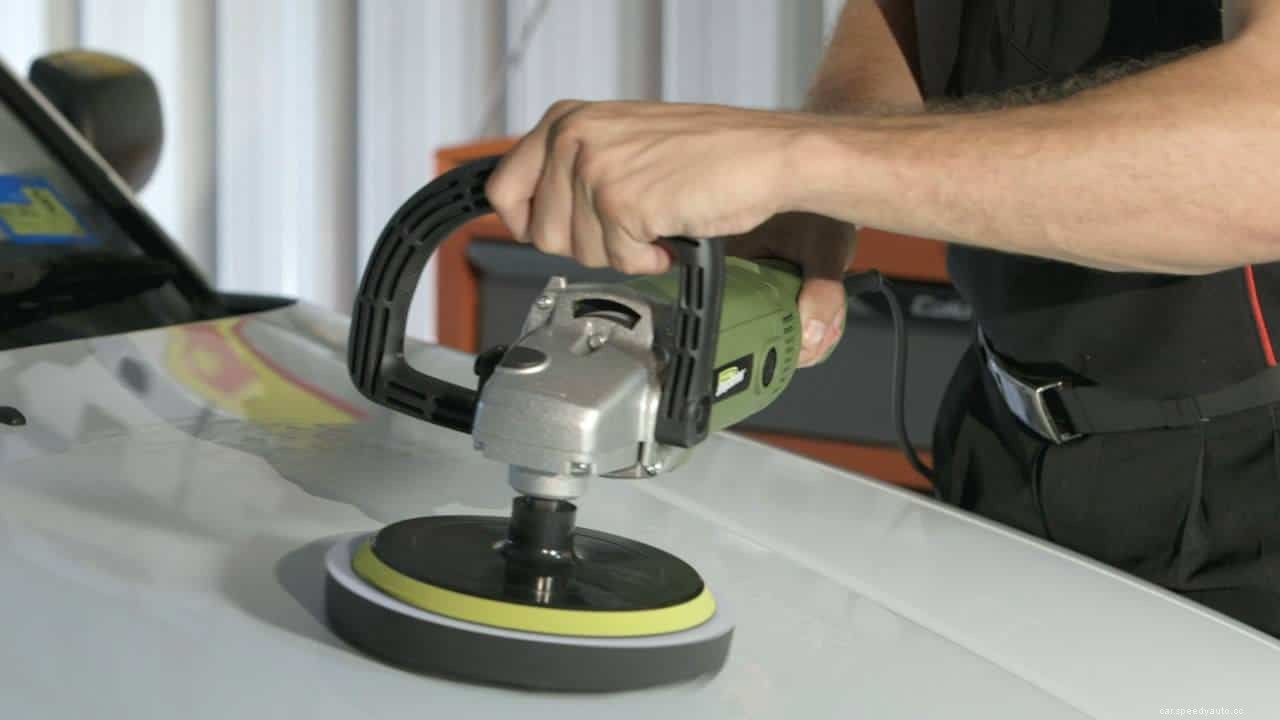
Photo Credit: http://www.supercheapauto.com.au/articles/car-cleaning/tips-on-using-an-electric-buffer/175
Repeat the step if you are not happy with the obtained finish. Remember, if your work on a particular area for long using power buffer, it can result in overheating and subsequent damage to paint and clear coat in that area. Always keep the polisher in motion while it is turned on.
The high-speed buffer can be used to eliminate the blemishes and scratches completely, and this also brings in great shine. But remember, improper usage of high-speed buffers will affect the appearance to a great extent, and it will leave scratches and swirls on the surface of your car.
Random orbital buffers can be used in case you require a greater finish with much lesser effort. But it might not last for long.
Polishing or rubbing compounds are used to add sheen to the surface and to have an even coloring. It enhances the glow and adds depth and clarity to the finish. You can rub the polishing compound lightly using a wet microfiber cloth and remove it using another piece of microfiber cloth.
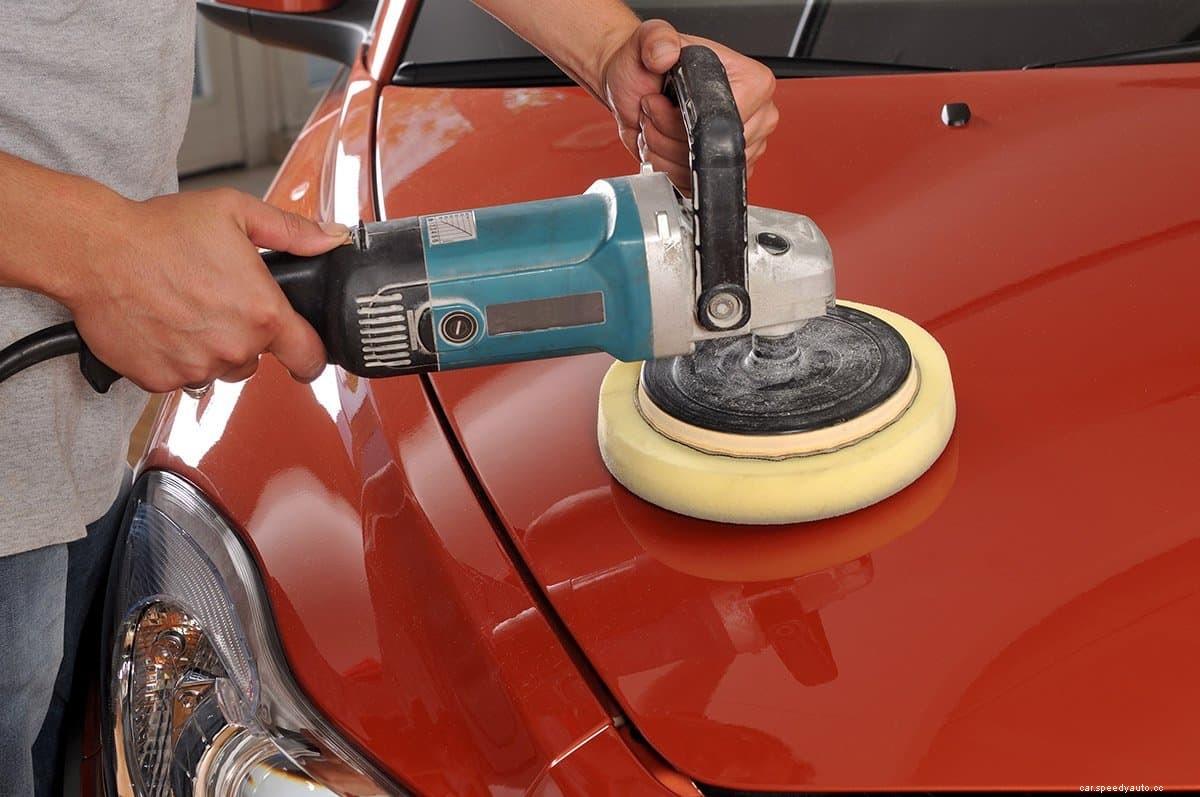
Wax can also be applied over the polishing compound to protect the clear coat from the contaminant and ultraviolet rays. Be careful when choosing the wax applicant as some of them cannot be applied with high speed which can damage your paint.
Use the right combination of buffing compound, buffing pad and speed of the power buffer to get the best results out of buffing. Inspect your job at regular intervals to spot any blemishes on the surface of your car or whether an area is missed out.
By following these instructions, you will find it very simple to do buffing. Get help from experts while selecting the buffers, polishing agents and waxing agents for your cars. It’s always good to get guidance from an expert about which would be suitable for your car model.
The power buffer should always be held near to your shoulder and you must avoid using high speeds and high pressure when buffing. If you are a novice, manual buffing is not advised at all; you can choose manual buffing when money is a problem.
Try to approach a professional initially and observe him buffing and slowly and gradually try to do it on your own. Try these simple steps next time and share your comments.
