
(Updated - 7/14/19) When you are sitting in your car with the AC on, and you suddenly notice that the interior of the car starts to feel warm. You ignore this initially thinking things will start to get cooler but the problem persists, and finally you notice that the car is starting to overheat, but only when the AC is on. Sounds familiar?
Cars can overheat when the AC is on because the serpentine belt that turns the AC compressor also connects to many other engine parts including:, the power steering pump, water pump, crank shaft, radiator fan, and alternator. If the AC compressor is not working well, then the engine has to work harder, making it overheat.
Another reason for over heating is when the AC condenser is not working properly and or the water pump, creating excess heat.
If you have this problem you are not alone. This problem is face by many others who have gone through this same issue with their car. An overheating engine is an important issue to resolve the first time it happens or expensive damage could occur, taking time and patience to fix.
Why Does My Car Overheat When AC Is On? What are the Reasons for Overheating?1. Bigger load problem2. Inefficient working of the cooling system3. Faulty fan4. Fault in the temperature sensorWhat is the Solution to Car Overheating When the AC is On?What to do f you are in traffic and your car overheats?
Photo Credit: https://yourautospace.com/why-your-car-overheats-after-turning-on-the-ac/
If overheating happen only when the AC is on, you'll be fairly sure that you need to check the AC compressor, the condenser, and the water pump. A car's engine can begin to heat up quickly because as soon as the AC in on, heat is created in different ways.
The engine having to work harder creates higher temperatures (if the AC compressor is bad) and the AC system creates heat that the condenser or water pump can't cool, also create higher temperatures.
Be sure to turn off the AC if you suspect a problem and try to get it fixed as soon as possible. Just carrying extra water to put in the radiator when the engine gets hot is going likely to lead to engine failure.
The main reason is most likely the AC compressor. When the AC is on the compressor needs to work like an engine, moving its cylinders to compress the refrigerant. This created a load (pressure carried) on the engine.
If the AC compressor doesn't turn as well as it use to the load on the engine is too much, creating excess heat. The AC compressor might have added an extra rotational load to the engine, so this the first thing to check is your engine overheats.
As the AC system moves refrigerant to the condenser, the engine fan blows over the condenser fins to regulate temperature. If the fins are clogged, the condenser temperature will rise. If the condenser gets too hot, it can lead to the engine overheating.
Another reason the engine can overheat could be when the radiator and or the condenser tubes get clogged over time. Liquid passed through the tubes and corrosion or particles can cause clogged areas.
This clogging can cause both the refrigerant and the coolant not to flow properly, causing parts to heat up and eventual engine overheating. Taking a look at the radiator and condenser may help you figure out why things aren't functioning improperly.
When the car gets overheated at slow speeds or a stop, the likely culprit is the engine fan. This problem is caused when there is a lack of airflow through the radiator and condenser. The fan could be broken or there could be blockage in the fins or the radiator and condenser. Also check for a faulty fan switch.
Consider getting a new fan or, you might want to check the fan assembly or the fan clutch.
This possibility is unlikely but happens in some cases. The coolant temperature can be measured and then compared to that of the temperature indicator on the dashboard. Sometimes due to the fault in the temperature sensor, this reading is false which causes inaccurate dashboard indicator readings.
If it reads normal and the engine temperature is raising your engine could overheat. You should check the functioning of the thermostat if you suspect this might be the reason your car is having temperature readings issues.
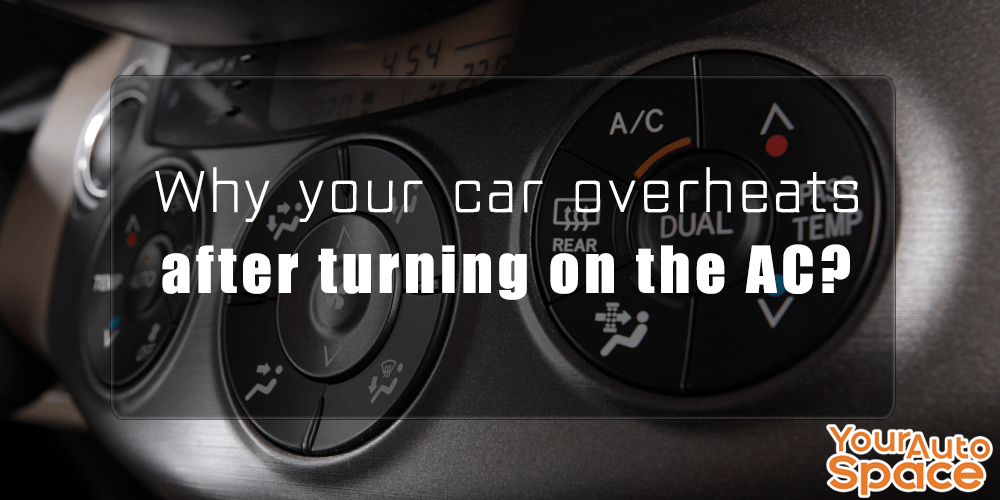
Photo Credit: https://yourautospace.com/why-your-car-overheats-after-turning-on-the-ac/
Being stuck in traffic can make the problem a lot more stressful. So if you face such a situation you can follow these tips:
Photo Credit: http://www.cardomain.com/ride/3356032/2004-mercury-sable/
A car overheating when the air conditioner on is a very common problem and you can find solutions yourself with some time and effort. The above-mentioned remedies might help you if your willing to do some research and work.
If your car still overheats with the AC after you've tried your solution, ask a service center that you trust to help out. Do not ignore this issue. Overheating can cause major damage to your car. Finding the solution should be a priority to help you save time and money.
If you want to find out more information about AC issues you can try these articles below:
What Should I Do If AC Compressor Clutch Is Not Engaging?
How Much Oil Should You Add Up In AC Compressor?
Why Is AC Pressure Too High? Causes And Solution
