
To stay safe on icy roads, experts recommend installing winter tires before the snow arrives. In certain provinces, however, winter tires aren't just a good idea they're also the law. Find out if your province legally requires you to install winter tires on your vehicle.
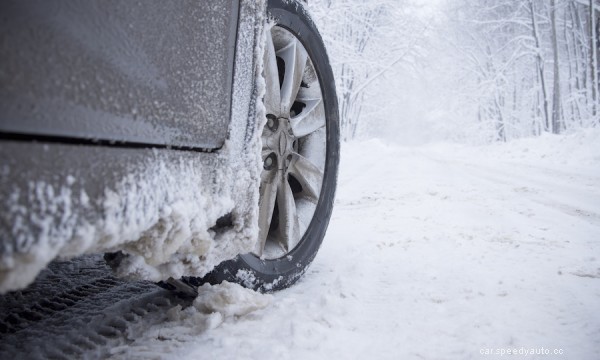
All Canadian provinces recommend that you install winter tires when the temperature dips below 7 °C. The reason for this is quite simple:
To an extent, new all-seasons are okay for winter driving.
Winter tires should be removed when the temperature goes above 7 °C because heat can cause the rubber to wear out prematurely and decrease their number of useful years.
Although some Canadian provinces only require all-seasons for winter driving, others have restrictions when studded tires can be installed and used.
Quebec instituted Law 42 in 2007, which requires all motorists to install four winter tires on their vehicle from December 15 to March 15, inclusive.
In British Columbia, tires with chains or winter tires are required by law only in certain mountainous areas. Local authorities can tell you what the regulations are in your area.
In these provinces and territories, studded tires are not subject to any specific dates or restrictions.
In these two provinces, studded tires are permitted from October 1 to April 30.
Concerning studded tires, these two provinces differ very slightly.
Prince Edward Island allows studded tires from October 1 to May 31.
The law in Newfoundland and Labrador stipulates that studded tires are not permitted before November 1, but allows them to stay on until the end of May.
When choosing winter tires, take into consideration the road conditions in your area, as well as the milage and frequency of use.
Some winter tires are excellent on ice and others are better in the snow, while some function well in both conditions. Check with your local tire retailer to ensure your tires are best suited to help you drive safely (and legally) through winter.
