
Corrosion can form in and on the battery’s terminals and around the battery cable ends, especially when the engine and battery are not running, causing the terminals to oxidize. This issue is often overlooked, however car battery corrosion can cause trouble starting your car, and the battery may not be fully charging when you are driving. Learn the simple steps of how to clean car battery corrosion now to extend your battery’s lifespan and optimize its performance.
In this comprehensive guide on how to remove corrosion on car battery, you will learn the different causes for corrosion, the detailed steps and pro tips on cleaning car battery corrosion, plus many handy maintenance tips to keep your battery always in tip top shape.
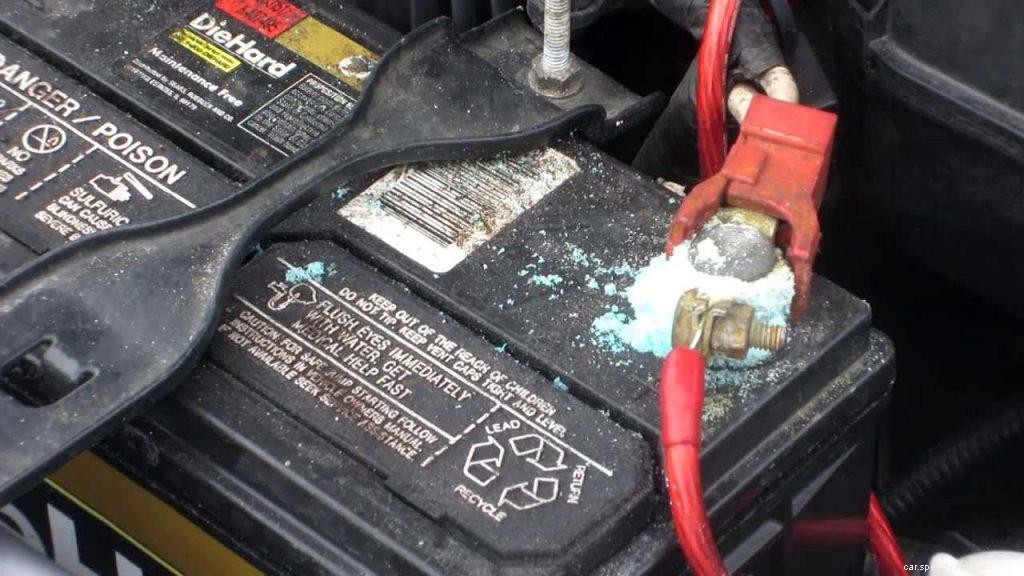
Corrosion is a problem with all types of car battery. Car battery corrosion looks like a crusty, ashy substance that forms around the battery ports. This type of corrosion is created because of the chemical reaction that goes in the terminals and battery cable ends.
Most batteries are filled with sulfuric acid, and when the battery is charging or discharging. During the charging and discharging process, this acid is heated or cooled producing a by-product — hydrogen gas. Corrosion is caused by the hydrogen gas being released from the sulfuric acid inside the battery.
As the gasses react to the external environment, it produces a corrosive environment. Since the terminals are in direct contact with the battery, they are exposed to this corrosive environment or “acidic fumes”, thus are prone to corrosion.
Another type of corrosive process you might see on your battery terminals occurs when the copper on the terminal clamp gets wet and reacts with the lead electrode it is connected to. This type of corrosion results in a greenish substance on the terminal itself. Otherwise, if the terminal clamps are made of aluminum, the corrosion will be in the form of a white substance.
Finally, another corrosive process called “sulfation” happens when a battery isn’t regularly recharged, either because it’s only being driven for short trips or because it’s aging. This type of corrosion will typically form white sulfur crystals on the negative battery terminal or occasionally around the battery itself if it’s leaking sulfuric acid. In some cases, these sulfur crystals can also build up around the positive electrode if the alternator is overcharging the battery.
In essence, the battery can only do its job when the connections are intact. Corroded cables and terminals, or loose fitting terminals alike, can limit the alternator’s ability to charge the battery and provide power to the car and its electrical accessories like radio and headlights.
It should be noted that small amounts of corrosion are not usually a serious problem; it simply reflects your car’s normal wear and tear over the years. That said, corrosion can get worse and starts to become an issue especially when subjected to higher temperatures during the summer months. In warmer conditions, larger buildups are more likely to form, which will act as an insulator that will prevent the battery from accepting or delivering a charge.
Leaving corrosion unchecked will cause problems over time, as corrosion impairs the connection to your battery and in many cases can lead to permanent battery failure. When that happens, you will have to go through the troubles of removing and replacing your battery.
Battery is a critical component that gets your car going. Its health affects whether your vehicle can run smoothly or at all, and “health” here also includes basic hygiene maintenance that every driver must perform on a regular basis.
READ MORE
To properly care for your precious batteries, before we proceed to cleaning car battery corrosion, you should grasp the most common causes of car battery corrosion below:
If corrosion occurs on the negative battery terminal only, this is typically a symptom of your car’s battery being undercharged. The most common reason for such undercharging is the alternator not having sufficient time to replenish lost battery capacity due to high electrical demand, and/or the vehicle is powered only for a short period of time each time it runs.
If battery corrosion is present on the positive battery terminal, this is a symptom of overcharging. If your battery is either the flooded or sealed type, overcharging the battery can push the electrolyte out of the vents or cracks, thus causing corrosion.
Copper is used to make the clamps that connect the wires and the battery. If you are good at chemistry, you will definitely know that copper is unable to corrode all by itself. However, the current which overpasses through it produces copper sulfate, thus resulting in corrosion on the battery terminal.
Filling too much battery water into a battery is another reason for corrosion on battery terminals. And you know battery terminals are made of metals which can be corroded. Therefore, if you fill too much battery water into your battery, the excess water will come out of the vents then corrode your battery terminals.
One of reason causing battery terminal corrosion is electrolyte leakage. If a battery is not well-maintained, the electrolyte will leak out and accumulate on the battery terminals, causing corrosion.
If your battery is over 5 years olds, of course, you will see corrosion on it. So in this case, don’t hesitate to replace the expired battery with a new one.
READ MORE
You can learn how to clean corrosion off car battery by using both household items and professional-grade supplies. Here, we will show you how to handle with battery corrosion by both methods in 3 steps.
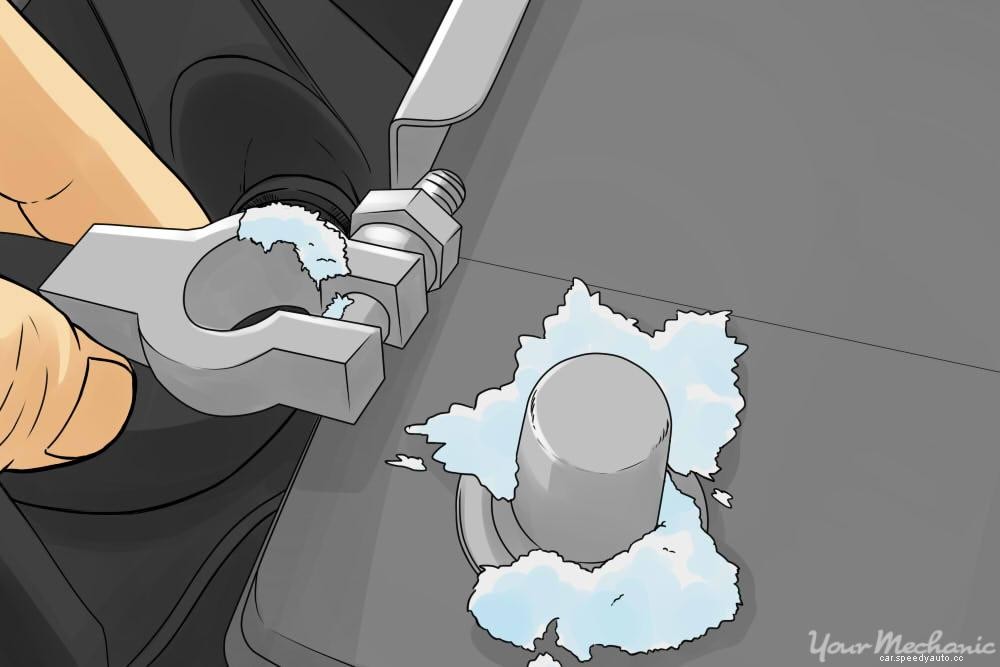
First of all, negative and positive cable ends need to be disconnected from the battery in order to clean the battery terminal connections properly.
Equipments needed:
Caution: Car battery contains acid inside which may cause accidental injuries. Therefore, when working with a vehicle battery, you have to wear eye glasses and gloves in order to protect yourself from acid.
To do this step, follow the direction below:
Now, it’s time to use the battery cable wrench. Place it on the battery cable end nut then twist it counter-clockwise.
After removal, perform a visual inspection of the battery cables for excess wear or corrosion. Frayed or damaged battery cables are a common reason for difficult starting or failure to start.
Look for dried, cracked, and peeling insulation, which is the plastic or rubber cover on the cable, and replace them if needed. Also check if the copper strands are intact; they serve to limit current flow and easily become brittle when exposed to the elements. Replace the battery cables in case of damage.
READ MORE
Pro tips: Here is how to clean car battery corrosion using available household items:
Equipments needed:
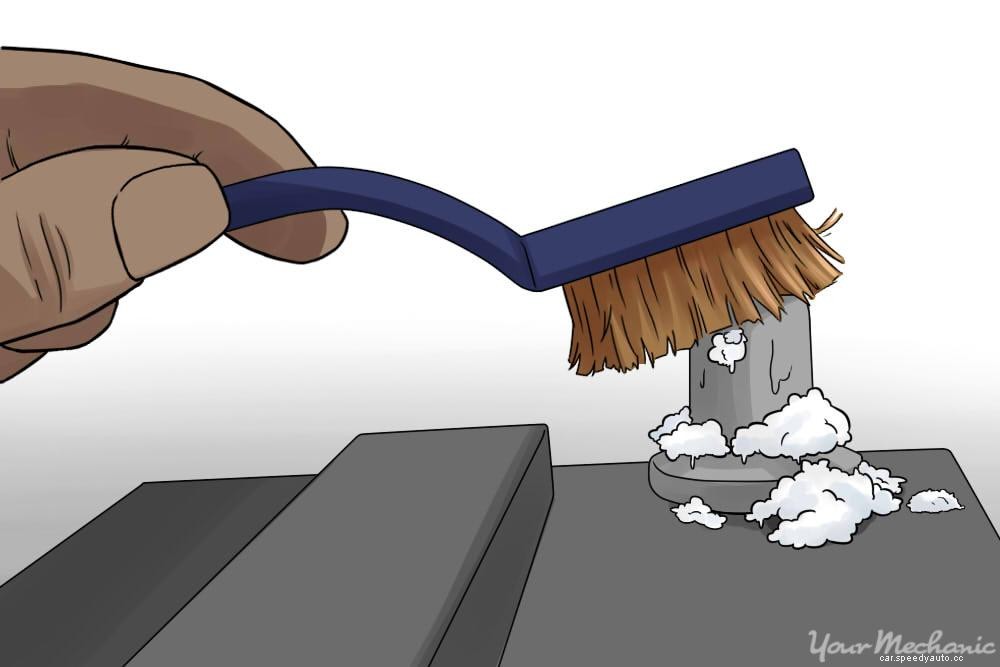
As you can see, with this method, you don’t need to use specific materials to clean the battery terminals of your car. Some simple household things are enough for you to restore a proper connection and clean the battery of your car.
* Important note: Never use coca-cola to remove battery corrosion. The synthetic sugars and phosphoric acid in coca-cola can cause further damage to your engine and surrounding components.
The chemical reaction between the mixture of acidic corrosion + baking soda + water on the terminals of car batteries will neutralize the acid, thus it is safe for you to handle.
Check out the video to know how to clean car battery corrosion in cheapest way:
Equipments needed
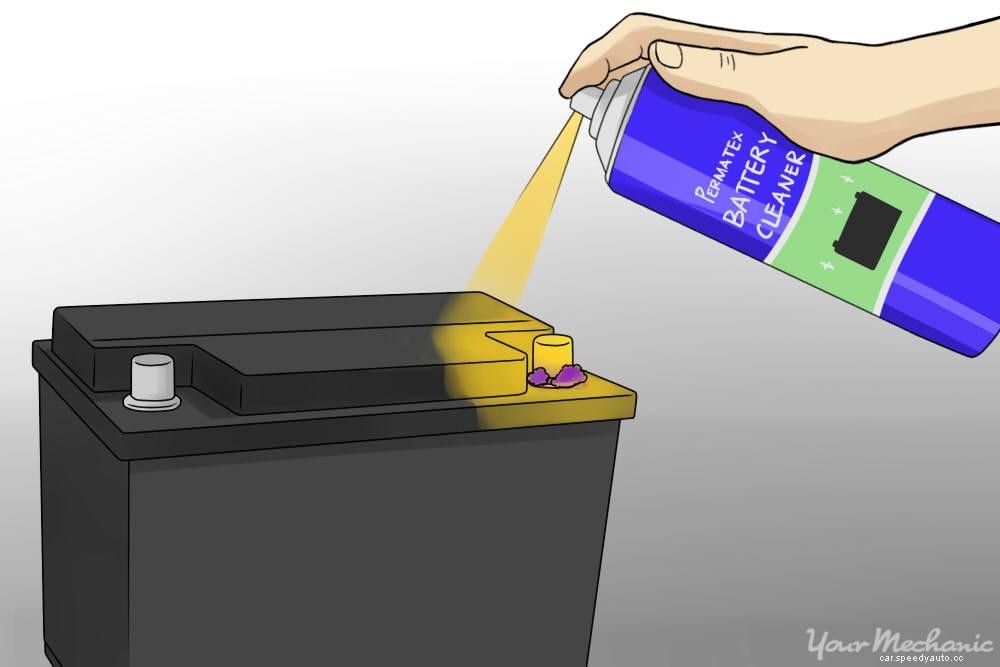
With the kit of specific materials, you can easily clean your car battery in a professional way. Here below is how to do:
Caution: You should be careful when using battery cleaner spray as some dyes in cleaner spray will stain your paint another color.
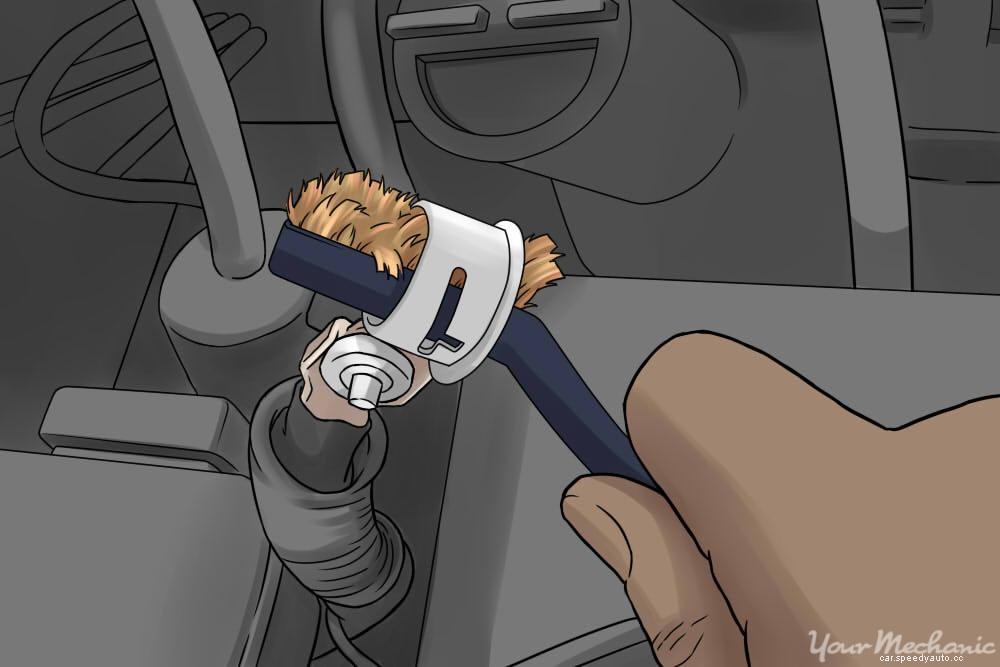
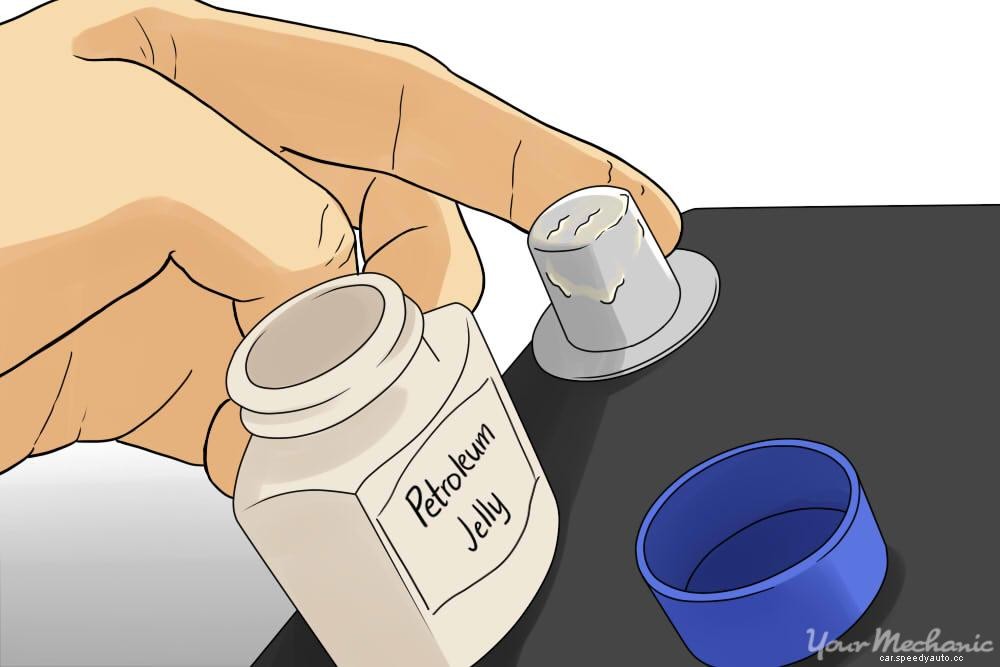
In this step, a battery terminal wrench is all you need in order to make the cable ends reconnected.
Replacing the cables. First, you install the positive cable back into its position. For some top-post batteries, you will have to fully wiggle or tap the cable end down into its position.
Tightening the nut. You need to tighten the nut on the clamp to make it snug. Then try to add another quarter twist.
Placing negative cable. You reconnect the negative battery cable in the same way like what you do with a positive cable.
Find out How to clean car battery corrosion by Coke in the video below
