
You may usually ignite the compressed fuel/air mixture by a spark plug, but do you really understand the spark plug heat range? To make things easier and to help you understand that basic term, we are now introducing to you the definition of spark plug heat range and how it affects your engine and how to use it correctly.
Firstly, let’s make a clear spark plug heat range explanation.
Spark plug heat range is the speed at which a spark plug can transfer heat from the firing tip to the cylinder head water jacket and into the cooling system. Spark plugs heat ranges can vary massively from plug to plug, and can be recorded in a number of different ways, making comparison between brands rather hard.
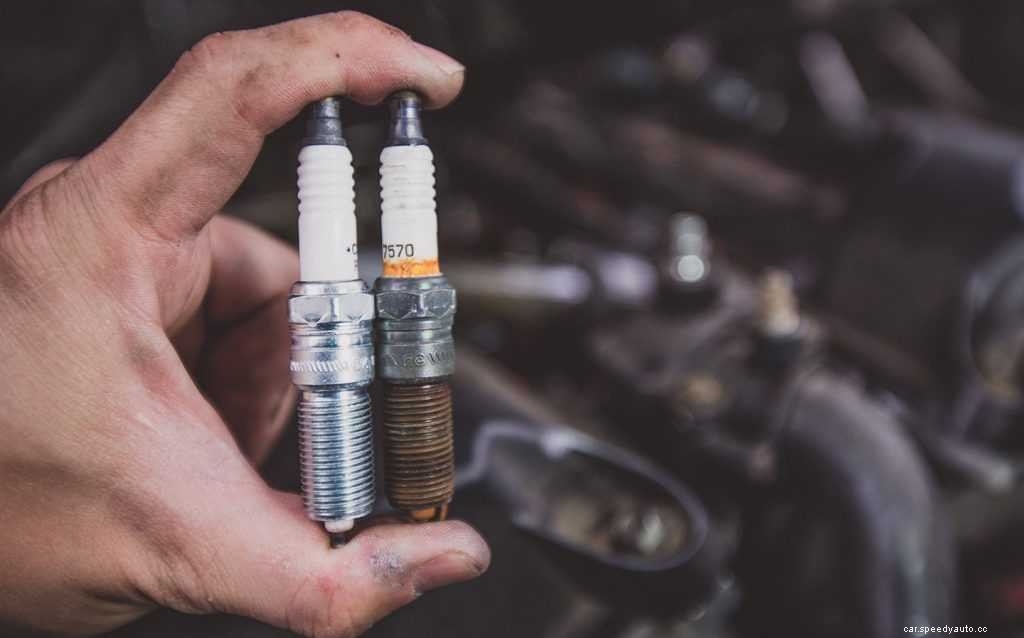
In specific,if the spark plug is too hot, your engine could experience detonation, pre-ignition, or power loss. If the spark plug is too cold, it will be unable to properly self-clean by burning off carbon deposits. So choosing the right heat range is crucial for high performance engines.
Usually, spark plug manufacturers recommend that the tips temperature remain around 500 – 850 celsius degrees. The heat range numbering system used by spark plug manufacturers is not universal. Some manufacturers numbering systems are opposite the other – for Champion, Autolite and Bosch, the higher the number, the hotter the plug. However, for NGK, the higher the number, the colder the plug.
Each spark plug manufacturer designs the heat range with a number. Typically the heat range for NGK Spark Plugs varies from 2-11. In broad terms, spark plugs are often referred to as the term hot spark plug or cold spark plug.
SEE MORE:
A hot spark plug is a plug which transfers heat slowly from the firing tip into the engine head, keeping the firing tip hotter. Detonation (engine knocking) or disintegrate centre electrodes are too hot spark plug symptoms. Hot plugs are good for applications that operate mainly at low rpms. Because they have a longer insulator nose length, heat is transferred from the firing tip to the cooling system at a slower pace.
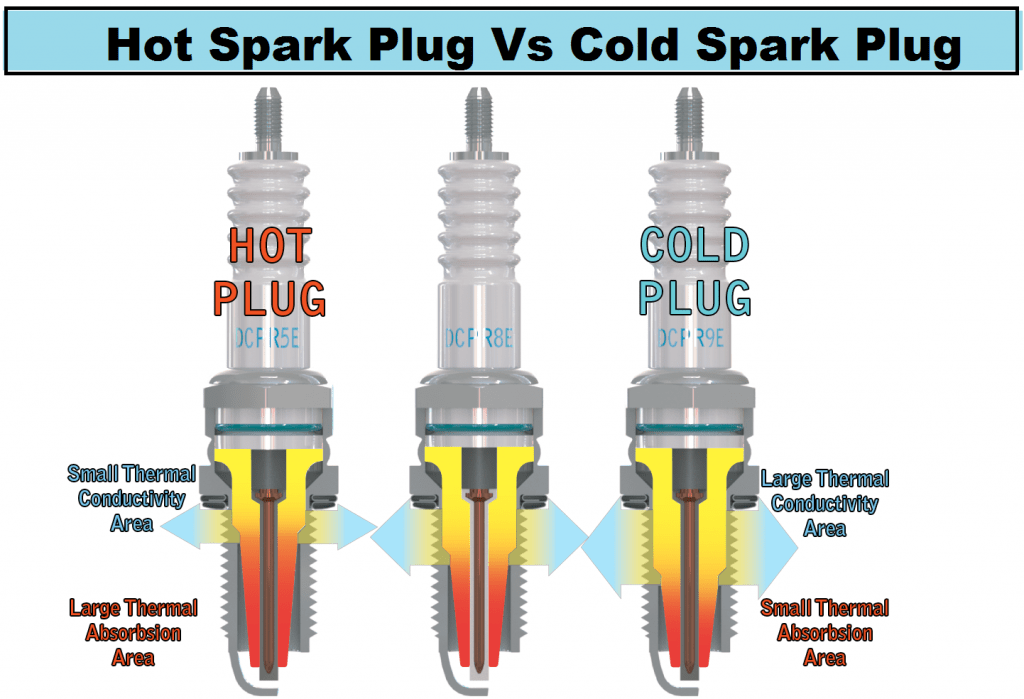
A cold spark plug is a plug which conducts more heat out of the spark plug tip and lowers the tip’s temperature. Cold plugs are ideal for high rpm engines, forced induction applications, and other instances where the engine produces high operating temperatures. Whether a spark plug is hot or cold is known as the heat range of the spark plug.
Although not as damaging as having a too low rated plug, the effects can still be detrimental to your engine. If a spark plugs temperature remains too low it can cause loss of ignition spark due to deposit build up on the firing end, which in turn will leave your engine struggling / down on power.
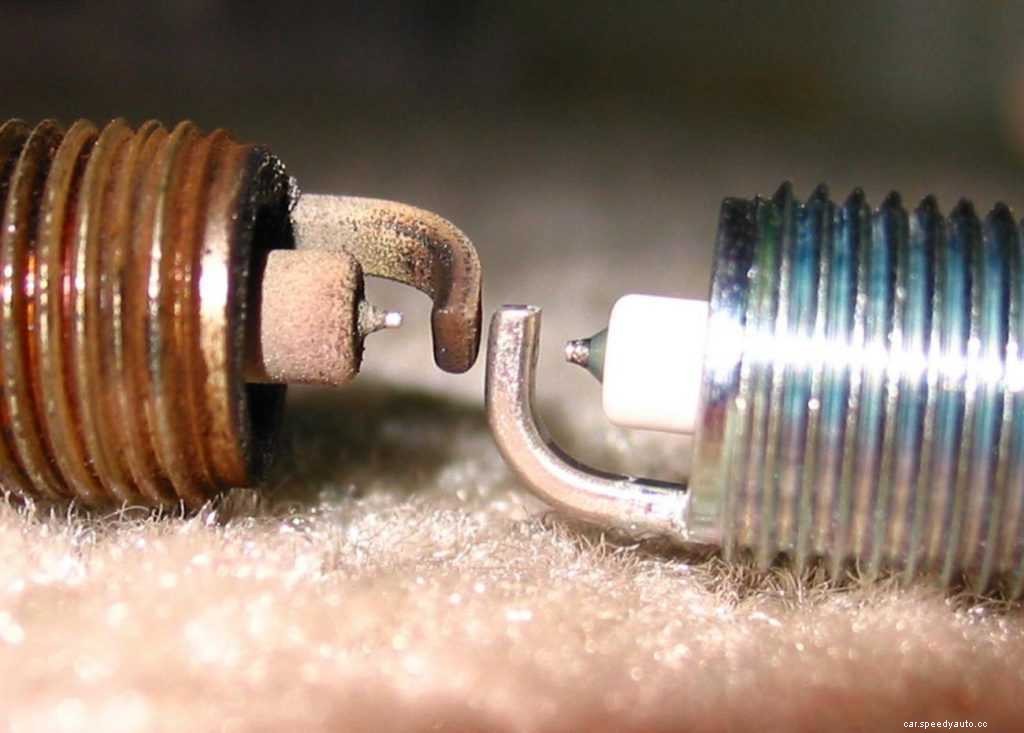
When the heat range is too low, it can be very damaging to your vehicle’s engine as the plug will overheat causing abnormal ignition firing (pre-ignition), that can lead to melting of the spark plug electrodes as well as piston seizure and erosion.
Low power engines – low heat range or hot spark plug
High power engines – high heat range or cold spark plug
As we mention above, the heat range for NGK spark plugs varies from 2-11. Let’s take a look on the heat range chart where there is full information about the number. You will have the basic understanding whether it is a hot or cold spark plug of 5 majors spark plug brands.
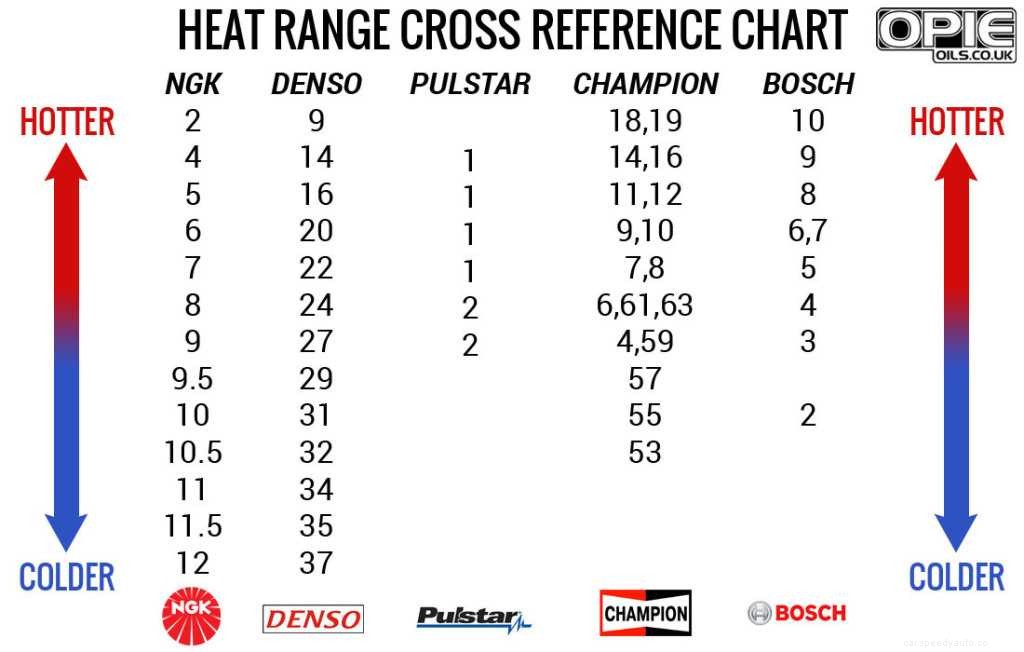
Having to change a new spark plug is a pain, but you definitely need to know what kind of hot or cold spark do you need and at which rate. So everytime you wonder “what heat range spark plug should I use”, take a look at this chart and you will figure it out!
Nitrous oxide is the factor that causes the high cylinder temperatures. Therefore it requires a colder heat range over the stock plug.
Metanon is figured out that it has a higher level of octane than the standard gasoline, methanol delivers more complete combustion. By that, you may need a colder plug to transfer more heat from the combustion chamber.
Lean air/fuel mixtures raise the operating temperature, along with the plug tip temperature, possibly causing knock or pre-ignition. You should use a colder heat range for leaner air/fuel mixtures. Since rich air/fuel mixtures can cause the plug temperature to dip, allowing carbon deposits to build up on the tip, you should use a hotter heat range for rich air/fuel mixtures.
Frequent and drawn-out acceleration and high-rpm driving raises combustion temperatures and generally requires a colder heat range.
Generally, advanced ignition timing raises the spark plug temperature. In fact, NGK estimates an increase of 70° to 100° for every 10° advance in ignition timing. Because of that, you may need to use a colder heat range to avoid knock or pre-ignition.
Higher compression ratios mean higher cylinder pressure and temperature. And again, you may need a colder heat range to rapidly transfer all that extra heat to the cooling system.
Supercharging forced induction leads to augmented cylinder pressure and temperature, which could lead to detonation. Depending on the exact application, you may need to go with a significantly colder heat range overstock.
Equip yourself with the knowledge about the heat range of the spark plug before changing it will help you avoid any serious damage for your car. Don’t forget to follow our maintenance tips for better understanding your car and learn how to fix it when you need.
