
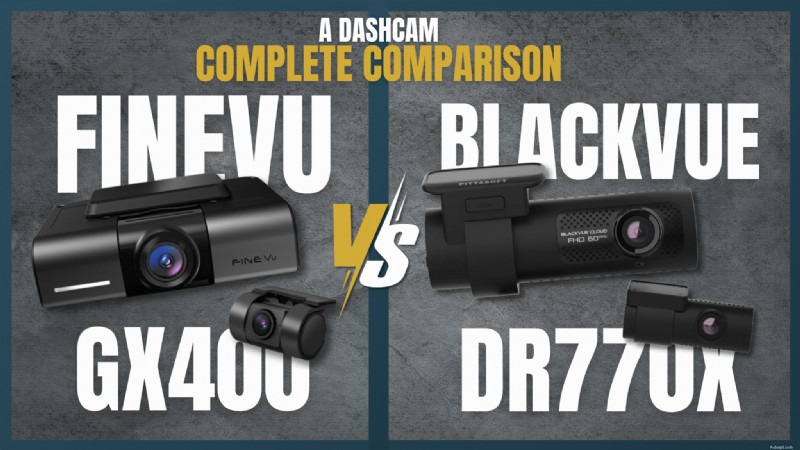
Dash cams have become essential for drivers seeking peace of mind on the road, capturing clear evidence in case of incidents and providing added security during parking. In this comparison, we’ll pit the FineVu GX400 against the BlackVue DR590X Plus, both as dual-channel (front and rear) models. While both are solid options from reputable Korean brands, we’ll examine their specs, features, and pricing to highlight which stands out as the superior choice for value-conscious buyers looking for top-tier performance.
*Winners of each category highlighted in BOLD
The heart of any dash cam is its ability to capture clear, usable footage. The FineVu GX400 leads with its 2K 2560p QHD front resolution, providing sharper details for identifying license plates and distant objects compared to the BlackVue DR770X’s 1080p Full HD. Its 5.1MP Sony STARVIS IMX335 sensor with HDR outperforms the BlackVue’s 2.1MP STARVIS in low-light scenarios, reducing noise and enhancing visibility. While the BlackVue offers 60FPS for smoother motion, the FineVu’s higher pixel count delivers better overall clarity, making it superior for evidentiary purposes.
Parking surveillance is where the FineVu GX400 truly dominates. Its Power Saving Parking Mode uses just 0.06W, allowing for vastly extended recording times (up to 2,325 more hours) without draining your battery, compared to the BlackVue’s more power-intensive standard mode. Features like Battery Protection and Low Voltage Cut-Off add reliability, while the BlackVue requires extra accessories for optimal parking performance. This efficiency makes the FineVu ideal for long-term parking and without the need for additional accessories like an External Battery (which can typically cost around $300).
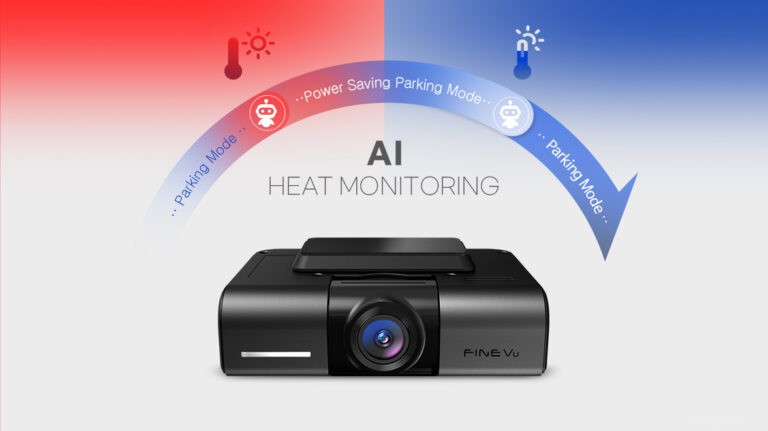
The FineVu GX400 is packed with driver-assist features like ADAS (including lane departure and forward vehicle alerts), AI Heat Monitoring to prevent overheating, and Speed Camera Alerts—features absent in the BlackVue DR770X. Auto Night Vision intelligently adjusts for lighting, and Smart Time Lapse maximises storage without gaps for enhanced transitions. On the other hand, the BlackVue shines with cloud connectivity for remote viewing, but this comes at the cost of requiring additional setup and subscriptions, whereas the FineVu’s WiFi app integration is cost-free. For everyday usability, the FineVu’s extras provide more proactive safety and convenience.
Both models are compact and discreet, but the FineVu’s ultra-slim design (under 1 inch thick) and included hardwire kit simplify installation. While the BlackVue includes cloud and optional LTE for advanced remote access, the FineVu’s built-in GPS and WiFi dongle offer solid connectivity without the added complexity or cost. We think both exuberate excellent and sturdy constructions, ultimately the design will come down to consumer preference. In terms of connectivity, we would rate the BlackVue better in this instance especially with the cloud connectivity.
In terms of both dashcams, they offer a complete kit with all the essentials such as the hardwiring kit and starter SD Card, which can be fairly rare to find on the dash cam market these days. Although in a direct comparison to each other, we find the FineVu GX400 to deliver significantly better value in terms of the cost and features it provides versus the DR770X, coming at around $497 to the BlackVue’s $719.
The GX400 pulls ahead in core usability and value, delivering premium performance without the BlackVue’s premium price tag or extras you might not need. Here’s the breakdown:
In summary, while the DR770X suits tech-heavy users (e.g., rideshare pros wanting cloud alerts), the FineVu GX400 is the smarter, more capable choice for reliable, high-detail protection that won’t nickel-and-dime you or drain your battery. If your needs lean toward cloud features, reconsider—but for most, the GX400 delivers peace of mind without compromise.

author, Automotive Service writer

As a seasoned author on our team, Chester also known as ‘Gadget’, for his love for all things mechanical, brings a wealth of experience and expertise to the table, particularly when it comes to automotive topics.
