
Mufflers & Emissions
Understand how catalytic converters reduce emissions, where they’re located, why thefts happen, and practical steps to prevent theft—plus what to do if yours is stolen.
Updated October 29, 2025 5–7 min read
Car-X has been the trusted name in exhaust and emissions repair since 1971. If you’re worried about theft or need a replacement, we’re here to help.
Jump to: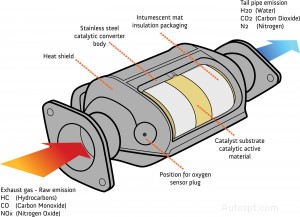
For nearly fifty years, the catalytic converter has been a key part of a vehicle’s emissions and exhaust system. It helps reduce harmful pollutants before exhaust exits the tailpipe—and, unfortunately, it’s also a frequent target for theft.
A catalytic converter is an oval or canister-shaped device installed in the exhaust system. It receives engine exhaust and uses chemical reactions to convert toxic gases into less harmful emissions.
The converter’s primary job is to reduce pollutants—helping lower hydrocarbons (HC), carbon monoxide (CO), and nitrogen oxides (NOx) released into the atmosphere.
Most vehicles place the converter roughly midway along the exhaust path, between the exhaust manifold(s) and the muffler. Many modern vehicles use more than one converter.
As hot exhaust passes through the converter, catalysts promote chemical reactions that transform harmful gases into less harmful ones before they exit the tailpipe. Oxygen sensors before and after the converter help the engine computer keep the system operating efficiently.
Inside the metal shell is a ceramic or metallic honeycomb called a substrate that provides a large surface area for reactions. Precious metals—primarily platinum (Pt), palladium (Pd), and rhodium (Rh)—coat the substrate and act as catalysts.
Converters contain valuable precious metals. Thieves may target higher-riding vehicles or specific models with easy access or higher metal content. Removal typically involves cutting the unit out of the exhaust—noisy, but quick.
Explore Converter Repair & Replacement Find a Car-X Near You
If you discover your converter is missing, stay calm and take these steps:
Request an Appointment See Mufflers & Exhaust Services
Driving without a converter is unsafe and may be illegal in many areas. In addition to loud exhaust and potential fumes, it can trigger check-engine lights and fail emissions testing.
How do I know if my converter was stolen?Common signs include a sudden, very loud exhaust, rougher running, and visible cuts or missing sections in the exhaust system.
What causes converter failure besides theft?Engine misfires, oil/coolant burning, or rich fuel mixtures can contaminate the catalyst. Address underlying engine issues to protect the converter.
Will insurance cover converter theft?Comprehensive policies often cover it, but coverage varies. Review your policy or speak with your provider.
