
The open road offers a sense of freedom, but that confidence relies entirely on one critical system: your brakes. You likely don’t think about them often—until you press the pedal and something feels wrong. Maybe it’s a high-pitched squeal that turns heads at a stoplight, or a shuddering steering wheel that makes your commute stressful.
Your vehicle’s braking system serves as your primary defense against accidents. While engines get the glory for performance, brakes bear the burden of safety. When they start to fail, they don’t just compromise your ride quality; they risk the safety of everyone in the vehicle. Ignoring early warning signs can turn a minor maintenance task into a major, expensive repair involving rotors, calipers, and hydraulic lines.
Understanding these signals is the first step toward better vehicle health. This guide helps you decode the noises, sensations, and visual cues your car sends when its stopping power is fading. By learning to spot these issues early, you can save money and drive with genuine peace of mind.
 Call 317-475-1846 for Affordable Brake Repair in Indianapolis Indiana
Your car often sounds the alarm before you feel any difference in performance. Brakes are engineered to be silent, so any new noise warrants immediate investigation.
If you hear a sharp squeak or squeal when applying the brakes, your brake pads are likely doing their job. Most modern pads feature a built-in metal wear indicator. When the friction material wears down to a certain level, this metal tab scrapes against the rotor to alert you that it is time for a replacement.
However, noise can also indicate “glazed” brakes. According to automotive experts at Firestone, glazing occurs when excessive heat and friction cause the brake pads to develop a smooth, hard, glass-like surface. These shiny pads struggle to grip the rotor effectively, leading to that piercing sound and reduced stopping power.
A grinding sound is far more serious. This noise typically mimics the sound of rocks being crushed in a tumbler. It usually means the brake pad material has completely worn away, leaving the metal backing plate to dig directly into the steel rotor.
This metal-on-metal contact causes rapid, severe damage. If you hear grinding, your braking efficiency is significantly compromised, and you are likely damaging the rotors beyond the point of resurfacing.
Sometimes your ears won’t catch the problem, but your hands and feet will. The physical feedback from your brake pedal and steering wheel tells a detailed story about the condition of your braking components.
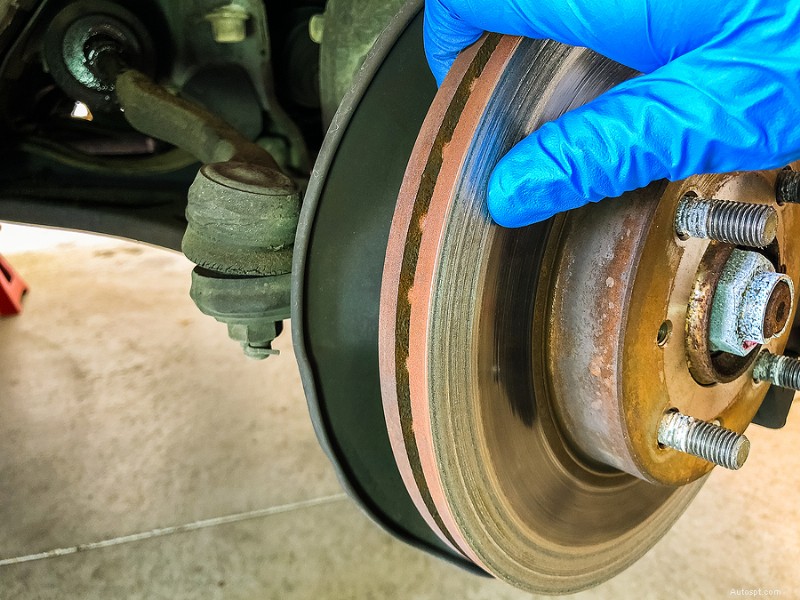
A pulsating brake pedal or a shaking steering wheel when you slow down often points to warped rotors. Rotors are the metal discs your brake pads clamp onto to stop the wheels. Over time, excessive heat—often from riding the brakes down steep hills or heavy towing—can cause these discs to become uneven.
When the pads squeeze against a warped rotor, they don’t make consistent contact. This creates a vibration that travels up through the hydraulic system to your foot or through the suspension to your hands.
If your car veers left or right when you hit the brakes, you may have a stuck caliper. The caliper is the clamp-like mechanism that houses the brake pads. If dirt, rust, or corrosion causes a caliper piston to seize, it cannot apply pressure evenly.
The Motorist Assurance Program notes that this “tugging” sensation can also result from a collapsed brake hose or uneven wear on your brake pads. Regardless of the specific cause, a car that pulls during braking is unpredictable and unsafe.
A brake pedal that feels soft or sinks all the way to the floor is a red flag for your hydraulic system. This lack of resistance usually means air has entered the brake lines or there is a fluid leak. Since air compresses more easily than fluid, the pressure you apply with your foot doesn’t fully transfer to the brakes. This can drastically increase your stopping distance.
Schedule Brake Inspection & Repair Service Now ✏
You don’t always need a lift to perform a basic check-up. Before heading to the shop, you can gather clues about what might be wrong.
If your car has open-spoke wheels, you can often see the brake pads without removing the tire. extensive sources suggest that if the pad looks thinner than a quarter of an inch, it is time for a replacement.
Pop the hood and locate the brake fluid reservoir. The fluid should be relatively clear or slightly yellowish. If it looks dark, dirty, or like black coffee, it has likely absorbed moisture and contaminants, which lowers its boiling point and reduces performance.
Look for any fluid pooling on the ground near the inner wheels. Brake fluid is slippery and has a distinct, slightly sweet chemical smell. Leaks often occur at the caliper seals or along the flexible brake hoses.
Once you identify the symptoms, the repair path usually falls into one of three categories.
This is the most common maintenance procedure. Technicians remove the old pads and replace them with new ceramic or semi-metallic ones. It is a standard service that restores quiet, effective braking.
If your rotors are warped or grooved but still thick enough, a shop might “turn” or resurface them. This process uses a lathe to shave off a thin layer of metal, restoring a flat surface. However, if the rotors are too thin or heavily damaged from metal-on-metal grinding, safety dictates they must be replaced entirely.
For spongy pedals, the solution is often a “brake bleed,” where a mechanic purges air bubbles from the lines. If the fluid is old, a full flush replaces the contaminated fluid with fresh liquid, protecting expensive components from internal corrosion.
While changing a tire is a handy skill, brake repair requires precision. A loose bolt or an improperly seated pad can lead to catastrophic failure.
You should consult a professional mechanic immediately if:
Proactive care can delay the need for repairs and keep your car safer for longer.
Your vehicle is a complex machine, but its ability to stop is its most vital function. Brakes rarely fail without warning; they usually scream, shudder, or fade before giving up entirely. By listening to these signals and acting quickly, you protect your investment and, more importantly, the lives of those traveling with you.
Don’t wait for a breakdown to address these critical signs. Regular inspections and prompt repairs ensure that when you need to stop, your car is ready to respond.
Is your car vibrating at stop signs or squealing in traffic? Don’t gamble with your safety. If you are located in the Indianapolis area, contact our certified automotive team today. We provide comprehensive diagnostics and precision brake repair to get you back on the road with confidence.
Book Your Appointment Now
Related Post: Brake Safety Starts Here: Simple Steps to Ensure Your Car Stays Safe on the Road
