
Skip to content
Home Car Advice Top Automotive Innovations of the Past 100 Years – 1930s: Front Independent Suspension
The 1930s were made for driving. More Americans had cars in their daily lives, more roads were getting paved, and Route 66 — “The Mother Road” — helped turn long-distance driving into a cultural phenomenon. But there was a catch. Plenty of those roads were still rough, inconsistent, and downright punishing at speed.
As drivers pushed their cars faster and farther, one problem became impossible to ignore — early suspension systems simply weren’t up to the job.
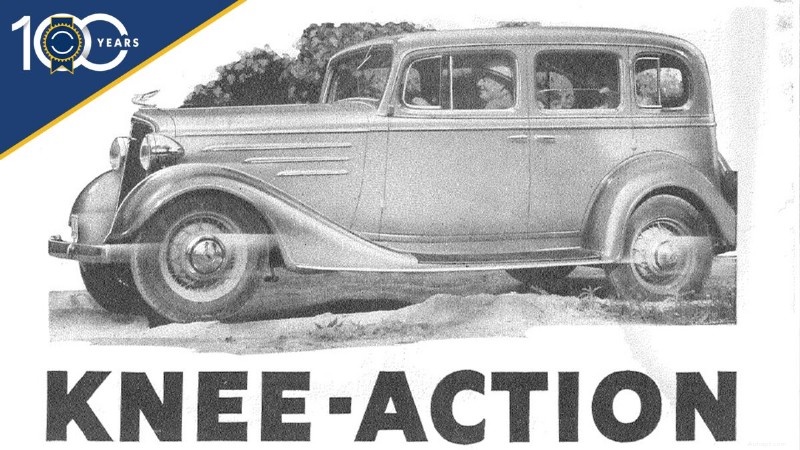
As verified by the GM Heritage Archive, in March 1933, engineers demonstrated two types of independent front suspension systems on Cadillac vehicles for executives from all five GM car brands (Chevrolet, Pontiac, Oldsmobile, Buick, and Cadillac). The winning design was introduced by French auto racer and aperitif heir André Dubonnet. This marked the birth of the Dubonnet system, also known within General Motors as “Knee Action.”
Knee Action was a new type of front suspension that used coil springs and control arms, enabling easier travel on the roads of the 1930s and paving the way for further advancements in driver control, safety, and comfort.
“The executives were impressed enough by the smoother ride to adopt the technology for the 1934 model year across GM divisions, with CEO Alfred P. Sloan and technical chief Charles F. ‘Boss’ Kettering reportedly backing the move,” according to the GM Heritage Archive. This early iteration of an independent front suspension replaced solid axle technology in passenger cars, and while it was relatively unrefined by modern standards, it pushed the automotive industry to adapt and continue improving automobiles as they moved into the 1940s.
Sam Staudt is an Oklahoma City-based automotive senior editor and seasoned content creator with a decade of crafting videos and a passion for anything with four wheels. He has worked alongside automotive giants, including Ken Block, Kevin Hart, Mario Andretti, Richard Petty, TJ Hunt, and Ryan Sheckler. He is an expert in leading creative teams to push the boundaries of artistic style while marrying it with functional information-based storytelling in the automotive space. When he’s not behind the camera or in the editing booth, Sam loves playing basketball and spending time with his wife, Cambry, and their two cats.
Simply choose the content you'd like to receive below and we'll send it straight to your inbox.
Newsletter
Get the latest news on the best cars, best deals, and more.
Sam Staudt Articles
Receive upcoming articles by this KBB.com expert.
Email Address
Invalid email address
Price cars, trucks and SUVs on KBB.com
