
Ford CEO Jim Farley isn’t pulling any punches lately. MotorBiscuit recently reported that Jim Farley has sounded the alarm on the “existential threat” of Chinese automakers. And while he was clear that allowing Chinese brands into the US would be “devastating” for American manufacturing, we wondered how much of Ford actually came from within the country.
As the Blue Oval pushes for 100% tariffs and federal protection to keep brands like BYD at bay, the comments on our social post were flooded with questions of where Ford products actually came from.
Ford currently comes first. It assembles more vehicles in America than any other manufacturer. According to Ford’s latest 2026 production data, roughly 83% of the vehicles they sell in the U.S. are assembled right here.
That’s a massive number, especially when you consider that they build more than 2 million units domestically every year. However, “assembled in America” doesn’t always mean “100% American parts.” Even the most patriotic pickup often relies on a global web of microchips and specialized components.
These do for the most part, however, comes from either Canada or Mexico, or from the US itself.
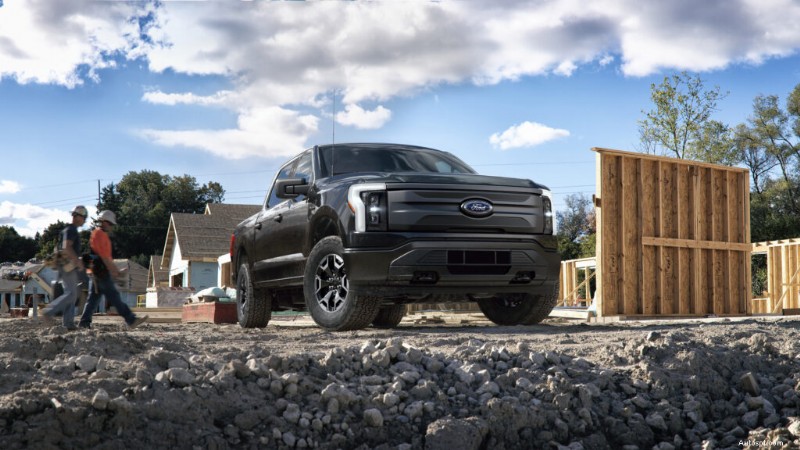 2022 Ford F-150 Lightning Pro. Pre-production model with available features shown. Available starting spring 2022.
If you’re looking to keep your dollars within the 50 states, these are the vehicles to go for. For the 2026 model year, these vehicles are the backbone of Ford’s domestic workforce:
Some of Ford’s most popular entry-level and high-tech models are actually imports from Mexico. If you’re driving one of these, your vehicle was likely born at the Hermosillo or Cuautitlán plants:
IIn 2025, Chinese giant BYD officially surpassed Ford in global sales, moving 4.6 million units compared to Ford’s 4.4 million. By using highly integrated supply chains and lower labor costs, Chinese brands can produce EVs for a fraction of what it costs in Detroit.
To counter this, Farley has pointed toward a secret “skunkworks” team within Ford that is developing a universal, low-cost EV platform. The goal is to create a mid-size electric pickup slated for 2027 that starts around $30,000.
Ford is arguably the most American of the Big Three when you look at raw assembly volume and domestic labor. If you want to buy American, sticking with the F-Series, Mustang, or Explorer is your safest bet.
However, as the industry moves toward EVs and smaller, affordable pickups, the “Made in the USA” label is becoming harder and more expensive to maintain.
