
“Deer in the headlights” is a popular idiom for good reason. Between July 2023 and June 2024, nearly 2 million animal collision insurance claims were filed in the U.S., with deer accounting for the majority, according to the Insurance Information Institute.
In 2023, 235 people were killed in car crashes involving animals, according to the latest stats reported by the Insurance Institute for Highway Safety.
Because Northeast deer populations have grown dramatically over the past few decades, deer crashes have been rising steadily.
Most deer-related crashes occur between October and December, close to sunset, when they feed. These months mark deer mating season, when the animals are more active, more aggressive and more likely to cross roadways.
Making matters worse, deer populations are growing at the same time animal habitats are being encroached upon and deer and other animals are being displaced by development. This not only increases the risk of deer collisions, but also means they can occur just about anywhere, including cities and suburbs.
“Extra vigilance is required to anticipate and avoid a deer darting into the roadway, especially during evening hours,” said Mark Schieldrop, senior spokesperson, AAA Northeast. “Deer are unpredictable and can appear in front of your vehicle suddenly and without warning. Remember, if you see one deer, there’s a good chance that more deer are nearby.”
Before you head out for your annual fall foliage road trips, study up on these tips to ensure you, your family and the wildlife stay safe.
Your chances of being injured in a deer crash are significantly higher if you don’t have your seat belt on.
Maybe the most obvious but undoubtedly most helpful step is to be on the lookout for deer crossing signs. These are your primary reminders to be on alert, use caution and, if necessary, reduce your speed.
Deer crossing signs, depicted with a leaping stag, are placed by local towns and highway departments in areas known for high deer activity and/or where deer collisions have occurred. They’re usually found along heavily wooded areas like parks and forests, as well as near water.
While we can never predict when a deer will jump out onto the road, we do know the time of day it’s most likely to happen. The animals are most active when they are grazing, which occurs during dawn and dusk. It’s also worth noting that because deer thrive during these hours, their eyes are well-adjusted to the dark, causing bright car headlights to temporarily blind them causing them to freeze in place.
Sunrise and sunset are also particularly difficult times of day to drive because the road may be dark, or the sun’s glare could be in your eyes.
It’s crucial to be particularly vigilant when you’re driving through deer country around these times. If possible, plan your travels for a different time of day.
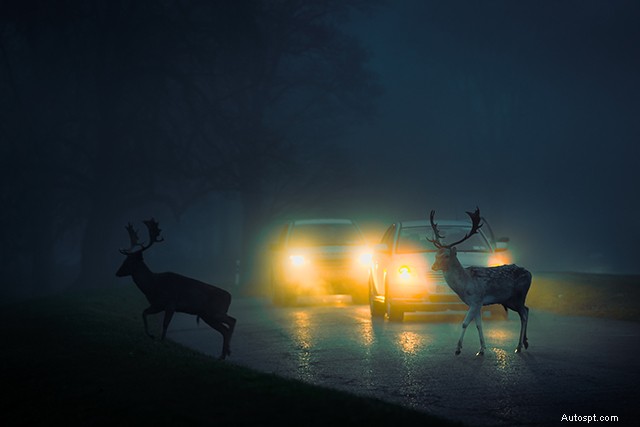
If a deer is in the road in front of your vehicle, you may be tempted to swerve around it. This, however, could make the situation much worse. Deer usually will move when they see a car coming, so swerving into another lane might just put you right back into the animal’s path. Additionally, you’ll increase the likelihood of losing control of your vehicle or crashing into another car.
Deer don’t want to see you any more than you want to see them. In fact, most large forest animals are actually quite timid and will run off at the first sight of a human. However, they may get too scared to flee and instead freeze in the middle of the road. When this happens, bring your car to a stop and give the animal a moment to move. If this doesn’t work, flick your headlights on and off a few times. Only use your car horn (in short bursts) as a last resort. The noise may cause a deer to get aggressive.
You’re driving down the highway when you spot a deer galloping across the road 100 feet ahead. You’ve avoided a potential collision and now you’re in the clear, right? Not so fast. Deer seldom travel alone. If you see one, there will almost always be others nearby. Once a deer crosses, check both sides of the roadway to make sure another one isn’t following.
If a crash occurs, move the vehicle to a safe location if possible and call 911. Then, contact your insurance company to report any damage to your car. Take photos of the damage if you can do so safely and without entering the roadway. Damage to the car from animal crashes generally falls under a driver’s comprehensive coverage.
This article has been updated and republished from a previous version.
Last updated on November 10, 2025 by AAA Staff
