
 1
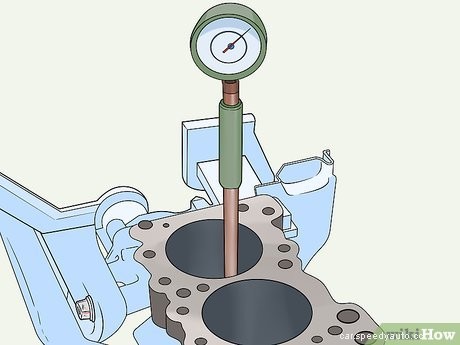
Measure the bore in centimeters. Use a bore gauge to measure the cylinder bore’s diameter. Remember that the diameter refers to the width of the cylinder. Write this number down so you can refer back to it later.
1
Measure the bore in centimeters. Use a bore gauge to measure the cylinder bore’s diameter. Remember that the diameter refers to the width of the cylinder. Write this number down so you can refer back to it later.
Tip: Many of the measurements you need are provided in the manufacturer specs. These numbers are more precise than the ones you’d get by measuring by hand, so check the specs first and only measure for the variables not listed.
 2
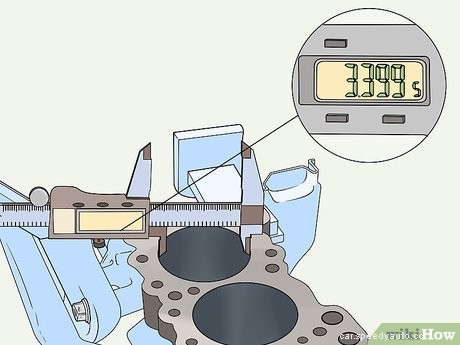
Find the stroke in centimeters. The stroke refers to how far the piston travels within the cylinder. If you don’t have the specs, measure this using a deck bridge and dial calipers.
2
Find the stroke in centimeters. The stroke refers to how far the piston travels within the cylinder. If you don’t have the specs, measure this using a deck bridge and dial calipers.
 3
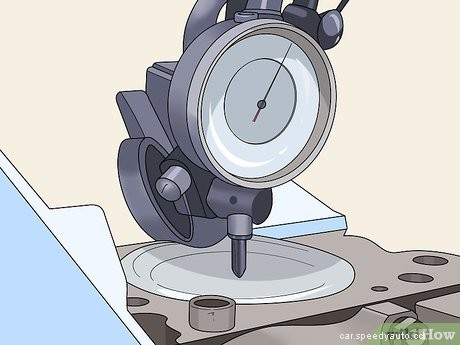
Determine the deck height in centimeters. Ensure the piston is at top dead center, then measure between the top of the cylinder and the flat surface at the top of the piston.
3
Determine the deck height in centimeters. Ensure the piston is at top dead center, then measure between the top of the cylinder and the flat surface at the top of the piston.
 4
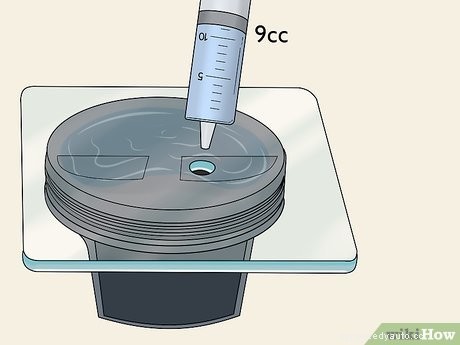
Figure out the piston top volume in cubic centimeters. Use the manufacturer specs for this one or look up the part number online to find the volume. Keep in mind that a piston with a dome takes away from the clearance volume, while a piston with a dish adds to the clearance volume.
4
Figure out the piston top volume in cubic centimeters. Use the manufacturer specs for this one or look up the part number online to find the volume. Keep in mind that a piston with a dome takes away from the clearance volume, while a piston with a dish adds to the clearance volume.
 5
Measure the head gasket volume in cubic centimeters. You may be able to find this information online or in the specs. If not, measure the sealing ring distance in inches and divide that by 3.1416. Square the answer then multiply it by the compressed gasket thickness in thousandths of inches. Take your answer and multiply it by 12.87 to find the head gasket volume in cubic centimeters.
5
Measure the head gasket volume in cubic centimeters. You may be able to find this information online or in the specs. If not, measure the sealing ring distance in inches and divide that by 3.1416. Square the answer then multiply it by the compressed gasket thickness in thousandths of inches. Take your answer and multiply it by 12.87 to find the head gasket volume in cubic centimeters.
 6
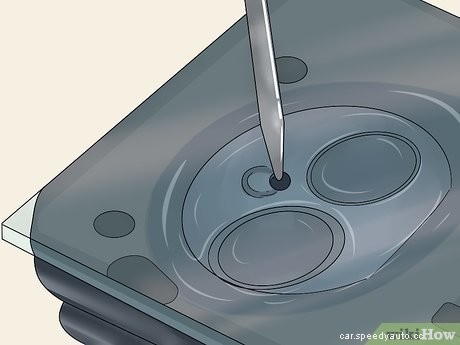
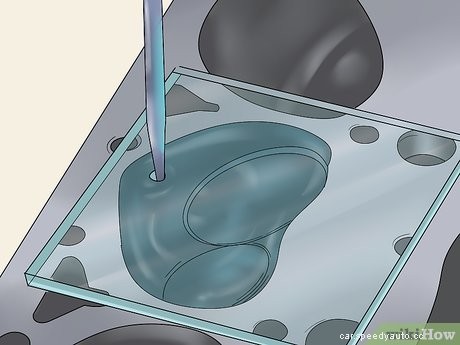
Determine the combustion chamber volume in cubic centimeters. Use the specs from the manufacturer to find this measurement. If you need to convert from cubic inches to cubic centimeters, multiply the number by 16.387.
6
Determine the combustion chamber volume in cubic centimeters. Use the specs from the manufacturer to find this measurement. If you need to convert from cubic inches to cubic centimeters, multiply the number by 16.387.
 1
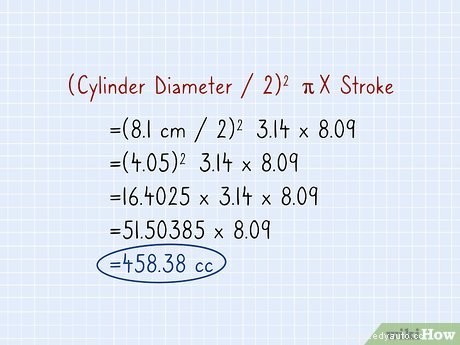
Use the formula (cylinder diameter / 2) x π x stroke to find the swept volume. Divide the cylinder diameter by 2. Then, square the result and multiply it by π, which is 3.14. Finally, multiply the result by the stroke to determine the swept volume of the engine.
1
Use the formula (cylinder diameter / 2) x π x stroke to find the swept volume. Divide the cylinder diameter by 2. Then, square the result and multiply it by π, which is 3.14. Finally, multiply the result by the stroke to determine the swept volume of the engine.
Tip: If you don’t want to do the math by hand, search online for a compression ratio calculator.
 2
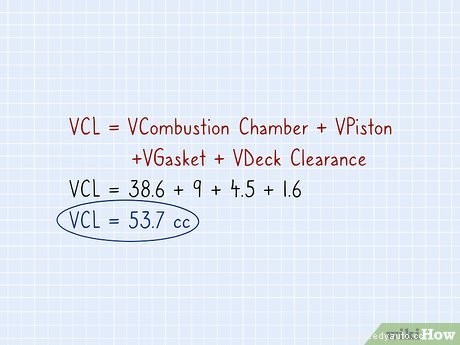
Find the clearance volume using the formula Vcombustion chamber + Vpiston + Vgasket + Vdeck clearance. Simply add the volume of the combustion chamber, the piston top volume, the gasket thickness, and the deck height or clearance.
2
Find the clearance volume using the formula Vcombustion chamber + Vpiston + Vgasket + Vdeck clearance. Simply add the volume of the combustion chamber, the piston top volume, the gasket thickness, and the deck height or clearance.
 3
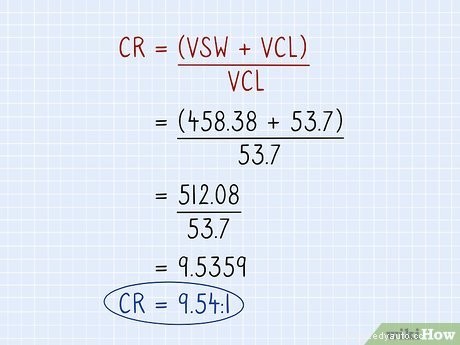
Plug your numbers into the formula CR = (Vsw + Vcl) / Vcl. Now that you know the swept volume and clearance volume, simply insert those numbers into the formula and solve it. Add the swept volume and cylinder volume together first. Then, divide the result by the cylinder volume to find the compression ratio.
3
Plug your numbers into the formula CR = (Vsw + Vcl) / Vcl. Now that you know the swept volume and clearance volume, simply insert those numbers into the formula and solve it. Add the swept volume and cylinder volume together first. Then, divide the result by the cylinder volume to find the compression ratio.
