
Automatic emergency braking (AEB) became available as an option on vehicles more than a decade ago. It was first offered in luxury cars but is now available as standard equipment on entry-level models as inexpensive as the Toyota Corolla. Soon it will be on all vehicles.
The Corolla includes forward collision warnings in its comprehensive safety bundle.
Automatic emergency braking is also effective in combination with a pedestrian detection system, such as when a pedestrian crossing the street is paying more attention to a smartphone than traffic. This technology has a self-explanatory name. Nevertheless, if you’re buying a car with this feature, you might be wondering what it is, what it does, and how it works.
In this article, we’ll cover the following details about automatic braking:
Automakers created automatic emergency braking to stop or slow a vehicle before it hits an object in its path. When sensors or cameras detect an object ahead, they determine whether the car is closing in too fast. It then needs to establish that the driver is taking no action to slow or stop the vehicle. If so, it automatically activates the brakes.
Some systems work only at lower speeds, helping to prevent fender benders in traffic. Others work at higher speeds, slowing a vehicle before an impact to reduce injuries and even prevent fatalities. Some react to pedestrians, cyclists, and animals, while others don’t. Increasingly, automatic braking is available when reversing, too.
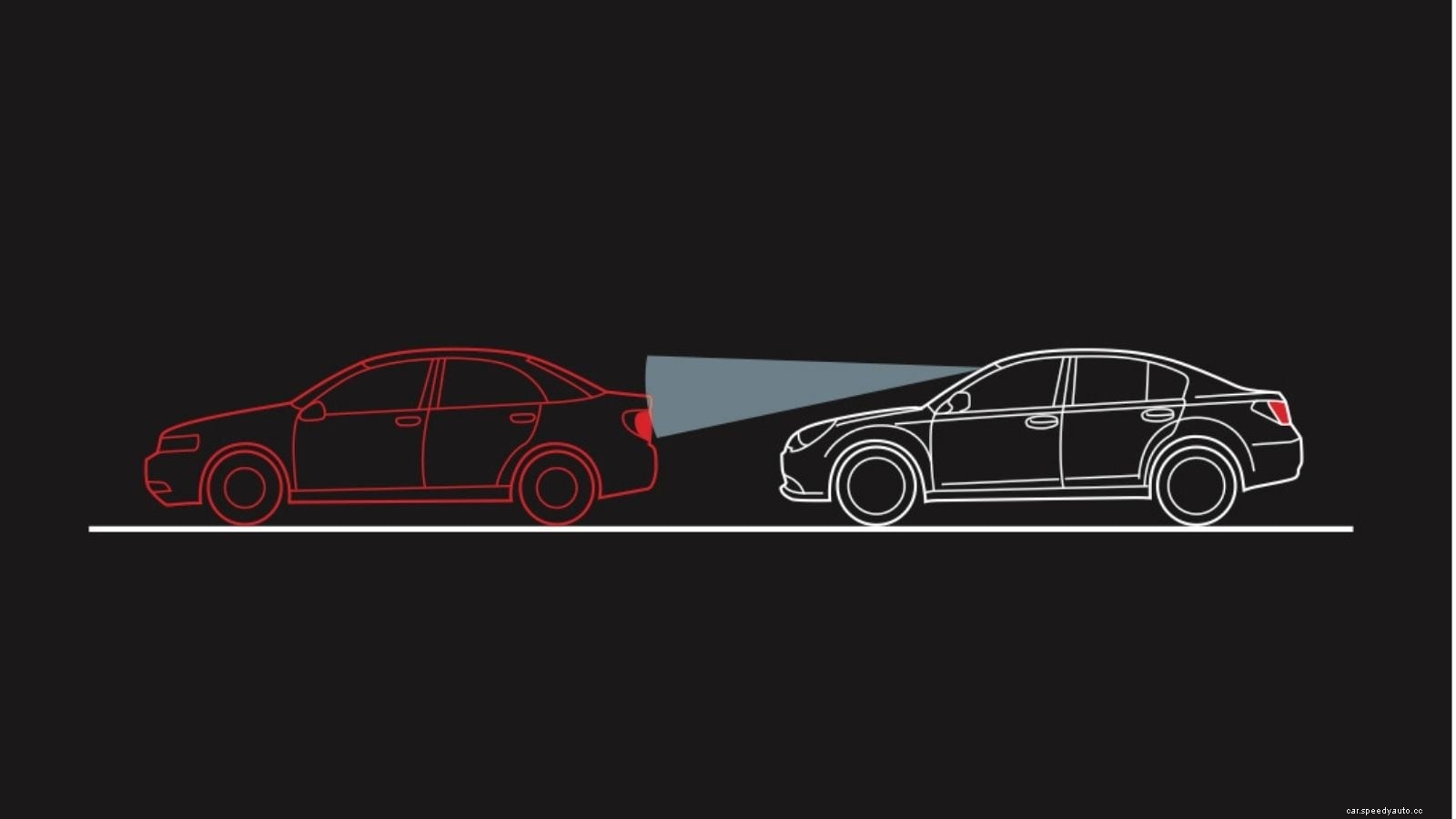
Forward collision warning goes hand in hand with your car’s automatic braking system. This system works using the front cameras to alert you visually or with a sound if there is a possibility of getting into a collision. Whether the car in front of you stopped abruptly or you waited too long to step on your brakes, this system will notify you of an impending collision. While all systems work differently, many work with the ABS (antilock braking system) and will slow or stop your car in the event of a potential forward collision.
Like forward collision warning, reverse emergency braking is a safety feature to prevent accidents. We’ve all been there. You back out of a grocery lot parking spot, and another vehicle is coming directly in your path. When that happens, this safety feature stops your car automatically if another vehicle is behind you while backing up. All systems will not automatically brake for you, but a warning alert will chime at the minimum.
Depending on the system’s design, automatic emergency braking relies on cameras, radar, or other sensors. When these technologies identify an object and the potential for a collision with it, they automatically activate the braking system.
These systems do not guarantee that you’ll avoid a collision. Instead, they will try to stop your vehicle in time under typical situations. At a minimum, they slow your vehicle to reduce the severity of the impact.
It is also important to remember that the technology works only when the camera, radar, or sensors can identify objects. Bright sunlight, heavy rain, caked-on snow, darkness, and other variables affect automatic emergency braking operation.
Therefore, it is not a replacement for attentive driving. Instead, it is a safety net.
RELATED STORIES: KBB’s Best Safety Rated Cars
Sometimes, this technology will activate when perceived threats are not real. In such cases, sudden braking is usually momentary. However, when this happens, it can rattle a driver’s nerves.
Occasionally, the system will falsely identify a vehicle in an adjoining curved lane as an obstacle and trigger full braking power. Dappled sunlight and reflections from signs can also momentarily trigger activations. These false positives are usually harmless — but underline the importance of remaining alert behind the wheel.
While imperfect, automatic emergency braking is nevertheless an important safety feature.
If you suspect something amiss with your automatic emergency braking system, see what it will cost using our Service and Repair Pricing Guide. Then, find the closest automobile shops and schedule a visit to have the work done.
You will find automatic emergency braking in most new cars for a good reason. It is a safety feature that can save lives. Despite random malfunctions, the safety feature is spoken very highly of by the Insurance Institute for Highway Safety (IIHS), an independent, nonprofit scientific and educational organization.
In 2019, their study concluded a 50% reduction in front-to-rear collisions for vehicles with automatic emergency braking. It also identified a 56% decrease in injuries for these types of collisions. As for the reverse automatic braking systems, there was a 78% decrease in crashes compared to cars with only a reverse camera.
