
We’re not going to lie. This whole airbag business is one insanely frustrating subject to cover. For being such a successful protector of human life, airbags get a shit-ton of heat, regardless as to whether they deploy in a dangerous manner, refuse to deploy at all, or do so in textbook form.
There’s good reason for this resentment toward airbags, we get that. Despite all of the advancements in adaptive and semi-autonomous technological safety standards, properly functioning modern generation airbags cut, burn, bruise, and break our body parts. Car crashes can be an insanely violent event, with an endless number of potential variables influencing the outcome. But despite the dangers, most people would much rather run the risk of being injured by an airbag, than not have one at all during a collision.
Which leads us to a question that focuses on the other side of this scenario: What happens to cars with deployed airbags? Is it safe to drive these vehicles as long as they are properly fixed, receive fresh airbags, are not labeled as “totaled,” and receive one of those nifty little free car cleaning coupons in the glove box?
Or is it best to take the safe bet, and stay away from automobiles with deployed airbags, even after they have been repaired? Today, we’ll be answering these, and many more airbag oriented questions, as we explore the ever expanding subject of saving one’s skin.

On October 23, 1971 Mercedes-Benz was granted a patent for a new system affording car occupants protection in an accident: the airbag. The development of this new safety feature had already been initiated at Mercedes-Benz five years beforehand, in 1966, and practical tests had been carried out since 1967. Encouraged by successful trials (including a total of 250 crash tests and around 2,500 trial runs on the crash sled), the Board of Management of the then Daimler-Benz AG resolved in 1974 to further develop the airbag to series maturity.
At the Geneva International Motor Show, Mercedes-Benz finally presented the new safety system in the S-Class from the W 126 series; and as of July 1981 it was available as an optional extra – originally for the driver only – for this luxury sedan. No less than 2,636 S-Class buyers decided in favor of the airbag in the first year alone. These pioneering concepts would hardly be possible today without the master achievements of the engineers of yesteryear – and one such concept is the airbag. Since the patent was issued in 1971, the airbag has saved the lives of thousands of people involved in road accidents.

By this point in history, it’s pretty common knowledge that airbag systems are designed to work alongside seat belts, in order to first withstrain, and then “buffer” a vehicle’s occupants. While seat belts engage only when a sudden stop is detected, airbags rely upon a series of sensor-based signals. Modern airbags not only rely upon information gathered regarding things like velocity and impact position, but occupant weight, seating position, braking patterns, and more.
According to the NHTSA, “Airbags are supplemental protection and are designed to work best in combination with seat belts. Both frontal and side-impact airbags are generally designed to deploy in moderate to severe crashes and may deploy in even a minor crash.”
The government goes on to say that while “…air bags reduce the chance that your upper body or head will strike the vehicle‘s interior during a crash. To avoid an air-bag-related injury, make sure you are properly seated and remember-air bags are designed to work with seat belts, not replace them.”
In order for an airbag to safely work at its full potential, CARFAX recommends that drivers always do the following:
Quick Nerd Note: Frontal airbags have been a mandatory safety equipment staple in passenger cars since model year 1998, with in all SUVs, pickups, and vans following suit a year later, in 1999. Nowadays, airbags are no longer just a steering wheel and passenger dashboard safety addition. From side airbags (SABs) being stuffed inside door pillars and within the bolsters of leather car seats, to overhead airbags dropping out of headliners, the number of buffering options has grown exponentially since mandates were set in place.

Kids are short, it’s one of the many reasons why they are so adorable, and in occasionally, in grave danger. There’s a reason why all government safety agencies agree that children should never be allowed to ride (or drive for that matter) in the front row of a motor vehicle. Not only is an airbag’s force strong enough to snap underdeveloped necks, but as we just mentioned, height should always be taken into consideration with frontal airbags.
“From 1987 to 2017, frontal air bags saved 50,457 lives. That’s enough people to fill a major league ballpark.”
-NHTSA
A good rule of wrench here is to boot anyone shorter than 5-feet (152.4 centimeters) into the backseat for safety purposes. While this may be a tough pill to swallow for those of you who are-ahem-vertically challenged, it is a common fact that one’s height can negatively affect an airbag’s performance. Remember that part about angling your steering wheel downward so that it faces your abdomen, and not your face? Well that steering column will only go down so far. Now we’re not saying that everyone who is 5-feet flat should be mandated to ride in the rear of an automobile. Just know that there are significant dangers involved with riding up front, and a person’s height directly correlates to these risks.
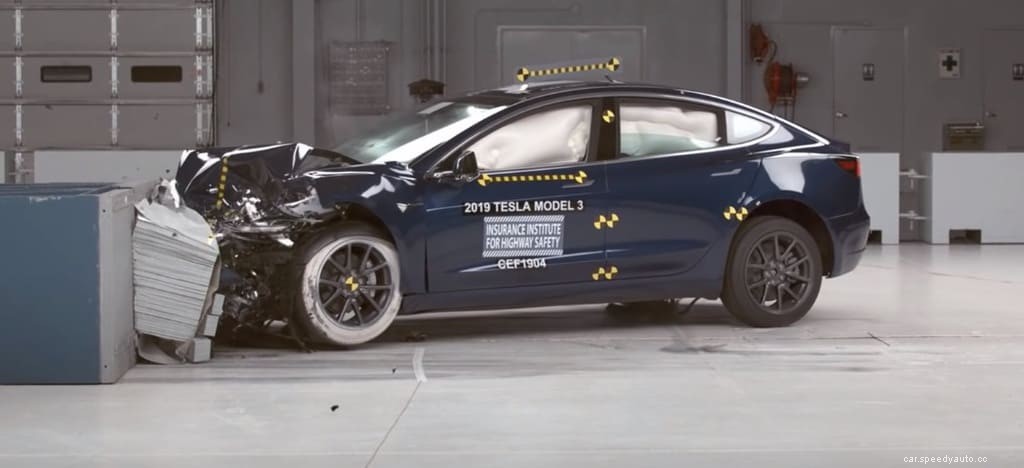
The easiest way to see if a vehicle has ever deployed its airbags (outside of recognizing the obvious odors is by going to the CARFAX website, and running a free airbag check. While this won’t flag all incidents, anytime there is an accident that is significant for police interaction, chances are it will end up on a CARFAX report.
But before we get into all that business, let’s go over a few airbag basics. Protecting a vehicle’s occupants goes well beyond safety equipment, and the more you know, the greater your chance of making safe driving (and buying) decisions.
“Once deployed, an air bag – whether advanced frontal or another type – cannot be re-used and must be replaced by an authorized service technician without delay.”
-NHTSA
When airbags have been deployed, they must be replaced. The same goes for when a vehicle has been submerged in a body of water or stuck in a flood. This not only helps ensure that the safety device is in good working order, but to alleviate the risk of car fires and prevent mold and mildew from developing.
While the risks associated with an automotive fire or black mold are definitely considerable, the risk of having a defective airbag unexpectedly deploy, or not deploy at all, remains a real risk when buying a used automobile. Reports of scams highlight auto shops charging customers or an insurance company full price for a new airbag and then either installing a B-grade knock-off, or tricking the ECU into thinking a new airbag has been installed, when in fact there isn’t even one on board the vehicle.

While the notion of rolling around in a vehicle with previously deployed, or inoperable airbags can be disconcerting to car owners, it is a real threat to unsuspecting used car buyers. These people have no idea that the vehicle has even been in an accident in the first place, ,making them prime targets for sneaky salespeople.
While the Takata recall is easily the largest, and arguably most nefarious airbag fraud scheme in human history, swindlers are quick to make an extra buck any way they can, so buyer’s should always be wary.
Even with an honest affirmation from the seller that the vehicle in question has had an airbag or two replaced, there’s still a chance that the owner is just trying to boost the car’s resale value, and has swapped the deployed unit with a knock-off.
“Counterfeit air bags have been shown to consistently malfunction in ways that range from non-deployment to the expulsion of metal shrapnel during deployment.”- NHTSA
So if you believe that you may have purchased a counterfeit airbag from an online retailer within eBay, it will probably be covered by their “Buyer Protection” program. So contact eBay’s Customer Support center for information, and then hit up your local Consumer Protection Agency to see what your rights are regarding this issue. You can also file a complaint with the Better Business Bureau or the Federal Trade Commission, which is particularly important when deceptive techniques have been used to make you believe the airbag in question was a genuine item.
While it is not illegal to swap an undeployed airbag into a vehicle, unused original equipment straight from the manufacturer is always the safest option. If you choose not to go this route, or are having an OEM airbag installed by a shop that is not a new-car dealership specializing in your brand of automobile, keep the following advice in mind.
Quick Nerd Note: Ever wonder what that little annoying SRS light is that stays illuminated all the time? SRS stands for supplemental restraint system, which directly correlates to a vehicle’s airbags. If it’s on or blinkinking, you should probably go get your vehicle’s safety equipment inspected, ASAP.
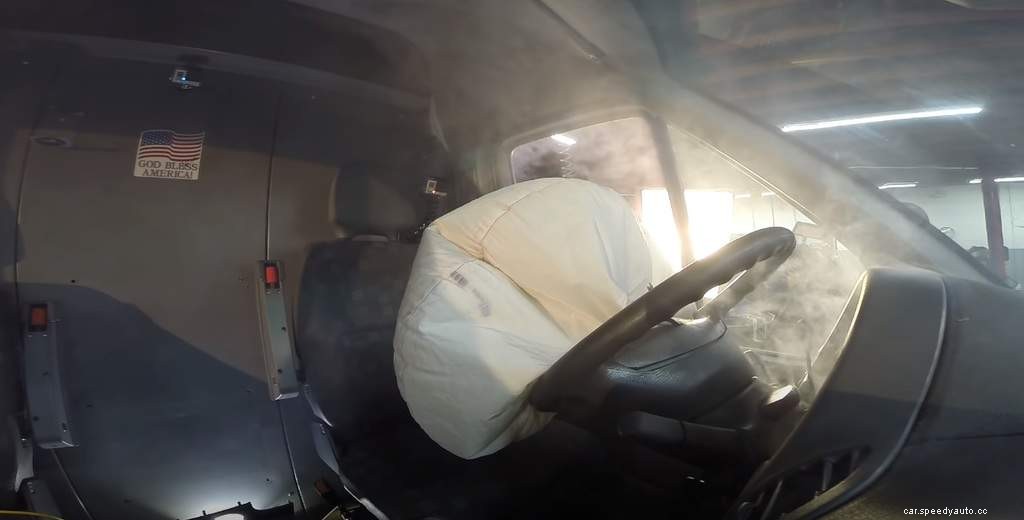
That said, there are steps that a potential used car buyer can take to protect themselves from airbag fraud, and determine whether or not a vehicle has been in an accident.
Quick Nerd Note: While the thought of stealing airbags may sound like a fool’s errand, it is worth noting that newer OEM airbags can run well over $1,000 USD a pop. This makes airbags a surprising target for car thieves, as even a parked car can fall victim. Hell, there have even been reports of shady repair shops swiping air bags during a routine repair, just to sell them online.

As the fallout from the Takata airbag defects recall hits the 67 million vehicle mark in the United States alone, The National Highway Traffic Safety Administration (NHTSA) has this to say.
All vehicle owners should:
Certain Takata airbags pose more of a risk than others too, with 2001-2003 Honda and Acura vehicles, and both Ford Rangers and Mazda B-Series trucks from 2006 being the most deadly.
Quick Nerd Note: In a moderate to severe crash, a signal is sent from the air bag system’s electronic control unit (ECU) to an inflator within the air bag module. An igniter in the inflator starts a chemical reaction that produces a harmless gas, which inflates the airbag in less than 1/20th of a second.
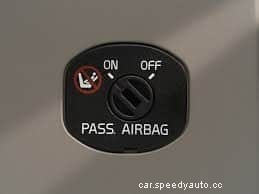
While it is exceedingly rare, there are circumstances when deactivating a frontal airbag is necessary, at which point the NHTSA has the sole authority to authorize the installation of an airbag “ON-OFF” switch.
Authorization for these switches are typically granted for the following reasons:
Note that only authorized dealers and repair shops can install ON-OFF airbag switches, and only after receiving an authorization letter from NHTSA.
In order to do so you will need to:
Quick Nerd Note: Side-impact airbags inflate even more quickly than frontal airbags. This is because there is typically less space between the driver and/or passengers, and whatever it is the vehicle is about to strike, or be struck by.

When it comes to automotive airbags, erring on the side of caution is always your safest bet. This is why taking the vehicle to a new car dealership is the way to go. Go ahead and cut corners in other areas. But when it comes to complex equipment that could potentially save your life, or the life of the occupants within a vehicle, taking all of the necessary precautions outweighs the initial sticker shock associated with OEM parts and services.
