
Following too closely to other cars – known as tailgating – is one of the biggest causes of road accidents in the UK and it could result in failing your driving test too.
Whether you're new to driving or have years of experience, knowing your stopping distances is a crucial part of staying safe on the roads, here we'll explain what they are, what affects them and how best to remember them.
It's first worth noting that a stopping distance = thinking distance + braking distance.
The following stopping distances relate to an average sized family car in normal weather conditions, however, it is also worth mentioning that a number of other factors can affect the stopping distance of a car (which we have outlined below).
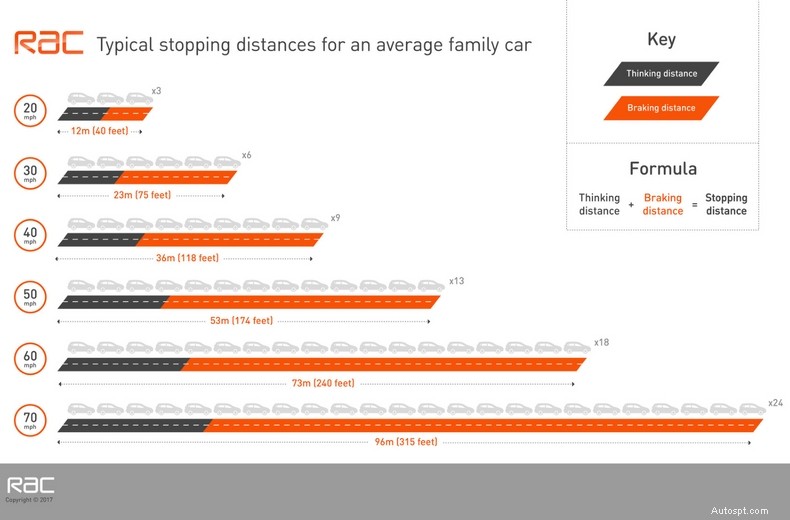
Unsurprisingly, the faster a car is travelling, the longer it takes to stop.
Travelling at 40mph rather than 30mph means it’ll take an extra 13 metres (more than three car lengths) to come to a stop – think about that next time you consider breaking the 30mph speed limit.
Stopping distances are can be split into two main categories: the thinking distance and the braking distance.
