
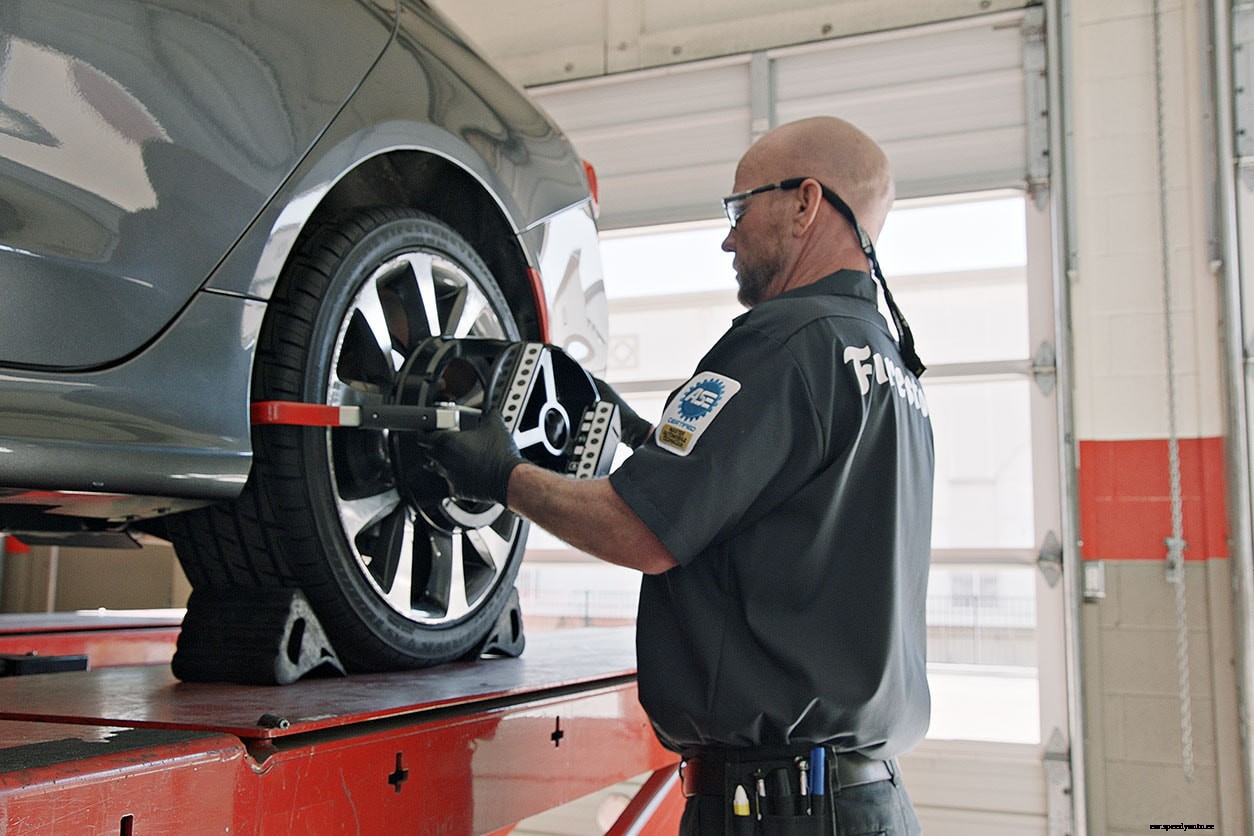
The yoga studio isn't the only place where you'll hear the words "balancing" and "alignment." You'll also hear these words mentioned when you take your car in for service.
But what do balancing and alignment mean off the yoga mat? Both contribute to a smoother ride, but tire balancing and alignment are different services. A tire balance corrects the weight imbalance on your tire and wheel assemblies, while an alignment corrects the angles of the tires so that they come into contact with the road in just the right way.
If you’re wondering, “What is wheel alignment?” or, “What does tire balancing mean?” it’s time to dive deeper into your car care practice. Learn the difference between the two today.
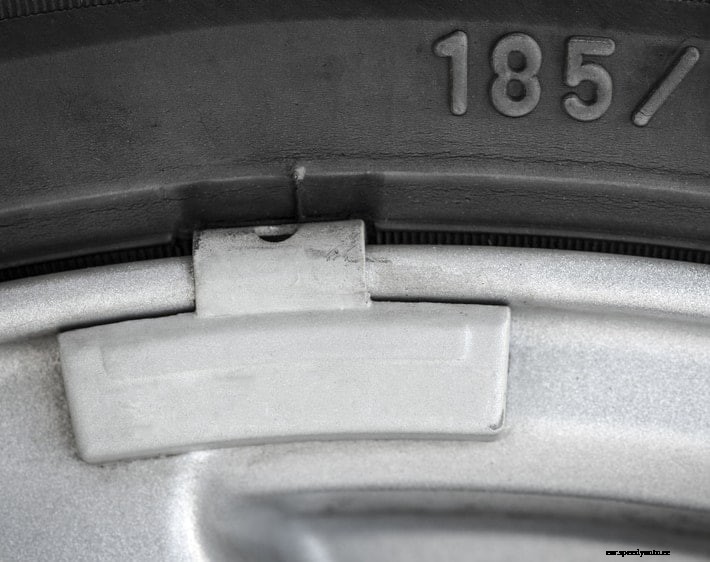
Tire balancing (also known as wheel balancing) corrects uneven distribution of weight
in the wheels. Imbalanced wheels can lead to vibration, excessive tire wear, damage tothe suspension, and other problems.
During a tire balance service, your tires and wheels are mounted onto a tire balancing machine. The machine spins the tire and wheel assembly to measure the imbalance, so that a technician can precisely install the correct tire weights to achieve a properly balanced wheel and tire assembly. Often, wheel balancing and alignment happen during one service, but they shouldn't be confused for the same thing!
Uneven tire wear and vibration in your steering wheel, floorboard, or seat can signal it's time for tire balancing. You may also want to have your tires balanced during a tire rotation, after a flat tire repair, or as part of your scheduled maintenance.
Interestingly, the part of your car that trembles can indicate whether the front or back wheels need balancing. If it's in the steering wheel, it’s likely your front tires. If it's in the seats, the imbalance is in the back wheels.
Tires can become out of balance because of uneven tire wear or the loss of a wheel weight because a rim hits a curb or pothole. If you leave your car parked for extended periods without moving it, the tires might develop flat spots that cause imbalances.
Wheel alignment (also known as tire alignment) refers to an adjustment of a car's suspension — the system that connects a vehicle to its wheels. It's not an adjustment of the tires or wheels themselves.
Alignment keeps your car from veering to the right or left. It also can improve the handling of your vehicle and stop unusual on-the-road vibrations.
Your vehicle might need an alignment if you notice any of the following:
Your alignment can get knocked out of whack after being in a car accident, driving over a pothole, or running into a curb.
The most significant benefit of balancing services is that they prevent premature tire tread wear. Technicians agree that getting your tires balanced every 5,000 to 6,000 miles (or as recommended by your manufacturer) can help extend their lifespan and improve their performance.
Wheel alignment benefits, on the other hand, include improved vehicle handling, fuel efficiency, and tire life. Firestone Complete Auto Care recommends that you have your vehicle's alignment checked every 6,000 miles or twice a year. Left untreated, alignment issues can shorten a tire's life by thousands of miles, and they can damage critical steering and suspension components.
Are you noticing symptoms of balancing and alignment issues in your car? Don't let them disrupt your flow. Schedule an appointment at your nearest Firestone Complete Auto Care for a zen-like ride that’s both relaxing and reliable.
