

Your car’s tire pressure monitoring system (TPMS for short) is the “voice” of your tires that sometimes speaks up and says, “Check my air, please!” But because not all cars can talk (yet), that urgent request is communicated to you through warning lights on your dash. If there’s an angry-looking light on your dashboard console and you don’t know what it means, read on. It may not even be that big a deal to fix yourself.
My Tire Pressure Light is Solid Yellow
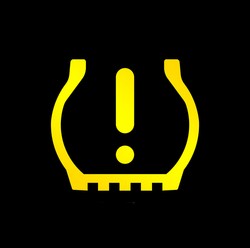
This happens when the pressure in one of your tires is either too low or too high. Therefore, the solution is to check the pressure on all your tires. Pain in the neck, right? But it’s better than getting stranded by the side of the road or having a blowout. Pop open your driver’s side door and read the silver plate that you’ve probably glanced at a million times. You’ll find it’s full of helpful information like the recommended air pressure for your tires. Compare what’s there with your actual air pressure. If you’re low, pump it up. If you’re high, bleed some of the air out. While you’re at it, don’t forget your car may also have a sensor attached to the spare tire, so check that one too.
My Tire Pressure Light is Flashing Yellow
A flashing yellow light means your car’s computer system isn’t communicating with one or more of the air pressure sensors. This could be the sign of dead batteries within the sensors themselves, which typically last between 7 and 10 years. Regardless of your vehicle’s age, it’s time to have your TPMS checked out.
Don’t Ignore the Light!
Getting your car worked on is an inconvenience, but you’ll save money in the long run by ensuring your TPMS is working. Sensor replacements can range from $50 to $100, while typical tire leak repairs can vary from $10 to $30 depending on the type of repair needed. Although it may sound cheaper to just get your flat tire fixed, not all tires can be repaired—and the longer you drive on a low or overinflated tire, the sooner you’ll have to replace it, and tires aren’t cheap.
If your tire pressure light is making angry faces, your next step should be a repair shop. With Openbay, you can pull up a list of qualified repair locations near you, get an estimate on cost, ask questions, and even make an appointment without picking up the phone.
Written by Rob Grant, Automotive Service Manager at Openbay. Rob is an ASE Certified Technician and frequent contributor to this blog, specializing in all things automotive service and repair.
Why TPMS Lights Are Such a Pain in the You-Know-What
5 Facts You Didn’t Know About Your Vehicle’s Tires
The Importance of Keeping Track of Your Car or Truck’s Tire Pressure
