
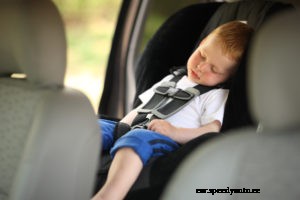
 How many times have you decided to stop at the grocery store on the way home from work, only to get all the way home and realize that you never made the stop? Sadly, spur-of-the-moment grocery store trips aren’t the only things that get forgotten. Every year, children are forgotten in hot cars and die from heat stroke due to extreme temperatures in the vehicle.
Although it’s easy to think that parents who would leave their child in a hot car must be negligent or unloving, it’s actually pretty easy to do. Research has even been done to determine how and why it’s possible.
Dr. David Diamond of the University of South Florida studied the interaction between the brain, stress, and memory. His research showed that there are 2 types of memory that affect how we do things. “Prospective memory” which helps us plan what we’re going to do in the future, and “habit memory” which helps us remember what we’ve done repetitively and frequently in the past. When the 2 compete with each other, especially during times of stress or sleep deprivation, the “habit memory” almost always wins.
For example, “prospective memory” would help you plan to drop your child off at daycare on your way to work. If your child falls asleep in the back seat and is out of sight and mind, “habit memory” takes over. When this happens, it allows you to drive straight to work without remembering the necessary stop along the way. Your child then gets left in the car and could be at risk for heat stroke.
With a clear understanding of the problem and a little education, child deaths from vehicular heat stroke can be prevented by following these simple tips:
Help us get the word out about vehicular heat stroke and together, we can make a world of difference.
