
One of the most common procedures performed on a vehicle is an oil change. Whether you are a DIY’er who will perform this on your own or someone who would prefer to have this done by a professional, choosing the correct oil is essential. There are many and more choices when it comes to oil. This article will discuss the similarities and differences between 5w30 and 5w40.
Table of Contents
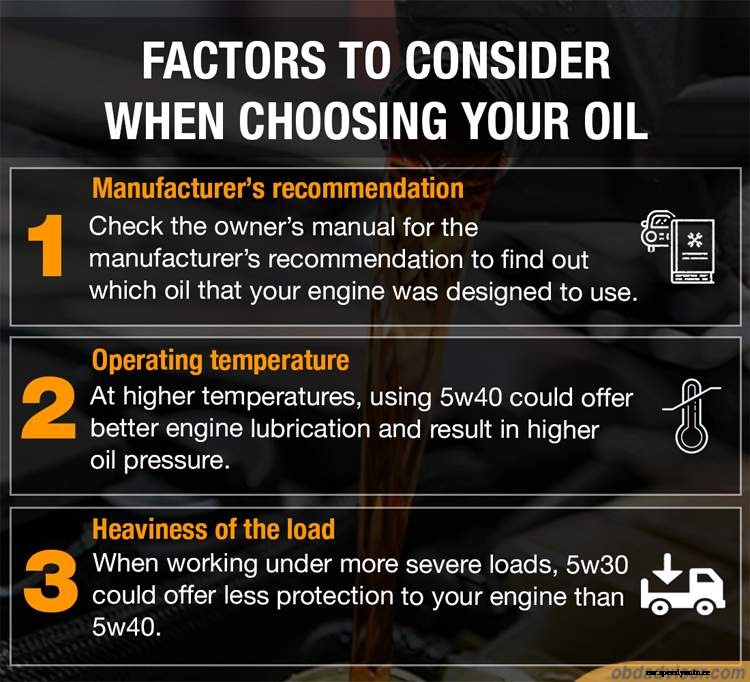
When considering which engine oil to choose, there are several important factors to consider. First and foremost, check the owner’s manual for the manufacturer’s recommendation. This type of oil is the one that will work best, as it is what your engine was designed to use.
Another factor to consider when choosing between 5w30 and 5w40 is the temperature that the oil will be operating in. 5w40 will remain thicker at higher temperatures than 5w30, which could offer better engine lubrication at these temperatures and result in higher oil pressure.
Also, how heavy of a load the engine will normally operate under should be considered. 5w30 and 5w40 will have the same viscosity and protection level while cold, but when working under more severe loads, 5w30 could offer less protection to your engine than 5w40. 5w40 will remain more viscous than 5w30 and help retain oil pressure when under a hefty load.
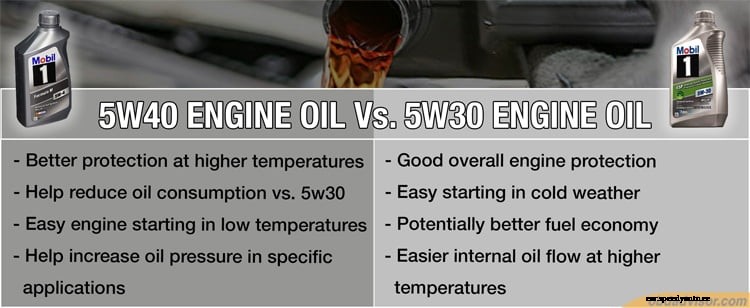
Some features of 5w40 engine oil are:
Some features of 5w30 engine oil are:
Bonus: Metal shavings in oil: Why? When is it time for action?
5w30 and 5w40 engine oils have some similarities:
There are a few critical differences between 5w40 and 5w30 motor oil.
In most applications, using 5w40 instead of 5w30 is perfectly acceptable. Likely, you will not notice any difference in a healthy engine. Most late model cars and trucks use variable valve timing and lift controlled by engine oil pressure. On these cars, it is essential to use whichever viscosity the manufacturer recommends, as different thicknesses can affect oil pressure, thus affecting how these systems function.
On older cars and trucks that don’t have these technologies, the two oils are basically interchangeable.
It is a best practice not to mix engine oils of different viscosities. In the short term, it will not cause any engine damage, so topping up a car that is low on oil with a different viscosity is acceptable. However, it will help if you don’t use it in the long term. I would recommend getting the oil changed and filled with whatever oil the manufacturer calls for as soon as possible to avoid any potential damage.
As with everything vehicle-related, it is best to follow your owner’s or service manual’s recommendations. You should take extra care when selecting an engine oil if your car is equipped with VVT because oil pressure differences affect this system. But overall, if your vehicle calls for 5w30, but it is not available, or you don’t want to spend the extra money, 5w40 will be a suitable alternative.
10w30 Vs 5w30: Can I Use 10w30 Instead Of 5w30?
Find a suitable Scan Tool for your vehicle with our search tool.
