
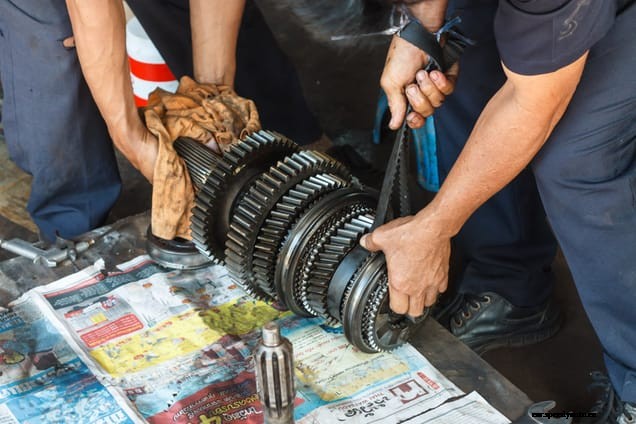
Most drivers know that the transmission is the component in their car or truck that shifts the gears. A car’s automatic transmission changes gears automatically for the driver while the car is in motion. However, in a car with a manual transmission, the driver must press a clutch pedal to unlock the gears and then change one gear into the next by moving a gear shift inside the car manually.
The most common type of automatic transmission uses a hydraulic system that locks and unlocks a series of gears as the car shifts for you. Manual transmissions operate with a friction clutch.
Beyond those basic facts, it’s often left up to a local transmission shop to service the vehicle’s transmission. A mechanic experienced in working on transmissions is the best choice you can make.
But first, it’s up to you to make sure it is maintained properly to avoid a costly transmission repair.
Most drivers know the two main types of transmissions: Automatic and manual. But there are two more. And to properly maintain your own car’s transmission, it’s important that you know which one it is.
This transmission shifts through the gears for the driver using a torque converter, gearset, and clutches or bands. However, some automatics give the driver some manual control when needing additional power for upshifts and downshifts. This is sometimes called a shiftable automatic, Tiptronic, or AutoStick.
In this type, the driver selects the gears manually by using a gear selector and clutch. It is also called a stick shift or standard transmission. There are many advantages to manual transmission because it’s cheaper and easier to repair than an automatic one.
The automated manual uses a mechanical clutch, but the action is not controlled by the driver pushing the clutch. It is automated through electronic or hydraulic controls. Another name is direct shift gearbox or sequential manual gearbox. It allows for fully automatic forward gear shifts through the gear selector or buttons or paddles on the steering wheel.
The continuously variable transmission (CVT) has a continuously variable drive ratio. There are no stepped gears. The purpose is to maintain steady acceleration without pauses for gear changes. This keeps the engine at its highest power range, which increases efficiency and gas mileage.
One of the most common questions by vehicle owners about their transmission concerns changing the fluid. It isn’t a system that many drivers pay much attention to until it’s too late. Allowing your car to run low on transmission fluid can cause improper shifting, or it can stop shifting altogether. Here are some things to remember so that your car’s transmission stays in good working order and keeps you on the road!
Automatic transmission fluid is purposely made in bright colors so that you can tell the difference between this fluid and engine oil. Transmission fluid is often red but is now also created in blue/green, purple, or amber. It’s important to know what you are looking at as you work to keep your car and all its systems in top working order.
An obvious question is if this fluid needs to be changed like engine fluid and how often. Get that owner’s manual out again! That is your best source to check first. But remember, transmission fluid should never burn off like engine oil does. Any leak that is a red (or another bright color) puddle under your car points to a transmission leak, usually under the middle or front of the vehicle. Then, your car will need the system checked for leaks and the fluid replenished.
The intervals for changing the transmission fluid do vary a great deal. Some vehicles might need a fluid change at 30,000 miles, while others won’t need that service until 100,000 miles. So, a fluid change might be necessary if you keep a car for an extended period or if you purchase a used car that already has high mileage on it. But if you tend to change cars regularly, you may never need a transmission fluid change.
Some newer cars have fitted automatic gearboxes. The transmission is sealed almost completely, and the fluid is meant to last the lifetime of the car. However, some CVTs do need the fluid changed.
So, changing the transmission fluid can be a confusing issue for vehicle owners. If you add this maintenance check to your other regularly scheduled service visits to BRAKEmax, you will have it covered! Getting the fluid checked will cost much less than getting the transmission repaired or even replaced simply from neglect.
Keep in mind that transmission fluid doesn’t normally burn off. Its job is to keep the mechanical parts cool and lubricated, whether the transmission is manual or automatic. If any parts become damaged or worn down (which is where the 100,000-mile standard comes in), the fluid can become contaminated. A flush would then be necessary.
Otherwise, the only way for transmission fluid to get low is for the car to develop a leak, which would then need to be fixed. That could involve a flush. Or maybe a recall involving the transmission is issued for your vehicle. The fluid might be flushed during the process of addressing the recall specifics.
And, just to be clear, there is a difference between draining and refilling the fluid and doing a power flush. The power flush needs to be done infrequently because it can dislodge sludge and other particles that can contaminate the clean fluid. But whether it is a drain or a flush, follow the directions and frequency recommended in your owner’s manual. If this is done too often, you are simply spending time and money that isn’t necessary.
Yes, manual transmissions use fluid, too, although the fluid needed can differ from car to car. Make sure you are using the right kind for your car. If you don’t, performance, as well as longevity, can be affected. And CVT vehicles have different needs because that system works using a belt or pulley system to handle gear ratios. This is a good time to consult with the transmission specialist at BRAKEmax.
Modern transmissions are sealed tightly and require a computer set up to read temperatures and other data. This generally isn’t a job for a DIY mechanic.
The biggest obstacle is access to the transmission. It’s a job that requires ramps, jack stands, or a lift. The fill plug is difficult to remove, also.
There are several kinds of transmission fluids:
Pull out your car’s owner’s manual and find out what is recommended as a regular maintenance schedule for your vehicle. Ask your BRAKEmax service staff to add this preventative check to your other maintenance visits. By combining a number of these maintenance visits, you save time and money by heading off more serious problems later. This is one of the best ways to keep your transmission in top working order for as long as possible without repairs.
Another aspect of protecting the transmission in your car or truck also rests with you, the owner of the vehicle, and some actions you can take on a routine basis.
Finally, another reminder is to have the transmission inspected annually for leaks and other abnormalities. It’s the best way to keep your vehicle’s transmission healthy!
How do you know what a transmission problem looks like exactly? Although many systems in vehicles have similar trouble signs, here are some clues to watch for. Then get the car checked out to pinpoint the exact cause or these:
The best advice? Don’t ignore signs like these! The situation won’t correct itself; make an appointment at BRAKEmax, and have a professional diagnose the problem.
Repairs can run an average of $900, with a range from $300 to $1500. Labor costs for transmission work are high, often running between $1000 and $2000.
If the repair is a simple leak, the cost is relatively inexpensive. However, a solenoid, along with the labor costs to install it, can be prohibitive. At some point, the cost is so high to repair a transmission that it is sometimes better to go with a more inexpensive rebuild of the system.
It is a difficult decision to make. Here are some factors to consider:
Once you know what repair your car’s transmission needs, you have more decisions to make. The following are other options, although there are costs involved with them, too:
These transmissions can sometimes be found at parts resale lots. And keep in mind that a rebuilt transmission can be close to the cost of a new transmission. It depends on the amount of damage that is involved.
A final word on rebuilding a transmission is that it is a labor-intensive job with multiple steps involved. The transmission in the car first has to be disassembled so the problem can be determined. Then all the broken parts must be replaced, along with the transmission fluid. Trouble codes have to be validated and sensors replaced. It is easy to see how the labor costs can soon soar.
Finally, if the car has become a liability due to numerous failing systems, it may be time to sell it. You can sell it for parts at junkyards and buy a newer car with fewer problems.
The biggest factor in repair time is getting parts. These parts are not always kept in an auto shop, so they have to be ordered. Some of these parts come from overseas, so shipping can take time.
Parts for certain types of vehicles can also take more time to get to the repair shop. Those needed for CVT transmissions, luxury cars and imported vehicles, and commercial and heavy-duty trucks can all take additional time to be ordered and shipped to the shop.
During this time, your car will probably not be available to you. Check your auto insurance policy to see if it provides rental car reimbursement and the shop you are using to see if they provide the use of a loaner car.
Even though it isn’t a high visibility system in your vehicle, your transmission is critical for more than shifting gears. And a problem in your transmission can bring your car to a halt—literally—in a short period of time. Repairs and replacements are expensive and time-consuming. Let BRAKEmax help you keep this system in top working order. And don’t forget our money-saving coupons, too!
Set an appointment now!
