
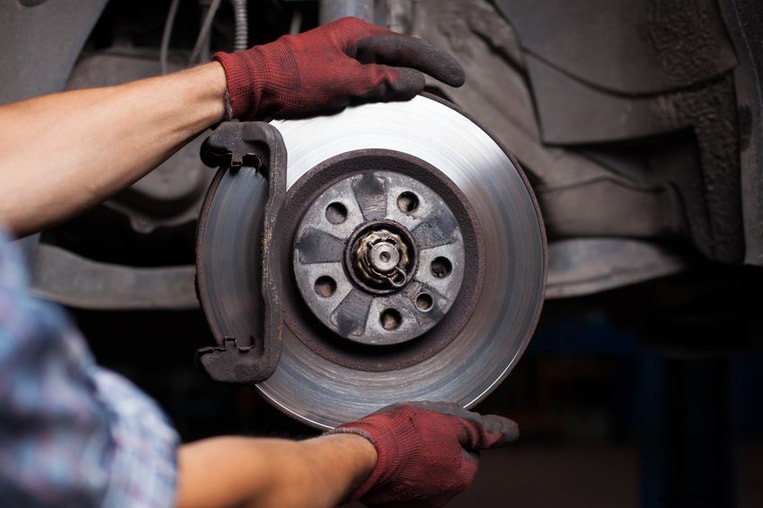
The importance of the brake system on your vehicles can’t be overemphasized. There are some repairs that can wait until a more convenient time, but a brake repair or brake replacement is not one of them. In order to take care of this essential part of a vehicle, it’s important to know how the brakes work, including one of the critical components, the brake pads.
The braking system of a vehicle is a complex interplay of these components:
The brake pads are an essential part of the entire brake system on cars with a disc brake system. When you need to stop or slow down, the pressure and friction combination when you step on the brake is what causes the pads to press on the rotors. If the pads are worn out or defective, you may end up with brake failure. That’s why it’s important to act quickly to take care of a brake pad replacement or repair.
Now that you know more about how the brake pads work in the entire system, the next question is how to tell when they need to be replaced or repaired.
Here are some red flags that alert you to problems with the brake pads in your vehicle:
If you hear squealing or other unusual noises when you press the brake pedal, it may be the built-in “wear indicator.” Manufacturers put this device on brakes to alert the driver that the pads need to be checked and perhaps replaced.
This clicking noise usually signals that the device holding the pad or pads in place has become loose. It makes a rattling or clicking noise and needs to be checked.
You find that it simply takes longer for the car to stop when you press the brake pedal. If you regularly press the brake pedal for longer than normal distances without the car ever having to stop, the pads and the rotor can overheat. This means the mechanism can’t generate the friction needed to stop the car quickly. And since the purpose of the brake system is to stop the car, pay attention!
Brake pads wear out differently in each position on the car. This causes pulling to one side or the other when you brake. There are other causes for pulling but it needs to be checked out by your BRAKEmax service staff as soon as possible.
Brake pads are held together with a resin. Over time, the resin breaks down and can lead to this vibration in the brakes. Let our BRAKEmax brake specialists take a look.
It isn’t worth it to jeopardize your safety by not paying attention to signs of trouble like these. Make an appointment at your BRAKEmax Tire & Service Centers as soon as possible to avoid further damage, unnecessary injury, or worse.
Brake pads start out with 12mm of the material that produces the friction that stops or slows your car. As a general rule, when you take your car or truck into BRAKEmax for its diagnostic checks, our brake mechanic will suggest replacing the pads when they get to 3 or 4 mm. The one thing we don’t want to see is the rotors being gouged out due to worn brake pads.
Not many drivers, though, actually measure their brake pads. It is important to keep up your schedule of maintenance checks for your car and also to trust your BRAKEmax brake specialists to measure this. Our experts will keep your car on the road safely and can also provide you with advice on protecting your brake pads or replacing them when it is time.
Two of the factors that will affect how quickly your brake pads wear out is how you drive your vehicle and what the pads are made of.
There are some things drivers can do to protect their vehicle’s brake pads from wearing out too quickly:
Of course, the geography of the area where you do most of your driving isn’t something you have much control over. Just be aware that constant braking in hilly areas will wear your pads more quickly, too. In cases like that, it’s especially important to keep up with your brake inspections at BRAKEmax.
Today, most brake pads are metallic, ceramic, or organic. Each has its advantages and its disadvantages, so being informed and asking your BRAKEmax brake specialist for advice is critical.
The choice may be determined by your vehicle’s needs, how you intend to use the vehicle, or the cost versus value factor. Discuss this with the BRAKEmax service staff in order to get what’s right for your budget as well as your vehicle.
Don’t forget the Coupon Page on the BRAKEmax website! Check often, no matter the need for your car at the moment. The coupons and specials change frequently. We are here to help!
As with most anything, having some basic knowledge of a system goes a long way to protecting it. The brake system in your vehicles is critical and grasping how it works, even at a rudimentary level, helps take care of the overall system as well as its various components. The brake pads are one of those parts that cannot be ignored when wearing or failing completely.
Let our BRAKEmax Tire & Service Centers be your first call when you are unsure about the health of your brake pads or any other part of the brake system.
