
Your transmission delivers power from your engine to your wheels through a series of gears. It contains a fluid that acts as a lubricant and in some cases the drive system itself. This fluid gets old and dirty over time and requires regular replacement.
Some transmissions have filters for their fluid, which should get replaced as well if so equipped.
Small particles from normal wear and tear get trapped in your transmission fluid. These cause extra wear on components if the fluid doesn’t get changed. Eventually, old fluid can cause your transmission to start slipping, get stuck in gear, or refuse to go into gear. At this point, your entire transmission needs to be rebuilt or replaced.
While some shops offer a transmission fluid flush service, it’s actually better to change automatic transmission fluid by opening the bottom of the transmission, even though it may not replace as much of it. The reason is that a flush doesn’t clean or replace the filter inside the transmission, which is critical for keeping the fluid clean. It’s possible to do it yourself at home, but if you take it to a shop, make sure they do it this way rather than just flushing the fluid and charge a reasonable price for it.
Generally, manufacturers recommend replacing the fluid and filter every 30,000 to 60,000 miles. Check the maintenance schedule in your owner’s manual to find out exactly how often they recommend it. If the interval is 100,000 miles or there is no recommendation at all, it doesn’t hurt to change it more often, and you should.
If your transmission begins to experience any of the symptoms described below, change your fluid immediately before the problems get worse.
In the same way that your oil is the lifeblood of your engine, the transmission fluid is the lifeblood of your transmission. It, too, needs to be changed regularly. Part of its job is to capture dust and debris that come loose while you’re driving. This is normal.
Some manufacturers specify long change intervals or even “lifetime” transmission fluid. This doesn’t make sense considering that all that debris is just going to sit in your transmission. Considering that it costs thousands of dollars to repair or replace a broken transmission, it’s actually more affordable to spend hundreds of dollars changing the fluid and filter every 30,000 to 60,000 miles, even at shop prices.
The specific steps vary from one vehicle to another, but this is generally how the job is done.
Like engine oil, your transmission fluid will flow better when it is up to operating temperature. Drive the car for five to ten minutes, then shut it down.
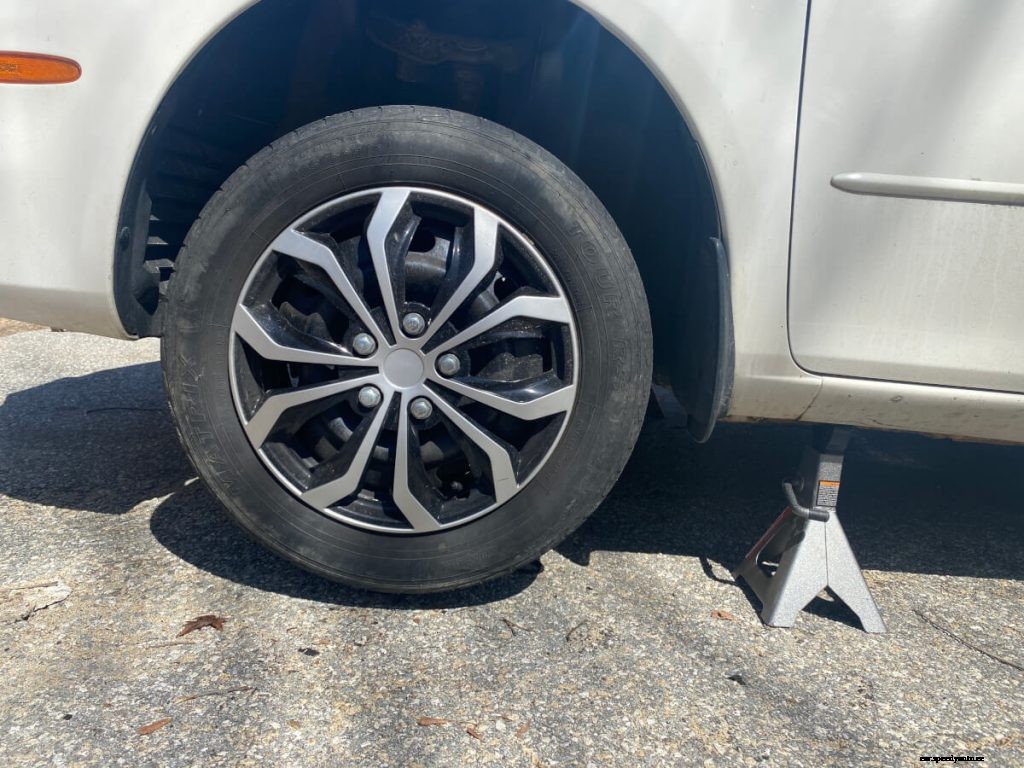
Follow these instructions to jack up your car and support it on jack stands. If possible, lift the entire car off the ground using four jack stands. If you only have two, support the front of the car, because that’s where the transmission is.
Place a tarp, cardboard, or newspaper on the ground under the transmission. This is a messy job, and although you’ll catch most of the old fluid in your drain pan, you will spill some, guaranteed.
If you’re lucky, there’s a drain plug that you can remove to drain most of the old fluid into your drain pan. Many transmissions don’t have a drain plug, which means you’ll have to skip this step and do it the messy way.
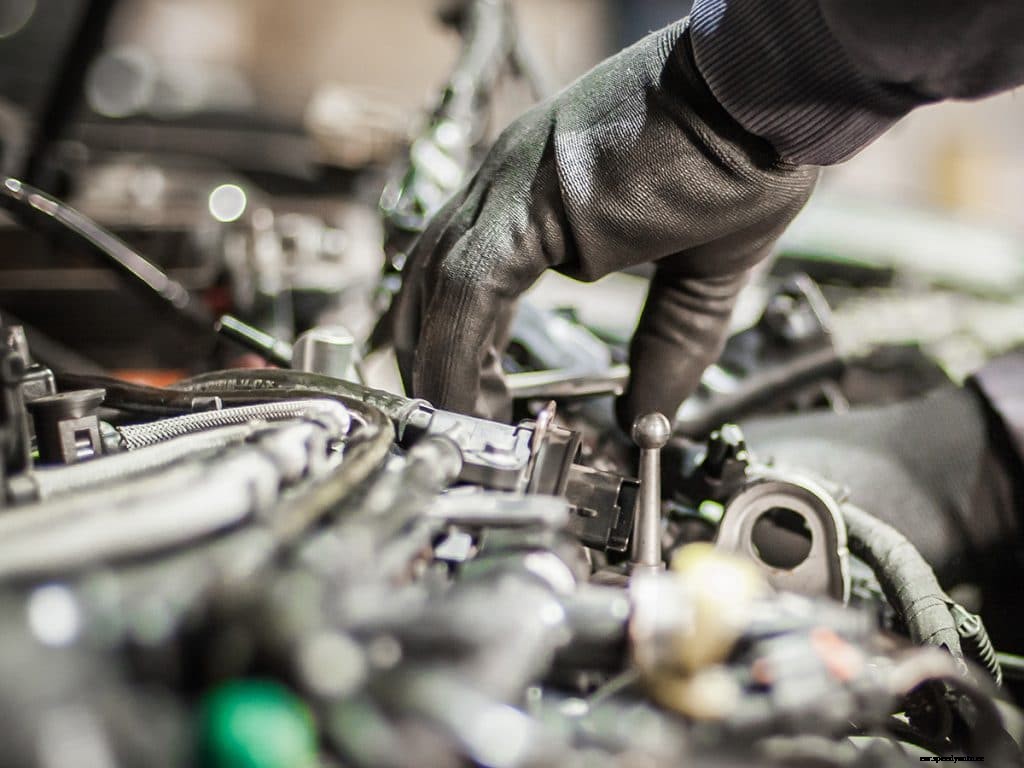
Begin to remove the bolts that hold the transmission pan onto the bottom of the transmission. Start with the bolts on one side, then move to the other.
Expect transmission fluid to start leaking out from between the transmission and the pan. It will be warm or hot, so be careful of that. You may need to pry the pan away from the bottom of the transmission if the gasket is particularly sticky. If your transmission has no drain plug, the fluid will all come out through the bottom of the transmission. This is the messy part.
Transmission pan gaskets are good for one use only. Use a gasket scraper to scrape what’s left of the old gasket completely off the transmission pan and the bottom of the transmission itself to ensure that the new one will seal properly.
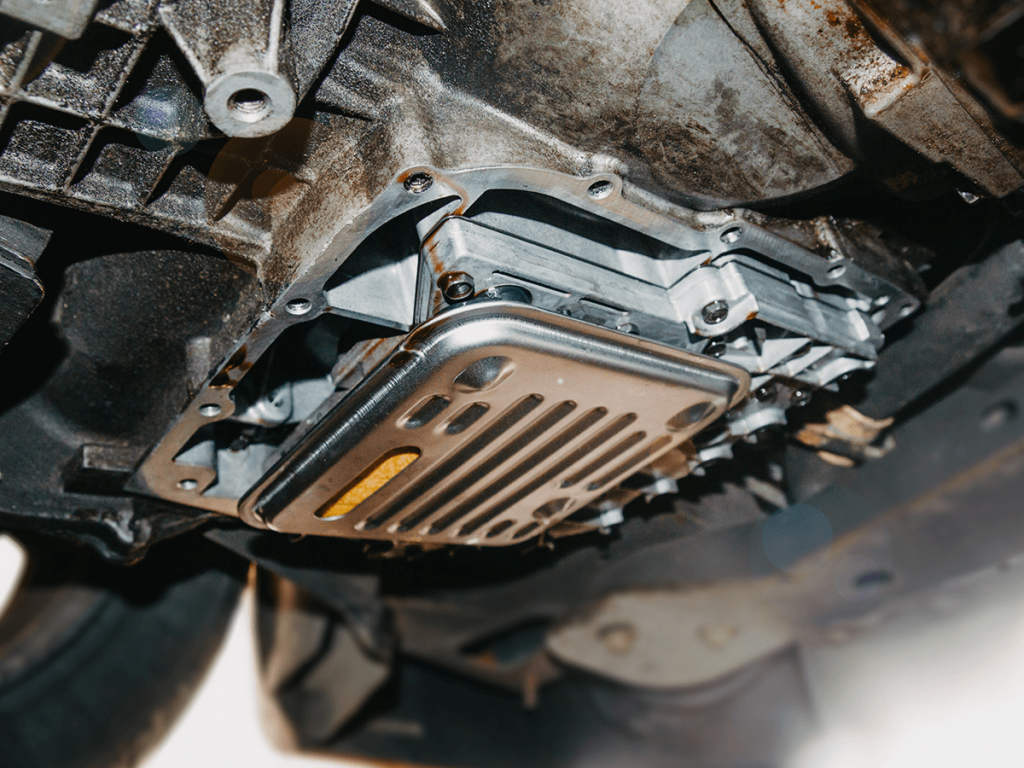
The reason we opened the transmission instead of simply flushing it is to replace the filter at the same time as the fluid. Make sure your drain pan is under the filter, then remove the old one. Then install the new filter, as well as its O-ring to ensure a proper seal.
It’s easiest to put the gasket on the pan so that it will remain in place as you lift it into position against the bottom of the transmission. You can use oil-soluble grease to help hold it in place, but DO NOT use any gasket sealer or adhesive.
Place the pan into position and bolt it back onto the bottom of the transmission. Refer to your manual to find information about the proper torque spec for the bolts, as well as whether you should use any kind of thread sealer or not.
Remove the jack stands and lower the car back down to the ground.
This is usually done from under the hood of your car, where the dipstick normally allows you to check the fluid level. Add the proper amount and type of transmission fluid for your particular car. Your manual will tell you what to do.
Start the engine, and look under the car to make sure no fluid is leaking out of the transmission. If it leaks, shut it off immediately. Otherwise, get in the car and move the shifter through all of the gears. It should shift smoothly and silently. If it does, you’re done!
Get the FIXD Sensor and free app today for a custom maintenance schedule based on your make, model, and mileage. Never miss important maintenance again with automated maintenance alerts! Learn more at fixd.com.
