
Automotive technology has come a long way since Henry Ford rolled out his first Model T in 1908.
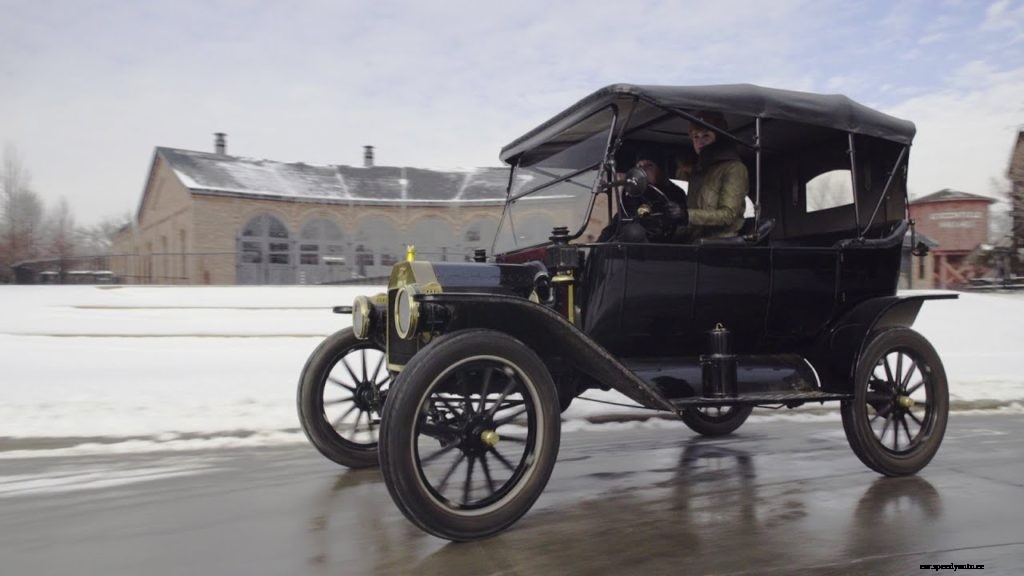
Today we have electronic engine control, air bags, automatic transmissions, and even a CD player that doubles as a telephone. But the one thing that the Model T and modern automobiles have in common is the internal combustion engine.
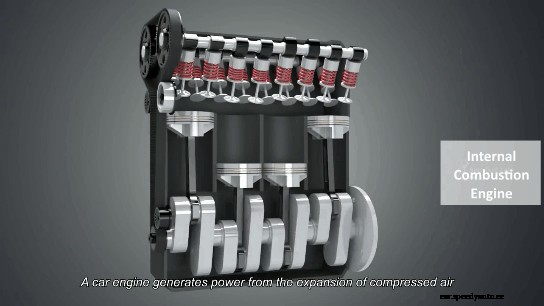
Although the controls that are used to make it work have drastically changed, operation of the base engine has stayed the same.
The end game of the car engine is to make the crankshaft turn. The force that puts the car in motion, starts at the crankshaft.
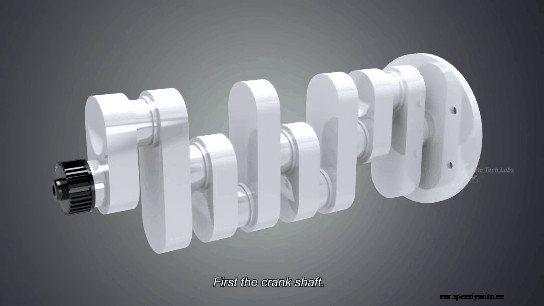
To understand how a crankshaft works, picture a bicycle being pedaled down the road. The pedals are offset from the center of the front sprocket. As the right pedal is pushed, the sprocket turns, and the left pedal moves into position to also be pushed. As the left pedal is pushed, it continues to turn the sprocket, moving the right pedal into position. This cycle repeats continuously, turning the sprocket, and moving the bicycle forward.
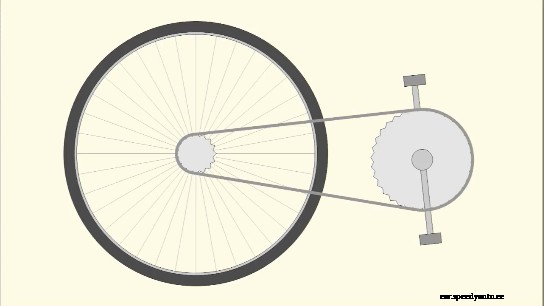
This is basically how a crankshaft works. Instead of pedals, a crankshaft is propelled by pistons. The pistons move up and down, each one raising the other into position to be the next one in line to turn the crankshaft.
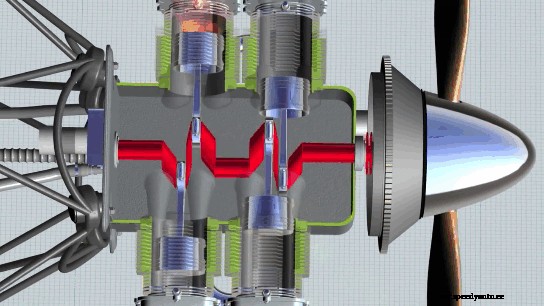
In order to understand what makes the pistons move, you must first understand the configuration of the internal combustion engine.
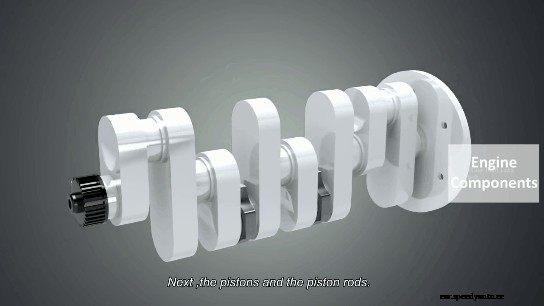
The engine block is cast out of metal, usually iron or aluminum. Built into the block are cylinders. Cylinders are usually three to five inches in diameter and five to ten inches long. These numbers vary greatly depending on the displacement of the engine. Car engines can have anywhere from two to twelve cylinders in one engine block. In this article we’ll discuss the in-line four cylinder engine.
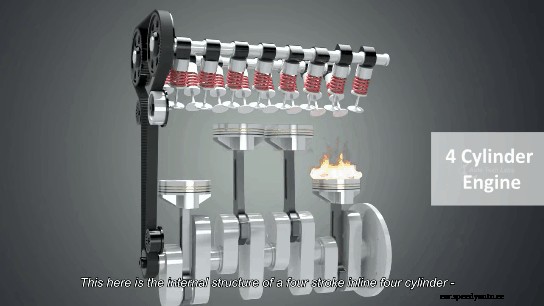
The four cylinder engine is designed with all four cylinders in a straight line. The crankshaft is located under the cylinders so that each piston, as it moves up and down in it’s cylinder, can turn the crankshaft, like pedals on a bicycle.
The pistons, with the help of flexible rings, fit perfectly into the cylinders. It’s imperative that air cannot get past the pistons while they are moving in the cylinder. The pistons are connected to the crankshaft with connecting rods. The piston pushes the rod, the rod pushes the crankshaft, and the crankshaft turns. Just like, well, you get it.
The top of the cylinders are sealed real tight with a cylinder head. Internal to the head are two valves per cylinder, an intake valve and an exhaust valve. Also threaded into the head is one spark plug per cylinder. The head seals the cylinder so well, that when the valves are closed, no air can enter the area above the piston and below the head. This space is called the combustion chamber.
So what forces the piston to travel down the cylinder and turn the crankshaft in an internal combustion car engine? The answer is: internal combustion.
Each piston completes a sequence of four strokes. A stroke is defined as the piston moving the length of the cylinder, whether it’s an upward stroke or a downward stroke. The four strokes are, Intake, Compression, Power, and Exhaust. After completing these four strokes the sequense starts over.
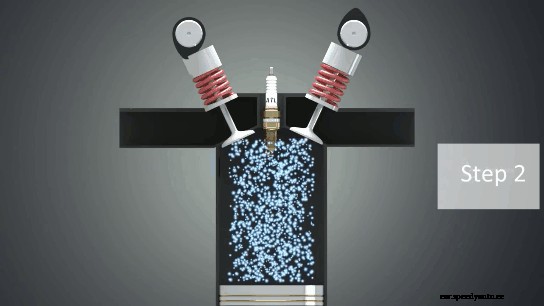
During the intake stroke the piston moves downward. Since no air can get into the area on top of the piston (the combustion chamber) a vacuum is created as the piston in moving downward. The intake valve opens, and the vacuum created by the piston sucks the air/fuel mixture into the cylinder through the intake valve. The air/fuel mixture should be about 14.7 parts air to 1 part gasoline. By the time the piston gets to the bottom of the intake stroke, the cylinder is filled with the air/fuel mixture.
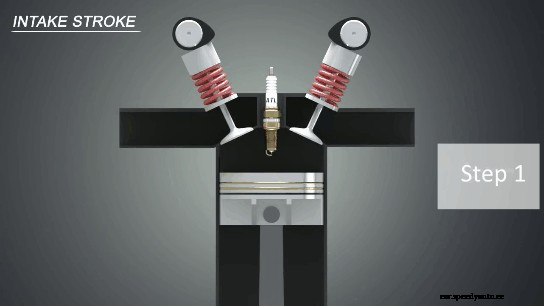
The intake valve closes, and the piston starts its travel upward, on the compression stroke. Since both valves are closed, and nothing can get past the pistons, there is no place for the air/fuel mixture to go, so it gets crushed. This is called compression. The air/fuel mixture is compressed against the cylinder head, then the spark plug fires.
The spark plug creates a spark that ignites the compressed air/fuel mixture. The expanding gases of the evenly burning air/fuel mixture forces the piston down, applying torque to the crankshaft, causing it to turn. This is the power stroke.
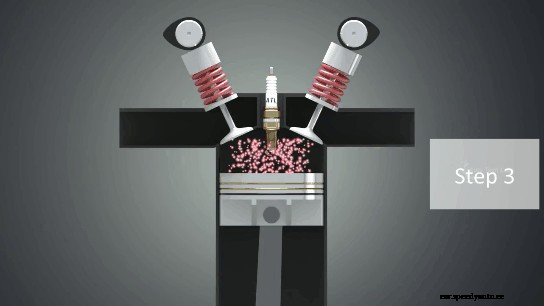
You’ve probably heard the burn in the cylinder referred to as an explosion. It’s not an explosion. An explosion in the combustion chamber is called detonation, and is a very bad thing. The air/fuel mixture burns evenly and completely.
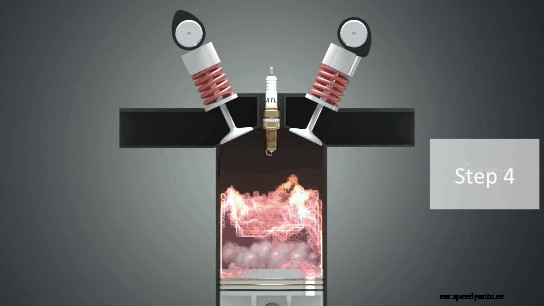
When the piston reaches the bottom of the power stroke, what remains in the cylinder is burnt fuel and air. These gases must be removed from the cylinder as the piston heads upward on the exhaust stroke. As the piston moves up the cylinder, the exhaust valve opens, and the piston pushes all the exhaust gases out of the cylinder through the open exhaust valve, and out the tailpipe.
So there’s your four strokes:
Intake Stroke: Intake valve opens, piston pulls air/fuel mixture into cylinder.
Compression Stroke: Piston compresses the fuel in the combustion chamber
Power Stroke: Spark plug ignites the mixture, expanding gases force piston downward to turn the crankshaft.
Exhaust Stroke: Exhaust gases are evacuated from the cylinder
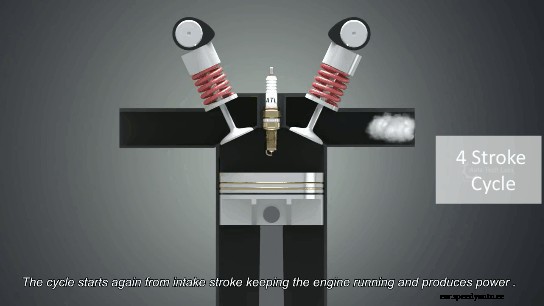
It’s important that on the exhaust stroke all gases are removed from the cylinder. It wouldn’t be possible for the intake stroke, which comes next, to create a vacuum if there is anything in the cylinder. A vacuum, by definition, is a space absolutely devoid of matter.
While the crankshaft is turning, all cylinders are on a different stroke at any given time. In a four cylinder engine, two pistons are at the top at the same time, one on the compression stroke and one on the exhaust stroke. At the same crankshaft position, the other two pistons are at the bottom, one on the power stroke, and the other on the intake stroke.
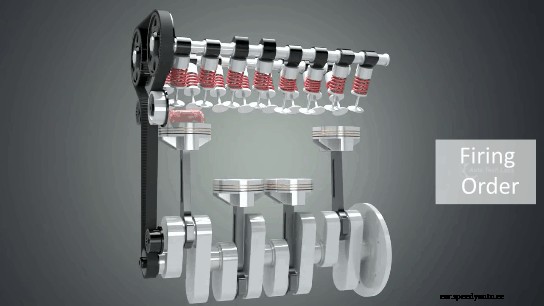
The valves are opened by a camshaft. As the camshaft spins, eccentric lobes push on the valve, forcing it open. The camshaft is driven by a timing belt or a timing chain, which is driven by the crankshaft. The timing of the camshaft in relation to the position of the pistons, is essential for this whole thing to operate.
So this is the basics of how does a car engine work. We haven’t even touched upon ignition systems, fuel delivery systems, and electronic engine control. Maybe next time. But for now, I hope this article helps you to understand how it works.
