
For both new and experienced drivers, fog can be one of the most dangerous weather conditions to drive in. Fog can significantly reduce visibility, so drivers must stay fully focused on the road ahead in order to stay safe since heavy fog usually demands your undivided attention. When things turn grey, remember these simple tips for how to drive safely in fog:
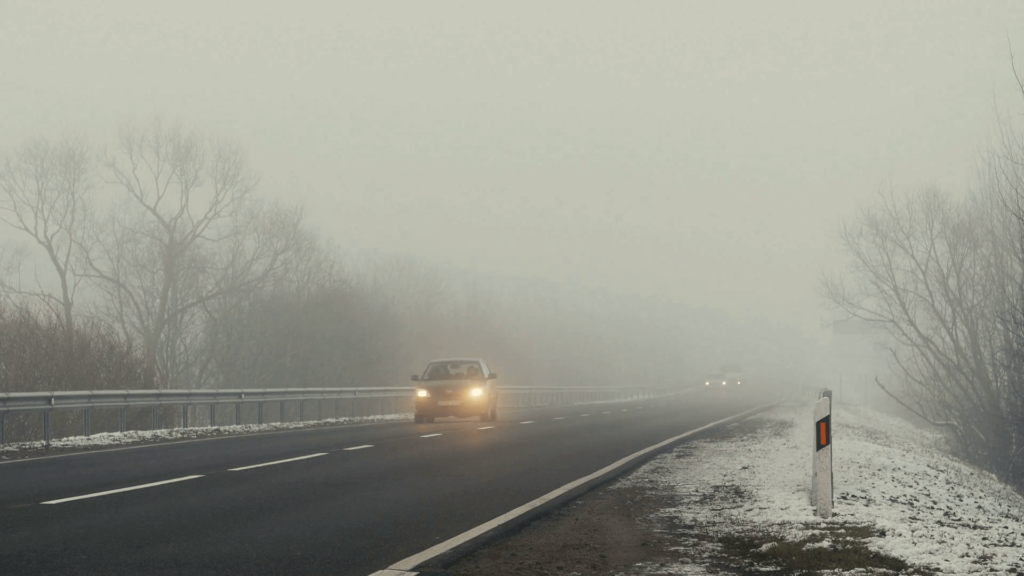
This one is pretty obvious and it’s the safest tip on this list. If the fog outside is dense and visibility is on the low extreme, then you need to postpone the journey if it isn’t worth the risk. Usually, the fog clears up within a couple of hours and waiting it out could save you from freezing on the side of the road or much worse.
Additionally, be vigilant of the weather. If your journey is longer than 30 minutes, then make a habit of keeping up with weather reports. If you’re advised not to drive, then don’t do it.
One of the most dangerous things you can do in fog is to drive close to, or above the normal speed. What you want to do is slow down so you have enough time to react to changes on the road. Additionally, when you maintain a slow and safe speed, the driver behind you will be compelled to do the same.
Since fog consists of tiny water droplets suspended in the air, then spread, block, and reflect light beams. High-beam is not recommended as it creates a distraction for the vehicle coming in the opposite direction, but low-beam do not refract much in the fog which makes it easier for other drivers to know where exactly your vehicle is.
The reason people will tell you to turn on the heater when it’s foggy outside is not necessarily to keep you warm. The main reason is that fog outside the windshield can cause condensation inside the glass. One dangerous thing about condensation is that it often form slowly and it isn’t something you’d normally notice unless you are used to it.
Since it is barely noticeable, it could obscure the little visibility you have without you knowing that some of the visibility problems are preventable. You can improve visibility by pressing the windshield demisting dial or button and turning on the rear window heater.
We know you can’t help multitasking, but driving in a fog for that matter, is not the best time to do so. Turn off your phone or other electronic devices, stop distracting conversations; fog is not the time to follow GPS, check a missed call, or argue with someone;
Decreased visibility means shorter reaction and, if the road is slippery, the longer it takes the vehicle to stop. So any extra space you put between yourself and the vehicle ahead is your friend. Though it might take longer to reach your destination while maintaining such distance, but your safety and that of your passengers is definitely worth it.
Having moisture and ice on your windshield can create distracting glare, which can further decrease visibility making it difficult to see. Put your wipers to good use by clearing your windshield completely and often to give yourself the best view possible. If your wipers aren’t good enough or leave some sections of the windshield untouched, then it might be time to get a new wiper.
It’s important to keep an eye on the vehicle ahead to predict and respond to changes, but you should not focus only on the narrow patch of landscape in front of you to the exclusion of every other thing on the road.
Driving is full of surprises, foggy roads are no different. The best thing you can do during inclement weather is to turn off cruise control in order to maintain complete control of your vehicle.
I know it’s tempting to try and “lose” the driver right on your tail so as not to get hit in the rear, but that’s a very bad idea that can make your situation more dangerous. You have no control over the vehicle ahead of yours or the one coming in the opposite direction. If you speed up, the driver behind just assumes you can see better and speeds up too.
Fog is not the best weather condition for sudden brakes. The earlier you start applying the brakes, the better! Besides that, your brake light will let the driver behind you know that you are losing speed, and they’ll have plenty of time to react.
Understand that when there’s a thick fog covering the road, and the visibility is at a dangerous level, you are not the only driver struggling to pick out stationary or moving objects.
Your best bet is to play it safe. Carefully exit the speed lane if you can and drive to a safe place far from traffic to park and wait out the fog. Though it’s not advisable to park by the side of the road, if you can’t get off the highway, then you need to pull over as far as possible from traffic lanes, turn off your headlights but keep your brake lights on so any vehicle coming up behind you is notified on time that you are stationary.
If you are far from the traffic lane and can safely exit the vehicle for a nearby shelter, do so; otherwise, stay in the vehicle with the seatbelt on and handbrake engaged to reduce whiplash in case you get rammed.
Fog is not the time for making unnecessary traffic maneuvers such as passing or changing lanes; this is because visibility is poor, and other drivers like yourself have more focused on the vehicle ahead than the ones coming up on the sides.
It’s really easy to miss pedestrians in a fog when all your focus is on looking for vehicles ahead. You need to be vigilant for pedestrians as you may not see them until the last minute, and even with your headlights on their estimate of your speed and distance might not be precise. To stay safe, assume that any pedestrian you see on the road might attempt to cross.
It’s totally fine to drive on a sunny day with the radio blaring your favorite playlist, but when there’s heavy fog and you can’t see you’ll need your ears to compliment your eyes. Turn off your radio and if you have passengers on board, tell them to be silent.
Now, wind down a bit and listen to the road for approaching cars. You’ll be able to pick up the hum of a car engine, the sound of the tires on the road, and pick up honking. Turning the radio down also helps you focus on the journey which is what you need in a fog.
Inclement weather makes driving more dangerous and fog is a different kind of dangerous. Unlike ice, water, or snow on the road which changes the way the car responds to the driver’s actions, fog doesn’t affect the car as much as it does the driver; it affects the driver’s visibility which is the most reliable source of information used for making safe decisions.
If you have to drive in the fog, follow these tips with extra care. If your journey can be delayed, then better to do so.
