
You’re running late and you rush out to your vehicle, only to find that it won’t start. The engine gives off a low rumble and the headlights dim. You realize that your car battery is drained. But, everything was okay when you bid your car ‘Goodnight’ barely 12 hours ago.
How did this happen? What could have drained your car battery?
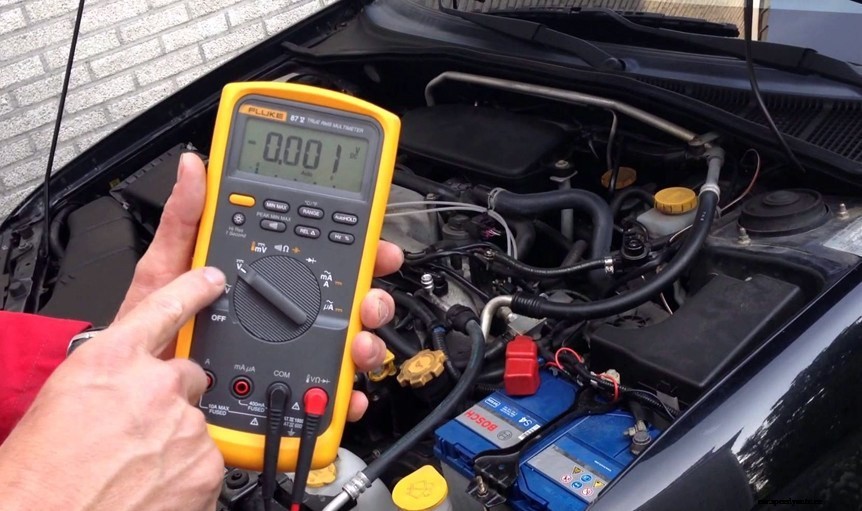
A battery can lose charge for a number of reasons. With the drained battery, it would be almost impossible to start the car. Here are 7 answers to the question “what can drain a car battery even when it’s off?”
Irrespective of how careful you are in your post-drive car checks, you’ve probably done this at least once in your life – you return from work, exhausted and not really thinking, and left the headlights on, didn’t properly close the trunk, or even forgot about some internal lights and devices.
These are just a few examples of human oversight. The problem is that these “events” are also drawing electricity from the battery. When this occurs, the car battery drains, and in the morning your car refuses to come alive.
Many new cars will alert you if your lights are still on when the door closes, but may not have alerts for other components. Older vehicles may not be so lucky in this regard.
Parasitic drain occurs when electrical components in your car continue feeding off of the battery even after the key is turned off. Some parasitic drain is normal and your battery delivers the energy required to keep components such as security alarms, clock or radio presets operational at all times. Parasitic drain that draws less than 75 milliamps from the battery is normal, above this and the battery will drain pretty quick.
The most common causes of parasitic drain above 75 milliamps are trunk lights, headlights, hood lights, or glove box lights that fail to turn off when the key is off and the doors closed. Other culprits of parasitic drain could be a result of faulty wiring, poor installation of aftermarket devices such as an amplifier and GPS that have a standby mode, or relay switches that are stuck in the “on” position and defective fuses.
If the charging system of your vehicle is faulty, your car battery can drain even while your engine is running. Most vehicles power their radio, lights, automatic windows, and other electrical components from the alternator, which can drain the battery more in the case of a charging problem. The alternator may have worn-out tensioners or loose belts that keep it from working properly, or it might even be dead.
Your alternator, tensioners, and belts may all be in working condition. But, a bad alternator diode could cause keep the circuit open even when the engine is shut off and you end up with a drained battery in the morning. So, if your battery keeps dying even while driving the car, then there might be an issue in your vehicle’s charging system. Other issues with the alternator can also reduce the power your battery receives.
Extreme weather is detrimental to a battery’s lifespan. Temperatures over 100 degrees or below 10 degrees Fahrenheit can cause lead sulfate crystals to form in the battery. If the vehicle sits in such extreme conditions long enough, the sulfate buildup can cause permanent damage to the battery. When the temperature is at either extremes, the battery has a hard time charging, especially if you drive short distances.
Every time you turn on the key, your car battery delivers an electrical boost to bring the engine to life. The battery may wear out prematurely if you perform lots of stop and start kind of short trips. Shutting off your engine before the alternator has enough time to pump up the juice into your car battery might explain why the battery continually drain or doesn’t last long.
One consequence of irregular maintenance. Loose or corroded battery terminals will not let the charging system top off your battery to its full capacity. Corroded battery terminals makes it difficult to start the engine and it could also affect the on-board computer in your vehicle.
Check the integrity of your cables regularly. If you see any signs of corrosion on the terminal, then you need to do something about it quickly to improve the lifespan of your battery. If the battery isn’t getting enough juice, you should have it diagnosed by a professional mechanic.
Everything has an expiration date. Even with our technological advancement, we are yet to develop a system that will last twenty years or more. This is simply because the passage of time has an effect on the durability of these components. Most batteries have a lifespan of 4-5 years. If your battery is old, it will not be able to hold enough charge necessary for the vehicle to operate properly. If this is the case, then you need to replace your battery.
It is worth mentioning that poor maintenance will also eat away at the lifespan of your battery. Batteries that cycle through extreme temperature will have difficulty holding a charge after some time.
It’s frustrating being the owner of a car battery that won’t hold a charge, but your battery may still be in good working condition or still new which makes figuring out the cause of the problem tricky. In most cases all you’ll need to get you going is a jump start and 10-15 minutes of drive time for the battery capacity to top up.
Assuming the cause of the battery drain is not human error and you’ve eliminated other possible causes, your best bet is to get the assistance of a qualified mechanic to check the health of the battery and look for anything you might have missed.
However, armed with the knowledge of what can drain a car battery when it’s off, we hope you implement preventive measures.
