
Ready or not, the cold winter months are coming. Soon enough, we will be hit with sleet, frost, snow, and ice, and that means no fun for car enthusiasts. Due to the harsher conditions of wintertime, cars require a little extra care to keep them road-ready because snow and low temperature can severely damage your car.
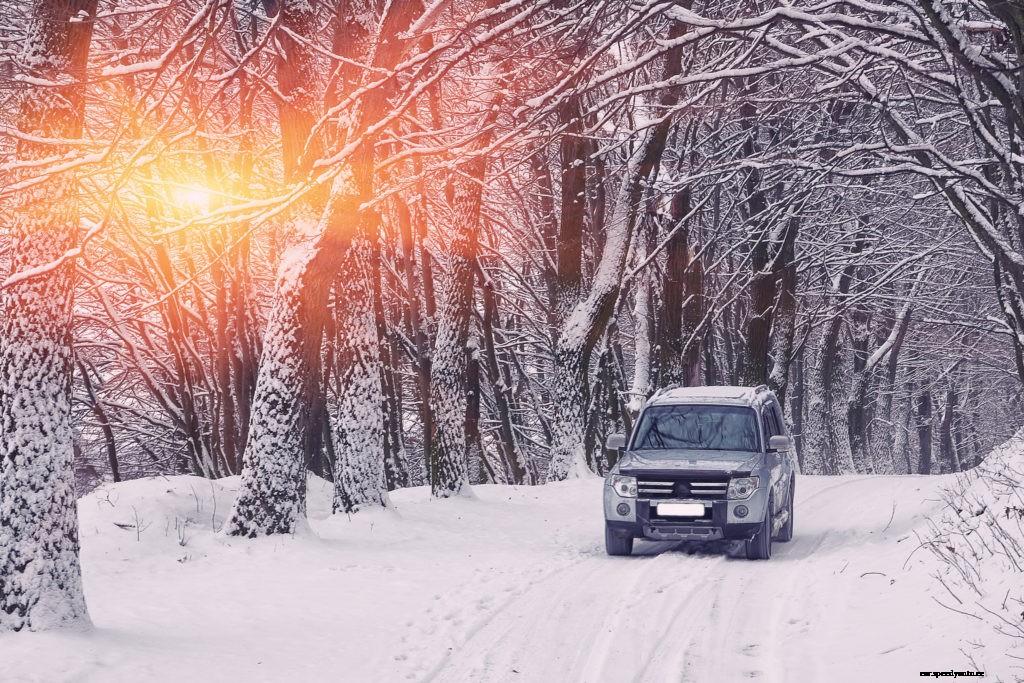
There are some things you can get away with on a mild day, but not in the winter period. Thus we’ve put together a list of things you should never do to your car in the winter to ensure that it’ll be up and running when winter is over.
You wake up in the morning, sleepwalk your way through your daily routine, and when you eventually make your way out to your car to leave the house, you are confronted by a thick layer of stubborn ice frosted over your car. Does this sound familiar?
I can understand, the last thing you want to do is spend over 15 minutes of your time meticulously scraping ice off of your car’s windshield. One not-so-smart-nor-bright idea a lot of people have is to boil some water and pour it on the car windshield in an attempt to speed up the melting process.
Two reasons why this is a very bad idea: First, you could hurt yourself. Second, when hot water comes in contact with cold glass, it could crack severely, and trust me, your windshield isn’t as strong as a beer mug that shatters under a similar condition. Replacing a windshield is neither cheap, easy, or fun, so it is best you just bite the bullet and exercise patience, start your car, turn on the defrosters, and just do it properly the old school way by using an ice scraper.
A simple and safer trick to speed up the process for on a thick layer of ice is to use a handheld hair blow dryer – and an extension socket if necessary. Use the lowest setting at a safe distance from the windshield and slowly go over the edges of the windshield for a couple of seconds, then step go back out and try using the ice scraper.
One other thing you shouldn’t do to your car in the winter is to attempt clearing your iced-over windshield with your windshield wipers. Ice is hard and sharp, and many windshield wiper blades are made of rubber, so attempting to chip away solid ice with your wipers can rip those delicate blades to shreds. Replacing wipers in the summer can be annoying, to say the least, now imagine doing so in the winter.
Also, an iced-over windshield can freeze-bind your wipers to the glass surface, or cause your windshield wiper blades to become frozen solid themselves. Either way, do not try to turn on the wipers. Turning them on while stuck in ice can damage your windshield itself, or it could damage your windshield wiper motor, a delicate, hard-to-reach, difficult-to-replace car part located inside the front of your car, a few inches under the windshield. Replacing a wiper motor could cost over $500 due to their hard-to-reach location and the rarity of the car part.
If the weather forecast predicts an overnight frost or an ice storm, make sure to keep your windshield wipers in a standing position and cover them with old socks as we advised you do to protect your car this winter. Doing this will prevent them from freezing or getting stuck to the windshield and also reduce their ice accumulation.
When it comes to car maintenance, tire pressure is one of the most neglected parts of a car. If you plan to drive safely in inclement weather this coming winter, you need to stay on top of your car’s tire pressure and maintenance schedule, because failure to do so can lead to major accidents, frequent flats and problems with braking, acceleration, and traction. Most of which you can avoid by ensuring that your vehicle’s tire pressure is properly calibrated.
During this winter season, the air pressure in your tires will reduce for every 10-degree drop in temperature that’s why it is a good idea to have a portable air compressor with an accurate gauge stored in your trunk or under the front seat.
It is also important to measure your car tire’s air pressure when the tire isn’t warm and the outside air is cold. This will ensure you get a more accurate reading of the air pressure, this way you will know how much air to pump into each tire to keep them functional in harsh road conditions.
Another helpful thing you can do is to swap your tires with the best brand of winter tires since they are specifically made to withstand winter conditions as well as perform well even in the cold temperatures and icy roads.
There are few things that can wreak more havoc on a car battery that extreme temperatures (both cold and hot). When the temperature outside drops below zero, your car’s electrical system, which is driven by the battery, can have a difficult time starting when you want it to. In some cases, your vehicle might not even start after a long, cold night.
That’s why you need to get your battery checked before a vicious streak of cold winter weather. If your battery is less than three years and there aren’t any cracks or corrosion on your battery, I advise you take it out of the car at the end of the day and keep it somewhere warm; you could wrap it in an old blanket, or, at the very least, keep it off of the floor.
Your car engine’s cooling system is a closed system that requires very little maintenance to keep it running smoothly, but it is still necessary to inspect the system very often, especially before a streak of harsh inclement weather.
The coolant system is designed to keep your engine from overheating, but the antifreeze ensures the liquid in the system doesn’t freeze while sitting in the radiator and engine block. What you need to do is have your car’s antifreeze checked early, so you know how much cold your system can handle, and if you need to add more antifreeze. While inspecting, if you notice that your antifreeze is dirty or full of tiny debris, you might as well opt for a coolant flush and fluid replacement. Doing this early can help prevent a slew of expensive issues.
It is compulsory to fuel up your vehicle before the fuel gauge hit the red mark, the reason is that an empty tank can freeze and crystallize due to the moist air left in the tank. Keep in mind that the more fuel you have in your tank, the less space there’ll be for air to crystallize in.
Winter is the only season where everyone unanimously agrees that you need to warm up your car engine before heading out to your destination, but for how long? Warming the car for about 2 to 3 minutes is actually good for the engine and will increase the lifespan of your car, but going beyond that might damage your engine.
During summer, the engine oil is less viscous so you don’t necessarily need to warm up the car, all you have to do is drive slowly for a couple of minutes so the engine slowly heats up to the optimum operating temperature. In the winter season, it is necessary to wait for the engine oil to lose viscosity and flow into the piston chambers before putting any load on the engine, and your crankshaft, pistons, camshaft, turbos, and other spinning, moving bits will be much, much happier.
I am not really a fan of speeding up when it isn’t necessary to do so. Due to the icy roads and low visibility, winter isn’t the time to be testing out the brakes of your car to see how the brakes work because you already have a lot against you. Car brakes do not work as efficiently as they do in the summer when the road is dry and your tire has good traction with the road. One mistake and you could be skidding your way to oblivion. On top of that you are not just putting yourself in harm’s way, but your passengers and other road users as well. So keep your eyes on the road and drive slowly, I see nothing wrong with being slow if you get to your destination safe and sound.
This seems like common sense, but there are many drivers who still speed despite the clear danger. Don’t be that driver!
These tips are enough to keep your vehicle in tip-top shape till spring comes around, if you plan to store your vehicle away for the winter, then check out our guide on how to prepare an RV for the winter season and how to prevent rodents from spending the winter in your vehicle.
