
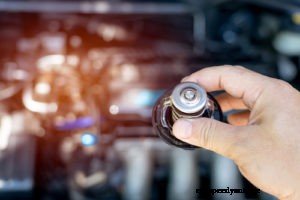
Your car’s thermostat regulates the coolant temperature and keeps your engine running, but there can be times when your thermostat malfunctions. In these instances, you need to be able to identify bad car thermostat symptoms. That way, you can bring your car to an auto mechanic to replace your thermostat before it causes your engine to fail.
Common signs of a bad thermostat include:
When you start your car, your engine will be cold and the thermostat is in the closed position. Normally, as you run your car, your engine warms up and the needle of your engine temperature gauge reaches the midway point to open your thermostat. This indicates that your engine is operating at the optimal temperature and your thermostat is in working order.
Conversely, your thermostat can get stuck. This can cause the needle on your temperature gauge to move slower or faster than usual and even stop before reaching that midpoint. If your thermostat is stuck closed, for example, this could prevent coolant from flowing to the engine which can cause your car to overheat.
In this scenario, test your thermostat by activating your heater. If warm air does not dispense from the vents or your temperature gauge does not move towards the midpoint, your thermostat is in need of repair or replacement.
You may run your car’s heater or air conditioner but notice a sudden change in air temperature. At this time, adjust your car’s HVAC settings. If the air temperature does not change, your thermostat may be defective.
As noted earlier, a faulty thermostat can be closed. This can prevent coolant from reaching your car’s engine and cause it to overflow from the thermostat housing. In addition, it can cause coolant to leak beneath your vehicle.
Knocking, boiling, gurgling, and other strange rumbling noises can crop up if your car’s thermostat is defective. These noises can come from your engine and/or radiator.
Cold temperatures can cause your thermostat to get stuck open. This can cause an excess amount of coolant to flow to your engine. If you activate your heater at this time, only cool air will dispense from your vents, even if you turn up the heater temperature.
Your thermostat can have far-flung effects on your car’s performance if it remains open or closed for an extended period of time.
Let’s not forget about the dangers of driving with a faulty thermostat either. If your thermostat causes your engine to stop running, you cannot drive your car. This increases your risk of an accident.
Bring your car to a professional auto mechanic as soon as bad thermostat symptoms appear.
Your mechanic can perform appropriate testing to determine if your thermostat is defective by assessing your coolant flow and temperature. To do so, your mechanic can remove your radiator cap and idle the engine.
Your mechanic can also perform testing to verify your coolant testing. To do so, your mechanic can idle your engine and use a thermometer to find out your engine block or cylinder head temperature followed by the temperature of the upper radiator hose.
Bad thermostat symptoms can occur at any time. If left unaddressed, these symptoms can cause severe engine damage. They can also result in costly and time-intensive car repairs.
Be proactive if you notice any signs of a bad thermostat. An auto mechanic can assess your thermostat and determine if it needs to be replaced or address any other issues that impact your ability to drive your car safely.
Note: Fix Auto USA does not physically repair defective thermostats. To resolve such issues, we recommend contacting professional mechanics that specialize in this repair.
Alternatively, if you need collision repair or other auto body work, Fix Auto USA can help. We have over 150 independently owned and operated auto body shops across the United States. Find a Fix Auto USA near you today.
This blog post was contributed by Fix Auto Mount Vernon a leading industry expert and collision repair shop servicing customers in Mount Vernon, Washington as well as Skagit County neighborhood.
