
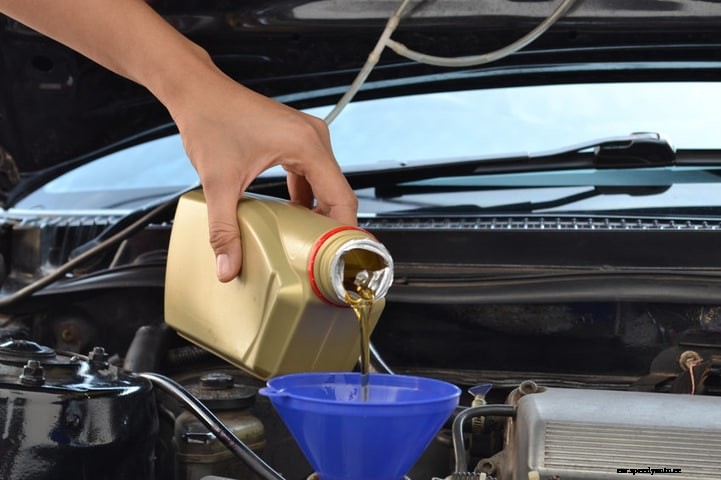
Regular oil change service for your vehicle might seem mundane. However, it’s one of the easiest ways to extend the lifespan of your car or truck. By choosing a qualified auto repair business like Lamb’s Tire and Automotive to handle your oil changes, you can be sure you are receiving the best service and the best rate possible.
Due to advancements in automotive technology and synthetic oil, traditional standards on how often you should change your oil may not be as accurate as you would assume. With that in mind, it’s essential to make sure you are changing your oil as often as needed. Here, you’ll find our expert advice on how often you should get a car oil change.
Traditionally, drivers have been encouraged to schedule oil changes after three months or 3,000 miles. This rule of thumb is still broadly applicable, but there are a few other factors that you should be considering, as well. These components may influence your vehicle’s oil change schedule:
Today’s more sophisticated engines can use oil more efficiently than older designs could. Still, this isn’t the only way age can affect your vehicle’s oil needs. Cars become less adept at using oil as they age, and issues like metal filings and debris can affect their engines over time. As a result, you may need oil change service more regularly with an older vehicle, though an engine flush might help in this regard.
“Severe driving” refers to driving that can put extra strain on a vehicle. Common types of severe driving include:
If you regularly drive in conditions like these, you could need oil changes at a rate two times higher than average.
Local weather can also affect your vehicle’s oil usage patterns. Of course, cold weather is rarely a concern in Austin, TX. With that being said, extreme heat can also cause problems related to oil, especially when traffic jams are a concern.
The type of oil you use in your car matters. Conventional oil is less costly, but requires replacement more often. In contrast, synthetic oil is more expensive upfront, but requires fewer changes in the long run. The latter type of oil also boasts enhanced lubrication and can effectively deal with extreme temperatures.
Perhaps the best way to see how your car’s oil is doing is to check it yourself. This process may seem intimidating if you’ve never done it before, but it’s relatively simple.
Generally speaking, you should check your vehicle’s oil level at least once a month. This process couldn’t be more straightforward for newer vehicles, as they generally include an electronic monitoring system for oil levels. If you own an older car, you’ll have to check your oil the “traditional” way by using a dipstick.
To check your oil manually, park your car, wait for it to cool down, and turn it off. Then, find your dipstick–it should be in the oil reservoir under your vehicle’s hood. Take it out, wipe off any leftover oil, and put it into the oil reservoir. Pull it out and then check each side to see where the oil level is. If it’s between two marks or a cross-hatched area on your dipstick, you’re in luck. Otherwise, you may be due for a car oil change.
No one beats Lamb’s Tire and Automotive for oil change service in Austin, TX, and surrounding areas. We’ve been around since 1987, and we still offer top of the line automotive service at great prices. Book your appointment today and save even more by checking out our oil change coupons!
