
It has been said that only two things are certain in life: death and taxes. Well, that is not entirely true. Change is inevitable as well. If you own or lease a car you have all sorts of change coming. You will need an oil change on a regular basis. Same thing for other fluids and filters. And every so often, your brake pads will wear out and need to be replaced.
Your brakes are the most important safety feature on your vehicle. Without them, nothing else matters very much. Sure, a powerful engine is pretty awesome. Leather upholstery, heated seats, or a video system for the kids - whatever your preferences - are of little value if you cannot stop on time. Seatbelts and airbags are important too, but those are in place in case of emergency. Your brakes? You need to trust those every moment you are driving.
So, what should you look for when your brakes are ready for a change? And when it comes time for brake service, how do you know who to trust?
Fortunately, your car will send signals when the brakes need to be replaced or repaired. For instance, if you press on the brake pedal and hear a high-pitched squealing sound, the wear indicators on your brake pads are singing out a message that it is time to schedule a brake job. But that is just one indicator. There are several, including:
Some of these symptoms can be attributed to other causes; pulling to one side could be due to a problem with a tire, and a puddle under the car could mean that some other fluid (i.e. transmission fluid, motor oil, or engine coolant) is leaking. But, generally speaking, if you notice any of these signs, you should have your vehicle inspected to determine if it needs brake service.
Brake pads last an average of forty to fifty thousand miles. Maybe more. Maybe less. The lifespan of a set of brake pads really depends on a few factors. The composition of the friction material on the pads (organic, ceramic, semi-metallic) makes a difference. So does the quality of the components. Driving conditions have an impact; stop-and-go traffic, steep hills, and dirt roads all serve to decrease brake pad life. So can your driving habits. If you tend to “ride the brakes” when you drive, or slam on the brakes a lot, you will wear down the brake pads sooner. Same goes if you frequently pull a heavy trailer or haul heavy loads. Even the size and weight of your vehicle have an impact on brake pad life. Some brake pads have been known to last sixty thousand miles or more. But with so many variables, they might not make it beyond 20K.
One way to mitigate the severity of wear on your brakes is to ask for a brake inspection at regular intervals. In fact, an inspection is really the only way to know the condition of your brake pads. This allows your brakes to be monitored so that you are not surprised when they go bad, or worse, when neglect leads to damage to your brake system. Many repair shops will offer a free brake inspection when you are having other services performed. If you opt to pay for a brake inspection service, you should expect more than a cursory glance at the brake pads.
Brake inspection should include the following:
When you are looking for a quality repair shop to replace your brakes (or any other service for that matter), you might consider asking a few questions.
1. What is included in the repair estimate?
Does the service include the rotors, fluid, adjustments, etc.? Or just the pads? Some shops tend to advertise low prices simply to get you in the door. What they do not tell you is that the “special” price is only for swapping out the old brake pads with new (often low-grade) replacements. Any other operation - resurfacing or replacing the rotors, upgrading the pads, etc - is an additional expense. That is not necessarily a poor practice. But you should know up front what is included in any repair estimate you receive.
2. What is the expected turnaround time?
Is the repair shop able to fit you in right away? If not, when are they available to service your car? Will it be a day or two, or will it take a couple of weeks to schedule your repair? And how long will the repair take to complete? Do they offer same-day service?
3. What is the quality of the brake system components used?
Not all replacement parts are created equal. Cheap parts will not last as long or perform as well as quality, name brand components. While brake system parts have come down in price in recent years, “cheap” is not your best option. Find out what kind and quality of OEM or aftermarket parts will be used. When you get your oil changed, you have the option between conventional, synthetic, and semi-synthetic oil. In the same way, you have choices about brake pads. You might consider a conversation about what type of brake pads is right for your vehicle, whether organic, semi-metallic, or ceramic.
4. What is the shop’s approach to repairing and replacing your brakes?
This question is tied to the first: what is going to be done? It is not uncommon for some repair shops to do nothing more than replace your brake pads, period. And while that is more work than it sounds, still it may not be a complete repair.
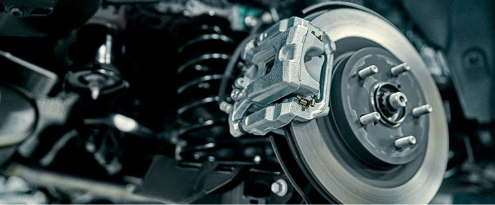
For instance, when a new set of brake pads are installed, the piston(s) in the caliper (the hydraulic clamp that squeezes your brake pads against the spinning rotor when you mash on the brakes) needs to be retracted to allow the new pads to fit. A thorough repair would include carefully cleaning the edges of the piston before it is forced back into the caliper. Otherwise, crud that builds up can cause your brakes to freeze up, to stick. That, in turn, causes other problems: excess heat, premature pad wear, and damage to the rotor. It might also make your car pull to one side.
Besides inspecting and cleaning the caliper piston and its rubber boot, a technician might also clean and lube (or replace) the caliper pins and other hardware. These operations can take time. Time that some shops might try to avoid. You might ask about the approach taken at your shop of choice.
5. What is the warranty?
Vehicles last longer today than they did in the past. That fact makes it really important for a service shop to stand behind its work. Yes, some brake system components are “wear items”, which means they wear out and need to be replaced from time to time. But they should have a minimum lifespan. And the repair itself should be backed by the shop. Ask if there is a warranty on parts and/or labor.
Any repair shop to whom you trust one of the most expensive investments you own - your car, truck, or SUV - should be about serving its customers. Make sure you feel as if you are getting straight talk. Ask questions and listen for thoughtful answers. A trusted technician will be happy to explain repairs, and a quality shop will fill you in on what is being done to your vehicle and even save the old parts for you to inspect. If you do not feel like you are being treated with respect or that you are getting the whole story, feel free to search for another shop.
