
Getting ready for a long road trip in your Tesla? You don’t have to worry about running out of miles in the middle of the road. Tesla’s network of Supercharger stations make it easy to charge your vehicle quickly, wherever you are.
Tesla Supercharging is a network of charging stations owned by Tesla, with more than 3,000 stations worldwide. They can charge most Teslas to 80% in less than 30 minutes. The charging cost per 100 miles is $4-$6, depending on the local energy cost.
Whether you’re a new Tesla owner or you want to clear any doubts about how charging one works, this article will answer all your questions.
Tesla Supercharger is a fast-charging technology created by Tesla. There are over 3,000 Superchargers stations with several Superchargers each. Superchargers could (up until recently) only be used by Tesla cars.
With a 480-volt current, Superchargers are designed to work with all of Tesla’s cars.
Tesla introduced this technology to the public in 2012 with their Supercharger Network. As the name implies, the Supercharger Network is a global network of fast-charging stations that use Tesla’s charging technology.
The network started with six Superchargers in the US and hasn’t stopped growing since. As of 2021, there are over 3,000 Supercharger stations around the world. With an average of nine Superchargers per station, the total number surpasses 25,000.
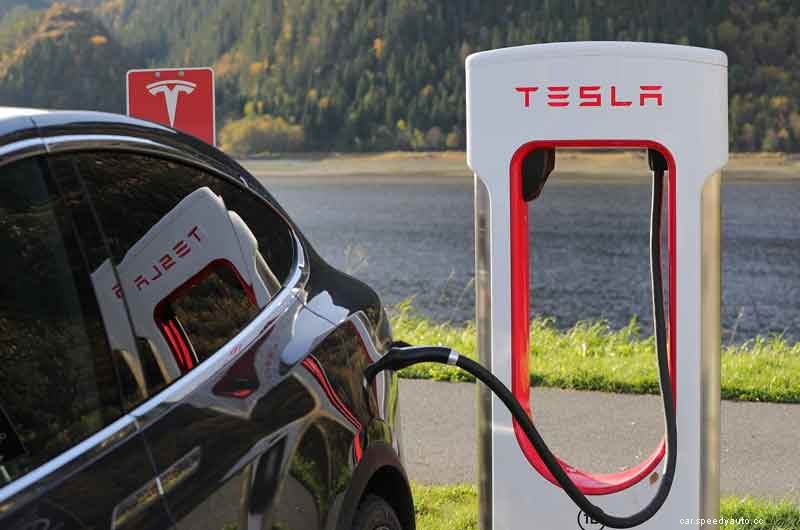
More than 1,000 Superchargers are located in North America, mainly in the US. The rest of the Superchargers are distributed through Europe, Asia, and the Pacific.
The focus of Tesla Superchargers is to allow Tesla owners to embark on longer journeys. In fact, Tesla went to the length of forbidding commercial vehicles from using Superchargers. This ban includes professionals like taxi drivers, likely in an attempt to free the way for consumer use.
Another proof that Tesla is trying to make Superchargers as convenient as possible for Tesla owners is the trip planner app for Tesla cars.
Even if you’re on the road, you can easily find Supercharger stations with the trip planner. After setting your destination, the trip planner will set a course with Superchargers along the way. It will account for other variables like elevation, driving style, and stall availability.
Pro Tip:
Most people obey the in-car navigation instructions, but the Tesla Navigation is quite conservative with charging planning ensuring that you never run out of any charge under any condition. To increase charging speeds and decrease costs you can try to use superchargers with about 10% of charge. You should also try to prioritize V3 chargers if possible. Then you should be able to max out the charging rate at 250kw. This way you can add about 65miles in 4 minutes, or 125 in 10 minutes. If your supercharger is billed per minute, this will save you a lot of money.
Tesla has made it very easy for owners to use Superchargers. The process only takes a few steps:
We wrote a similar article about the Basics of Supercharging. Feel free to give it a read and stay informed!
Most Tesla Superchargers can charge up to 200 miles (322 km) in just 15 minutes. That’s a huge leap when you compare it with home charging, which usually takes an hour to charge 44 miles (71 km).
Since Tesla introduced the Supercharger V3, charging has gotten even faster. While the V2 could support rates of up to 150kW, the V3 takes that number to 250kW.
The time it takes to get a full charge will depend on your car’s battery size. Here are some estimates for each model:
| Tesla Model | Maximum charge in 15 minutes | Average time for charging 20% to 80% |
| Model S | 200 miles (322 km) | 30 minutes |
| Model 3 | 175 miles (282 km) | 20 minutes |
| Model X | 175 miles (282 km) | 30 minutes |
| Model Y | 162 miles (261 km) | 32 minutes |
There are also some discrepancies between the peak numbers Tesla provides and the average charge time that consumers report.
To prevent congestion in Supercharger Stations, your Tesla may limit your charge to 80%. You can change this setting in your Teslas’ screen or the Tesla app.
In any case, your Tesla will always recommend the necessary charge to get to the next supercharger.
If you want more tips to optimize your Tesla’s range, check out this video by Andy Slye:
The fact that Tesla has its own network of charging stations only makes their cars more appealing. Depending on where you live, they’re readily available and easy to use.
But what if there’s a non-Tesla charging station that’s closer to you? Are you limited to only using Tesla proprietary chargers?
You don’t need a Supercharger to charge a Tesla. Any third-party charging station will do as long as you have the right adapter. Stations labelled as “1772” or “120 volts” will work with the Mobile Connector that came with your Tesla. You can also buy a separate adapter to charge at 240v stations.
It’s a good idea to carry both the Mobile Connector and the adapter bundle in your trunk when you’re going for long road trips.
And in case you’re wondering, Tesla chargers can’t be used right now by other electric cars.
However, Elon Musk recently announced that they plan to open their Supercharger Stations for other manufacturers to use. Tesla would set a standard price, and the process would be done through the Tesla app.
In most of the world, Tesla connectors are standardized, so the transition will be easy. However, in the United States, Superchargers have a proprietary connector that’s only compatible with Teslas, so owners of other brands would need to buy an adapter.
 You will find more infographics at Statista
Tesla Supercharger Miles was a part of Tesla’s referral program. If a family member or friend purchased a Tesla using your referral link, you could have access to free miles of charging and chances to win Tesla vehicles.
Sadly, since September 18 of 2021, vehicle products are no longer a part of referral awards, including free miles.
If your referred friend made their purchase before that date, you could still get access to free miles. For each referral, both the referer and the referred customer get 1,000 free miles (1,609 km). If the order was delivered between September 10 and 30 of 2019, you could get 2,000 miles (3,219 km) per customer.
Tesla supercharger miles expire after six months after the miles were added. They can be used on any vehicle on the same account. So, if you have a lot of Supercharger Miles stored up, don’t save them up!
Since it’s no longer possible to earn new free Supercharger miles, it’s tempting to leave them for when you need them the most. But, as you can see, if you wait for too long, you lose them.
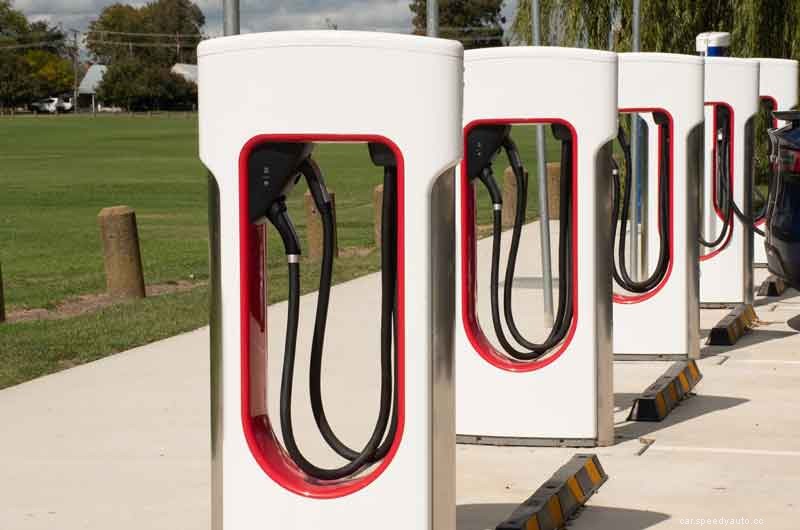
There isn’t a straight answer to how much Tesla Supercharging costs since prices will vary depending on where you live and what model you have. However, there are two ways in which Tesla bills owners: per kWh and per minute. The first option is the most common one.
If you’re being charged per minute, the price will vary according to two tiers:
Payment can also vary depending on whether you’re at peak energy usage rates. If you’re charging your Tesla at a time of day when many people in the area are using electricity, then the price of Supercharging will go slightly up.
Superchargers are considerably faster than charging your Tesla at home, which also makes them more expensive. They charge your Tesla with direct current (DC), which is much more efficient than the alternating current (AC) available in homes.
The price of charging is displayed on your Tesla’s screen. It’ll also show you an estimate of the final charges. Charging prices always include taxes and fees.
Models have different efficiencies and battery sizes, so prices vary with each one. If you take the average cost of energy in the US, we can get some estimates for each model:
| Tesla Model | Cost per Mile | Cost per 100 miles (161 km) | Full Charge |
| Model Y | $0.22 | $5.28 | $17.21 |
| Model X | $0.064 | $6.37 | $22.95 |
| Model 3 | $0.044 | $4.36 | $11.47 |
| Model S | $0.057 | $5.67 | $22.95 |
If you leave your vehicle plugged in after it’s done charging, Tesla will start counting an idle fee. The longer your Tesla stays idle, the more you’ll have to pay. If you move your Tesla within 5 minutes after it’s done charging, the fee will be removed.
Tesla charges an idle fee to keep the Supercharging experience as quick as possible. If you decide to take a walk while your Tesla recharges, be sure to keep an eye on your Tesla App notifications!
Tesla Supercharging isn’t free. But some models, depending on when they were bought, carry some kind of free supercharging promotion. Free Supercharging is a somewhat confusing feature, as it has never been consistent, and many owners aren’t sure if their vehicle qualifies for free charging or not.
When Teslas first came around, free charging was much more widespread in an effort to popularize the new brand. Nowadays, free charging and referral programs are much more conservative.
Right now, there are no free Supercharging perks for buying a Tesla. However, depending on when you made your purchase, you might get unlimited free Supercharging for your vehicle.
These are the situations where you may be able to get free Supercharging:
Keep in mind that free Supercharging isn’t transferable. If you buy a second-hand Tesla, you won’t be entitled to any kind of free Supercharging.
The best way of making sure whether your Tesla qualifies for free Supercharging is to contact the company directly. The Tesla app can also tell you if your car has Supercharging capabilities, but it won’t go into much detail.
There are 3,254 Supercharger stations distributed throughout the world as of 2021. Almost 1,200 stations are located in the US. There are another 1,000 in China and more than 600 in Europe. Tesla plans to triple the number of Superchargers over the next 2 years.
You might be thinking 3,000 isn’t that much, at least if you compare them to how ubiquitous gas stations are.
However, by 2017 there were only 1,000 Supercharger stations worldwide. That number has more than triplicated in only 4 years! With such impressive growth, you can only expect to see even more Supercharging stations in the future.
If you want to know how Superchargers are distributed worldwide, you just have to take a look at Tesla’s interactive Supercharger station map.
There are several Supercharger stations in every US state, so you won’t have to drive too much before finding one.
However, the US isn’t the only country with a decent Supercharger infrastructure. In fact, Hong Kong takes the record for the place with the highest density of Superchargers in the whole world.
There are around 1,000 stations in mainland China, but 800 of those are in Beijing, so you can’t say there’s much of a network outside the capital. Europe doesn’t fall behind either, with over 600 stations and plans to install many more.
Tesla Supercharging is one of the most useful aspects of owning a Tesla. With over 3,000 stations worldwide, they allow you to charge your vehicle quickly across long road trips.
