
Tesla is one of, if not the most recognizable brand, of Electric Vehicles on the market today. However, many potential customers who live in warmer climates may wonder if hot weather will negatively affect a Tesla.
Heat can affect a Tesla’s battery range, and any extreme temperatures can make your battery last longer or shorter. Temperatures of 100º F (43.3º C) or above can drop your vehicle’s battery efficiency by as much as 40%.
Keep reading to see a breakdown of how heat affects Tesla battery life and learn some details on EV battery performance under different weather conditions.
All lithium-ion batteries provide optimal performance around 68° F (20 °C), or slightly below it. This rule applies to 18,650 cell batteries (used in the roadster, Model S, and Model X), as well as the 2,170 cells (used in the Model 3 and Y).
For a walkthrough on how temperatures affect Tesla performance, check out this video from Ben Sullins:
As you can see, forcing a Tesla to operate at extreme temperatures can negatively affect battery life to a large degree.
Colder temperatures increase impedance, which lengthens charging time. That means that the charged electrons have a more challenging time doing their thing inside the battery, simultaneously making it harder for the battery to hold a charge.
Conversely, chemical changes that happen inside batteries happen faster at higher temperatures. This rapid change can cause the batteries and their charge to degrade more quickly. This degradation can be dangerous at high temperatures since some batteries may short or overcharge.
Pro Tip:
If you tend to often check your car’s rated range (by going to the charge limit and sliding and hovering the limit controller over 100%) you can see what the rated miles are. With the new app you can click on the thunderbolt, and it will open this section for you to adjust the charge limit. You can also do this from anywhere even when the car is not charging. This will also open the charge port unfortunately. If you just want to adjust the charge limit from your phone without opening the charge port, you can just click on the battery icon. This way it will not open the charge port.
According to the experts at Recurrentauto, high temperatures will change the composition and organization of the SEI layer (the layer of the battery that helps it keep holding a charge). When high temps wreak havoc on this layer, the battery will end up using too much lithium, or it will create unreactive compounds, preventing ions from flowing.
That’s a bit complex. However, the biggest takeaway is that heat will degrade batteries left at high temperatures, even when the vehicle is powered off. High temperatures during charging can also cause damage to the battery.
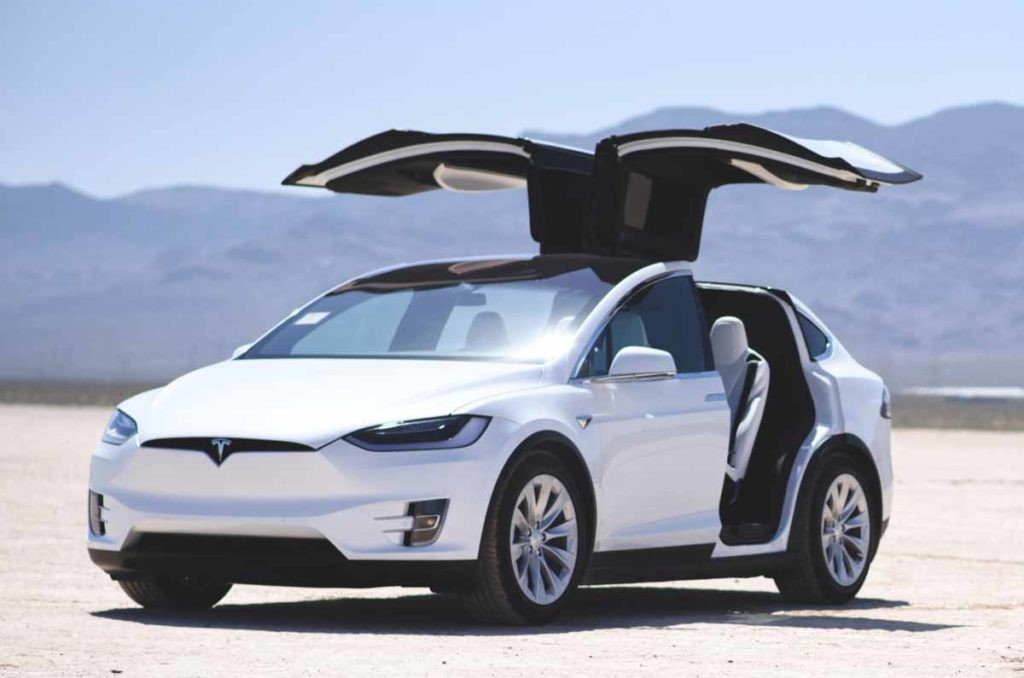
A Tesla isn’t likely to overheat in hot weather, although the temperature can have many different effects on EV batteries. The batteries can withstand high temperatures (around 50 °C or 122 °F) but may be negatively affected if they stay too warm over time.
Teslas are built with active thermal management systems that allow the vehicle to cool down the cabin and essential components (like the battery) if the temperatures reach dangerous levels.
Driving the car introduces fast-moving air to the ventilation system, which is diverted to help cool the cabin and components while the vehicle is in motion.
Pro Tip:
If you don’t like the air draft in your face, there is something you can do about it. You can separate the airflow to the steering wheel (and your face) by inserting your fingers inside the center of the airflow of the air conditioning and pulling it apart. This will ensure that the airflow is flowing in dual directions of the steering wheel.
While this means that Teslas won’t get hot enough to seriously damage the battery or components, hot and cold temperatures will still affect the vehicle’s battery life.
It’s recommended to charge, drive, and store your Tesla at moderate ambient temperatures and to operate the car at charges close to (but not quite at) 100%.
If you’d like to find out what’s wrong with your Tesla Air Cinditioning, you can read this troubleshooting article that we wrote.
Teslas and other EVs come with a ‘preconditioning feature’ that allows the car to regulate temperatures automatically before you start to drive. Your Tesla will optimize the battery’s temperature for optimal performance when you use the feature.
You don’t need to precondition your Tesla battery in the summer, but you probably should. Using the preconditioning feature before driving in hot or cold weather can help mitigate extreme temperatures’ effects on battery life and vehicle range.
The cooling used by the thermal management system is highly dependent on the radiator, just like in a gas-powered vehicle.
Preconditioning your Tesla before taking it out for a spin is not only better for the battery, but it can also save you the experience of sitting in an overheated cabin waiting for the AC to cool you down.
I wrote a detailed and similar article about Tesla Battery Preheating and Preconditioning – Ins and Outs. Have a look to find out more facts about weather related EV issues.
Like hot weather, cold temperatures can also negatively affect battery performance. There is less danger of damaging the battery components when it’s chilly outside, but there is still a significant effect on battery life.
As mentioned before, lithium-ion batteries work best around 68 °F (20 °C).
At colder temperatures, electrical impedance increases, making it harder for the electrons to do their thing while overcoming mutual attraction. That means that the vehicle will charge more slowly, and the charge will not hold as efficiently when driving.
Cold weather is not worse for your tesla than hot weather. Unlike overheating, lower temperatures do not decay the battery components into other compounds and are less likely to damage the battery.
Still, it is best to keep the vehicle around 68 °F (20 °C) during charging. The preconditioning feature is ideal for charging your Tesla in extreme weather since it can maintain that optimal temperature for the best charge.
One plus side of this is that it is generally more manageable for the temperature mitigation system to heat the car’s components than to cool them down. That’s because the vehicle generates heat even when stationary, which can help warm the batteries to their optimal temperature.
If you’re in the market for an electric vehicle, but you don’t know which one to go with, you may be wondering which ones stand up the best to various weather conditions.
The chances are that you know more or less the type of car you wish to drive, but you want to understand the details about the technical stuff like lithium-ion batteries and how they stand up to the heat.
Tesla models perform much better at extreme temperatures than other EV models in a side-by-side comparison. That’s because Tesla features state-of-the-art temperature mitigation systems that many other EV models fail to replicate.
You can see a side-by-side comparison of a few different EVs in the following table.
| Make and Model | Official Range (Mi) | Actual Range in Winter (Mi) |
| Tesla Model S | 610 | 475 |
| Tesla Model 3 | 560 | 407 |
| Tesla Model X | 507 | 360 |
| Kia e-Nitro | 455 | 350 |
| Hyundai Kona | 449 | 405 |
| Mercedes-Benz EQC | 404 | 310 |
Data Courtesy of RecurrentAuto.com
As you can see, the Tesla Model S has a very high range rating of 610 miles (981.7 km) on a full charge. That is comparable to what many gas-powered vehicles get on a full tank of gas.
However, this drops down to 475 miles (764.43 km) during the winter months, when the cold weather increases the impedance in the batteries. Other Tesla models are similarly affected but still perform better than competing EVs from other manufacturers.
If you’re thinking of purchasing an electric vehicle for use in a hot climate, there are some factors you should take into consideration.
Some EVs perform better than others, and some don’t have access to adequate space to store and charge their vehicle at optimal temperatures.
