
From fighting climate change to finding the most budget-friendly choice, there are many reasons why people might want electric vehicles (EVs) instead of gas-powered versions. While there is a lot of hype around EVs being the best financial choice, it’s easy to wonder if an electric vehicle is really a better bang for your buck. When it comes to everyday purchases like gas, does the cost to charge an EV even compare?
Charging an electric vehicle is cheaper than paying for gas, saving up to $0.04 per mile (1.6 km). Charging an EV is between $5,000 and $12,000 cheaper than fueling with gas over a 15-year lifespan, based upon vehicle size, type, and location.
Are you brand new to the electric vehicle world? In this article, I go over the following:
Choosing an EV doesn’t need to be complicated, so let me guide you through the savings by ditching your gas vehicle.
While there are pros and cons for every major decision, the positive reasons to switch to an EV outweigh the negative ones.
If you have ever taken a road trip from coast to coast, you might have noticed the significant difference in gas prices varying from state to state.
For instance, gas prices in California are higher than in other states. Compared to the East Coast, the West Coast was nearly 70 cents more per gallon (4.5L) in 2020. Gas is also a constant variable in any location, with prices sometimes fluctuating a few times per day.
While electricity costs are higher in California, Hawaii, and the Northeastern states, electricity premiums are lower during “off-peak” periods of the day.
While the exact hour of peak or off-peak pricing will vary based on the electricity provider, overnight hours are always considered off-peak. This means that an EV owner who charges their car at home overnight can save anywhere from 25-35% compared to charging in the daytime.
Overall, having better “control” over electricity costs is a massive win for EV owners.
Knowing that you can charge your car overnight for the same relative cost is undoubtedly better than playing the daily gas price game. With varying gas prices state-to-state, you can easily travel across borders, knowing the cost to charge won’t be as drastic.
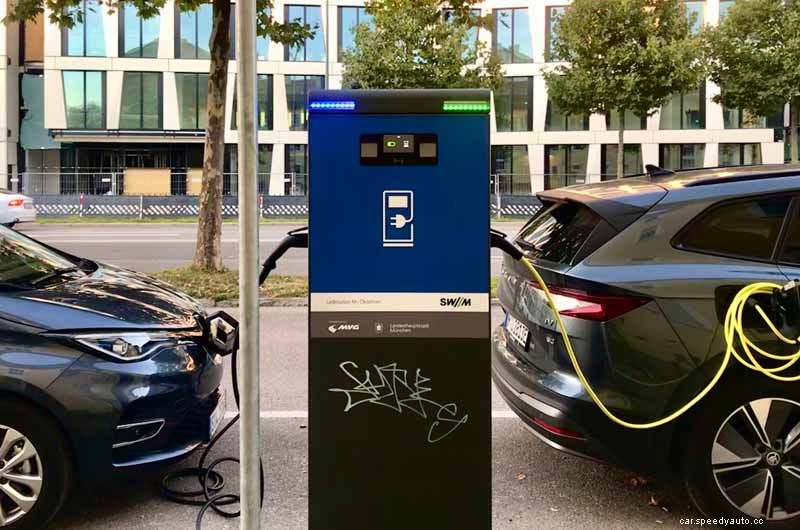
It doesn’t take a rocket scientist to know that fueling a huge, powerful truck is more expensive than a tiny compact car. The gas tank size alone will vary, and the power required to run the car will also play a factor.
While electric vehicles don’t have a gas tank, the size and type of vehicle may require longer charging times to charge it up completely.
Just like when deciding on a gasoline-powered vehicle, you need to figure out the usual purpose of your new EV and factor in the costs associated with it. A compact mini EV may work if you are a local commuter without children and will only take 3-4 hours to charge.
If you have a large family and need a vehicle that will haul things, some electric trucks that have yet to hit the market will take 14+ hours to charge fully.
Again, the ability to charge a larger vehicle compared to fueling it with gas is another win. Leaving a larger car to charge overnight will be cheaper than filling up a gas tank.
I will cover that part in the cost comparison chart below.
The purchase price of an electric vehicle is usually 10% to 30% more than its gas-powered counterpart, which may hinder some from even considering an EV. The savings on an electric vehicle come along later, making it the more budget-friendly choice over a gas car.
Luckily, the federal government incentivizes those who purchase an electric vehicle as a part of green initiatives. This federal tax credit varies based upon vehicle type but can help those stuck on the fence about taking the plunge into electric vehicles.
If you’d like to find out Why Used Electric Cars Are So Cheap, check out this article that we wrote. Check out which sort of EVs are the best buy.
Electric vehicles have fewer moving parts and therefore require less maintenance. Regular maintenance like oil changes and transmission fluid is not required, bringing approximate savings up to $200 a year.
Thanks to regenerative braking, there is significantly less wear on brake pads, and therefore the need to replace them is less frequent. Overall, the estimated cost to maintain an electric vehicle is 30-50% less than a regular gas vehicle.
This YouTube video goes over the lifetime cost comparison of an EV vs. a gasoline vehicle:
