
Making your Airbnb listing competitive and profitable takes a little work. In addition to keeping the place clean, great communication with the guests, and routine maintenance, some hosts add a little extra to ensure their guests have the best experience. In fact, some hosts go as far as providing a personalized note and bottle of wine when the guests are celebrating a certain event, such as an anniversary. This above and beyond effort goes a long way and will often lead to five star reviews. With enough of these amazing guest experiences, you’ll be able to justify higher listing fees.
One great way to increase your guest’s experience is to provide an additional amenity your competitors likely are not currently offering. As hinted in the title of this article, that additional amenity is EV charging. By installing EV charging at your Airbnb listing, you’ll attract a growing crowd of electric vehicle (EV) owners. EVs are here and increasing in market share each and every year. In fact, adoption rates in California are around 10% and are estimated to reach 30% by 2030. Inevitably, more charging stations are needed to facilitate all of these electric cars and installing EV charging at Airbnb is a perfect place.
As previously mentioned, by installing an EV charging station at your listing you can guarantee you’ll see a rise in demand specifically from EV drivers. When EV drivers on a long trip, planning and stopping for charging can be a concern. Fortunately, most EVs today can charge in around 30 minutes. That being said, charging to 100% overnight while you sleep is much more convenient than stopping while out on the road.
As such, EV charging at Airbnb has incredible value to the EV driver. By charging at the Airbnb, they can remove an entire charging session from their journey. This can be a big time saver. In fact, it is very likely that EV drivers would be willing to pay more for the Airbnb listing for this convenience. This can be still true even if the charging is not free (more on that later)!
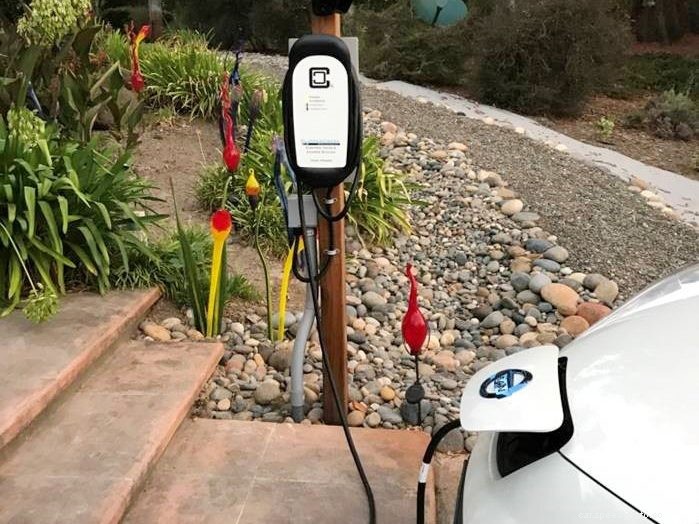
As you may have noticed, hotels are quickly installing charging stations for this very same reason. Airbnbs should follow this same trend too to capitalize on the growing population of EV drivers.
There are two options when it comes to paying for the electricity from the EV charger, either you pay or the guest pays. If you pay, you could raise your listing fees accordingly and market the EV charger as “free”. On the other hand, if you don’t want to cover the electricity costs, you can require the guest to pay directly at the charger. To accomplish this, you’ll need a special type of charging station that is capable of payment processing.
One recommended option to buy the Enel X Juicebox Pro and sign up (free!) to the EVmatch network.
Once you have the Juicebox Pro installed by an electrician, you can sign up the the EVmatch network and register the charger. EVmatch provides a peer-to-peer charging network. In short, guests will access the EVmatch app on their phone and select your charger. You’ll pre-set the cost to use the charger and approve or deny requests from guests.
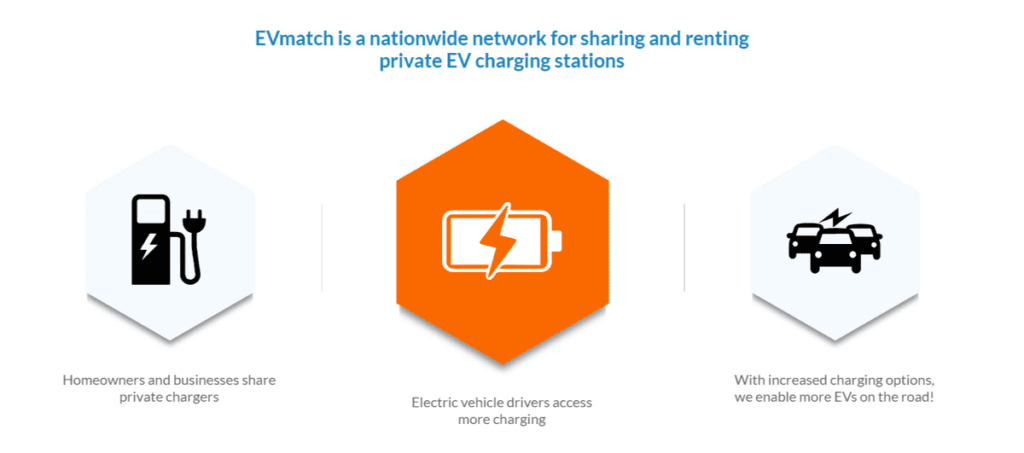
Once approved, guests will have access to the charger. Because all of this is connected to the internet, guests without approved access will not be able to use the charger even if they plug it into their car.
Finally, after everything is set up and running, you’ll generate revenue from each charging session. Since you have control of the pricing, you can set the cost to use the charger to cover the electricity costs and small EVmatch payment process fee or you can mark it up to generate some profit. Either way, EV drivers will be pleased to be able to charge their car overnight!
Showing off your green/sustainability practices may entice certain guests. In a world where climate change is becoming more and more a global concern, shifting to more environmentally friendly products is crucial for a healthy planet. By offering EV charging, you’ll show your guests that you are committed to helping the environment.
Electric cars produce zero tailpipe emissions and are proven to produce less lifecycle emissions when compared to gas cars. It may not be noted by all guests, however, some may take it as a sign of a good environmental steward.
