
For those of you new to zero-emission electric driving, we recommend a read of the following articles:
Electric cars offer many benefits, some related directly to driving and others not related to transportation. One such benefit is Vehicle-to-Home (V2H) bidirectional technology.
Some of you may have come across, Vehicle-to-Grid (V2G), Vehicle-to-Load (V2L) and Vehicle-to-Vehicle (V2V) charging technology. Though these are all part of ‘bidirectional technology’, each has its own unique benefit and constraint.
Bidirectional charging allows a two-way electricity flow, while, unidirectional charging allows only a one-way flow. Though V2H has much in common with V2G, differences exist between the two technologies. In V2H, the energy used is for powering the home and is not fed back to the National Grid, as is the case with V2G.
Though the primary role of an electric vehicle (EV) is transportation, it is now clear that an electric vehicle can also be leveraged for a lot more than just driving, given the advantages of the onboard high-voltage EV battery. Over the past few years, as the electric driving market has developed, we have witnessed both, EV battery size and battery performance improve substantially, offering broader opportunities unique to electric vehicles (EVs).
In the UK, we have trials underway in regards to Vehicle-to-Home (V2H) technology. One such example is Indra, an EV charging station manufacturer with experience in bidirectional electric car chargers. The company is currently running a V2H trial in the UK. According to the company, “Our pilot trial has proven that V2H technology can help you save up to £200 a month on your energy bills. It is also a game changer for helping to reduce your carbon footprint’.
Automotive manufacturers are also just as keen on developing V2H. In fact, the Ford Motor Company already offers V2H compatibility in its F-150 Lightning truck. According to Ford, the F-150 can power a home for up to 3 days. Expect many more EV manufacturers to follow suit. General Motors, the US based automotive manufacturer is currently running a V2H trial in the United States.
Bidirectional V2H charging allows an electric vehicle to be leveraged for powering a home. In Vehicle-to-Home charging, the high-voltage onboard EV battery becomes a battery energy storage systems (BESS), enabling energy to be stored, for use when the customer needs it. Decentralised EV battery storage units are expected to become an integral component of the National Energy Framework of a country. As the number of electric cars on our roads increase, the role of EV batteries will only become more pronounced and important to our day-to-day lives.
According to the IEA (International Energy Agency), “The Net Zero Emissions by 2050 Scenario sees an electric car fleet of over 300 million in 2030 and electric cars accounting for 60% of new car sales”. Put another way, the IEA expects at least 300 million EV batteries in use!
It is clear from our experience of vehicle ownership over the past many decades, that, the majority of the time vehicles are parked. In fact, some estimates suggest that cars are parked up to 95% of the time. Put another way, cars move only 5% of the time. Though we may see some improvement in capacity utilisation of vehicles in the coming years, as new services like ‘car sharing schemes’ develop further, we can still expect to see vehicles parked for the majority of time, in particular, in residential garages.
Vehicle-to-Home charging will allow this ‘downtime’ to be capitalised by EV owners to power their home from the energy stored in the EV battery, resulting in a number of benefits, to include, financial savings. In general, battery-electric vehicles (BEVs) have an onboard EV battery between 30 kWh to 100 kWh. Some of the recent introductions of pure electric cars offer an EV battery size larger than 100 kWh. But an average is 60 kWh.
An EV battery is no different from a home battery storage system, like the Tesla Powerwall. The Tesla Powerwall allows the stored solar energy to be used by the household reducing the reliance on grid sourced electricity, resulting in the family saving money and using clean and renewable energy. An EV battery is capable of doing just the same!
Given the average consumption of electricity for a household in the UK, a 60 kWh EV battery will have enough stored energy to power a home for up to five days, if not longer! Bottom-line, V2H is not only applicable for an emergency, like a power outage, but can be used on a day-to-day basis to power the home.
Though the V2H concept is simple to understand, its execution is not as straightforward, as a number of factors have to be considered, to include, the conversion of DC (direct current) to AC (alternating current). When charging an electric car at home, AC needs to be converted to DC. However, when discharging the onboard energy in an EV, DC has to be converted to AC.
For V2H to be possible, the bidirectional EV charger and the electric car have to be compatible with the V2H capability embedded. Also, some of the electrical infrastructure in the house will need to be updated to support V2H. Though V2H is at an early stage of deployment, expect it to become more widespread in the near future, as electric driving becomes more central to our narrative in the UK.
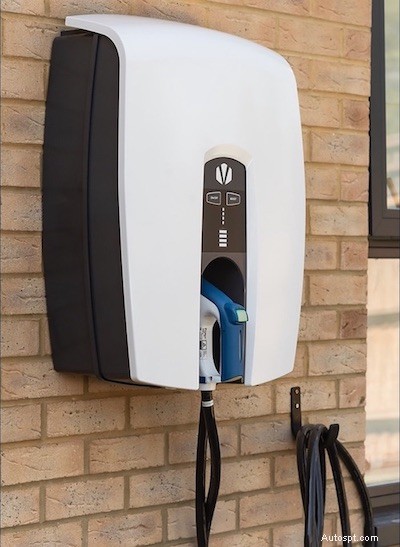 Indra Bidirectional EV Charger (credit: Indra)
While e-zoomed uses reasonable efforts to provide accurate and up-to-date information, some of the information provided is gathered from third parties and has not been independently verified by e-zoomed. While the information from the third party sources is believed to be reliable, no warranty, express or implied, is made by e-zoomed regarding the accuracy, adequacy, completeness, legality, reliability or usefulness of any information. This disclaimer applies to both isolated and aggregate uses of this information.
