
While most electric cars have a 8-year or 160.000 km warranty for their batteries, the upcoming Lexus UX 300e raises the bar to new levels.
Offering a 10-year or 1 million km warranty on its battery, Lexus ensures that the UX 300e maintains at least 70 % of its initial battery capacity for a long time, providing peace of mind to its customers.
Let’s see the press release.
First all-electric Lexus draws on 15 years of Lexus leadership in electrification
10-year (or 1 million kilometre) battery warranty to heighten peace of mind amongst UX 300e customers
Intelligently packaged and extremely durable all-electric drivetrain
Leveraging Lexus’ unique experience in building over 1.7 million electrified hybrids since 2005, the new UX 300e embodies the peerless quality and reliability that is a hallmark of the brand. Building on a world-class reputation for battery technology and durability, the first all-electric Lexus benefits in particular from the luxury carmaker’s leadership in battery management systems, power control units and electric motors.
NEWLY DEVELOPED LITHIUM-ION BATTERY
The UX 300e is powered by a newly developed 54.3 kilowatt-hour high-capacity battery which achieves 400 km of range in the NEDC cycle, corresponding to over 300 km target range in the WLTP cycle. Located under the cabin floor and rear seat to ensure a low centre of gravity, the 288-cell lithium-ion battery pack enables the space and practicality expected from an urban crossover.
MAXIMISING BATTERY LIFE AND DURABILITY
For increased control and battery life, sensors monitor the voltage of each battery cell and block, as well as the battery cell temperature. In tandem with the car’s advanced Battery Management System, this results in maximum usable battery cell capacity, and an extended driving range.
For the UX 300e, Lexus developed a battery cell air-cooling system which is safer and lighter than water-cooled systems. With cooled air circulating inside the battery pack, stable battery output can be attained even at high speed and during repeated rapid charging. Working hand in hand with the cabin air conditioning, the system enhances the car’s performance, battery life and charging performance.
Reliability was also to the fore in the development of the battery heating system. Heating elements under each battery module minimise the impact of cold weather on the driving range, ensuring full power is available from the start.
Finally, for a long, trouble-free service life, the battery pack is fitted with rubber seals to protect it from water and dust.
10-YEAR BATTERY WARRANTY
As a measure of the brand’s confidence in its all-electric vehicle technology, Lexus is offering a 10-year (or 1,000,000 km) service warranty on all functional defects of the BEV (Battery Electric Vehicle) main battery and capacity degradation below 70%, provided that the owner respects the regular health checks foreseen in the maintenance program. In addition to the battery warranty, the UX 300e owner will benefit from the 3-year vehicle warranty and 5-year cover (or 100,000 km) on drivetrain defects.
“Our acknowledged leadership in electrification, coupled with this 10-year warranty commitment, brings a new level of reassurance to customers opting for a BEV in this segment,” Pascal Ruch, Head of Lexus Europe
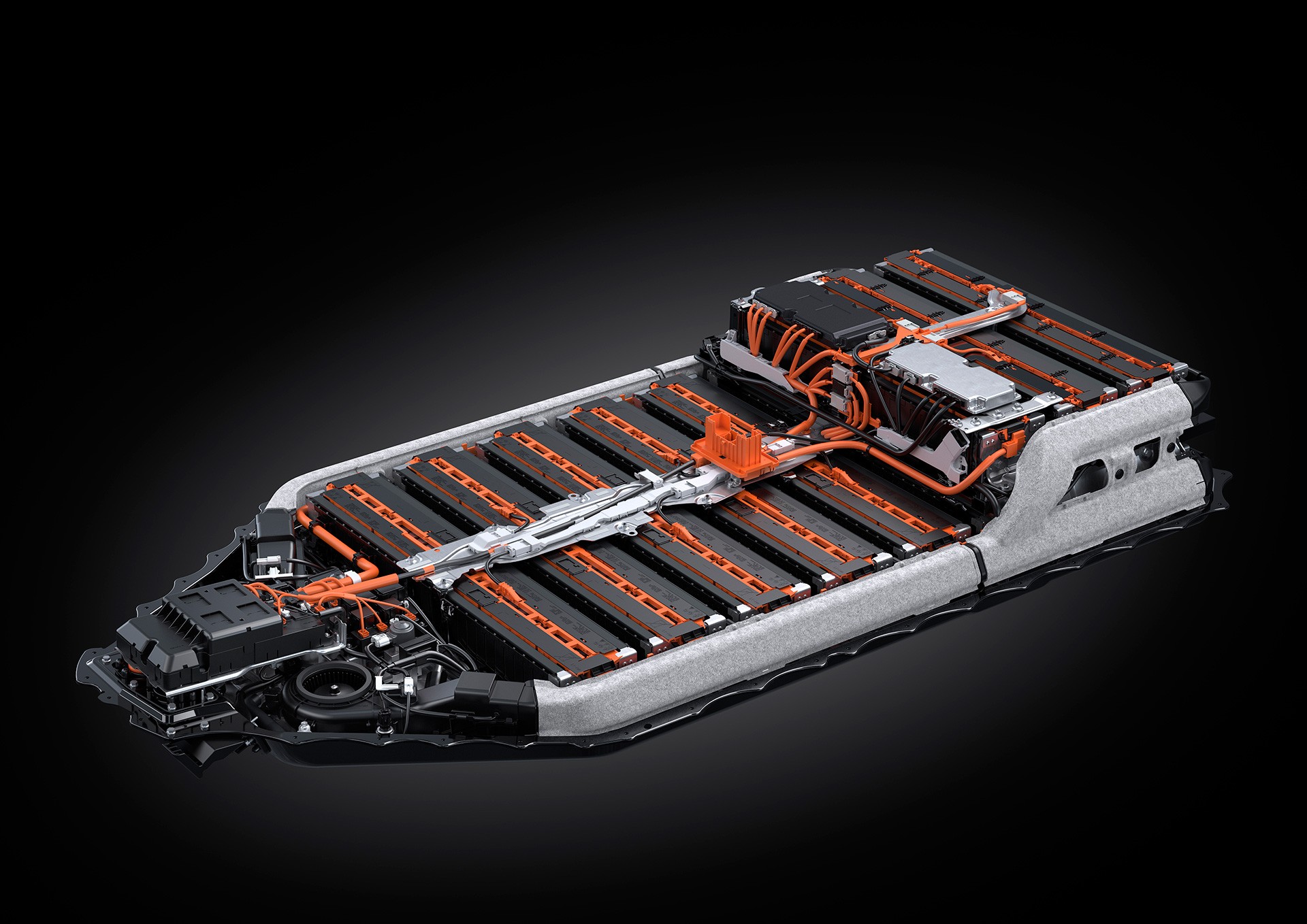
Lexus UX 300e battery
PRECISION-ENGINEERED ELECTRIC VEHICLE TRANSAXLE
An ultra-compact new transaxle, with a 3-shaft layout and reduction gear mechanism to allow high motor speeds, delivers class-leading drivetrain performance and exceedingly low noise levels. For extended component life and super-smooth running, Lexus engineers introduced improvements such as gear tooth surface polishing, a sound-proof cover and an optimised lubrication system.
HIGH-OUTPUT ELECTRIC MOTOR
The UX 300e’s all-new BEV drivetrain includes a high-output 150 kW (204 DIN hp) electric motor/generator driving the front wheels. This lends the car a natural-yet-brisk acceleration character, delivering a top speed of 160 km/h and 0-100 km in a sprightly 7.5 seconds
BUILT TO LEXUS QUALITY STANDARDS
Ensuring the first all-electric Lexus shares the same world-class quality that is a mainstay of every Lexus car, the UX 300e is built alongside electrified hybrid models at Lexus’ award-winning Kyushu plant, with production overseen by its renowned ‘Takumi’ master craftspeople. Famed for their minute attention to detail and exacting standards, the Takumi perfectly embody Lexus’ commitment to quality in every vehicle it builds.
The UX 300e will be introduced to selected markets in Europe by the end of the year.
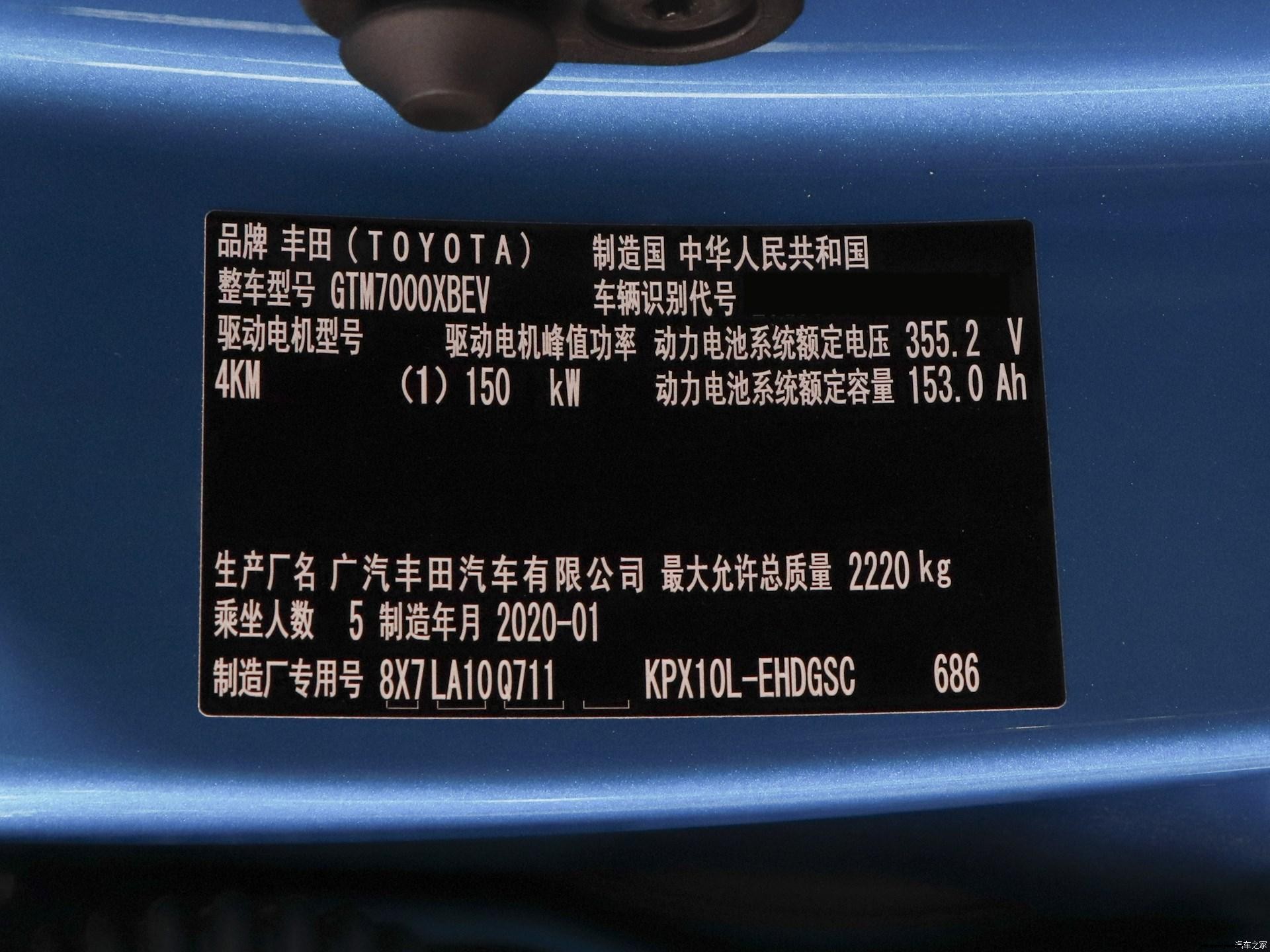
Toyota C-HR EV information label
The 54,3 kWh (355,2 V x 153 Ah) battery is the same that we find in the Toyota C-HR/IZOA EV. It’s actively air-cooled and made with 288 (96s3p) prismatic battery cells from Panasonic, this is enough to give the Lexus UX 300e a WLTP range superior to 300 km (186 miles).
Moreover, the battery weighs 350 kg, which means a gravimetric energy density of 155 Wh/kg. This is a very similar figure to the BMW i3’s 120 Ah battery made with NCM 622 cells from Samsung SDI.
I know that most people prefer a TMS (Thermal Management System) with liquid-cooling, but I have nothing against a TMS that just actively uses air to heat or cool the battery. I like simple things and this kind of TMS has the advantage of requiring less maintenance.
What I would like to know is the usable battery capacity to determine how large the buffer is.
Anyway, considering that the Lexus UX 300e comes with a DC fast charging rate limited to 50 kW via CHAdeMO, Lexus might be betting that fast charging in Europe – where CCS is standard – will be less frequent, allowing themselves to offer a generous battery warranty.
After years of spreading propaganda against electric cars, offering a generous battery warranty might be a smart strategy that helps Toyota regain some lost trust within the EV community. What do you think?
