
Clean Air Day is now in its 4th year and takes place tomorrow, on Thursday 8th October. Led by Global Action Plan, Clean Air Day is the UK’s largest air pollution campaign, it began back in 2017 and at DriveElectric we’ve been marking the occasion too for the last 4 years…
The purpose of the Clean Air Day campaign is to improve everyone’s understanding of air pollution and raise awareness on how it affects our health. Over 36,000 people in the UK die every year as a result of poor air quality and The World Health Organisation recognise air pollution to be the largest environmental risk we face today.
Many things are being done to help reduce the air pollution across the country;
There are lots of ways you can help improve the quality of the air around you and reduce air pollution, we have put together a list of some ways you can try and start to make an positive impact on your local environment.
As a company we are always looking to reduce our carbon footprint and accelerate EV adoption to improve air quality for everyone, and Clean Air Day an important day of reflection and taking action to us.
Normally on Clean Air Day we challenge our team to try lift sharing, public transport, working from home or an EV for the day (if they’re not already an electric car driver). This year we’re mostly working from home, so 80% of our team have an incredibly low carbon commute currently today, which involves walking from one room to another in their own home. What a year! But the good news is that WFH has helped us smash our low carbon goals for Clean Air Day 2020! #nailedit.
Taking into account those who will be in the office today we’re still looking pretty low carbon for today in terms of travel, we’re up to 87% low carbon commuters from 60% last year, good news for local air quality! We’ve put together a couple of pie charts to compare our team’s 2019 and 2020 Clean Air Day commute:
Give the air pollution calculator a go and find out what your individual contribution to air pollution in the UK and ways you are able to reduce it. This is the UK’s first personal Air Pollution Calculator, which helps you to better understand how lifestyle choices affect the quality of the air we breathe and the simple steps that can be taken to reduce it. Focusing on the largest sources of air pollution like personal transport and domestic burning, therefore is just an estimate of your footprint.
Get your air pollution footprintClean Air Day Live will recognise the benefits of clean air places, celebrate those that are acting to improve the air we breathe and inspire others to play their part in cleaning up our air. Clean Air Day Live will run for the whole day on Thursday the 8th October 2020 from 10am to 5.30pm BST. The line up is subject to change but currently will include talks from the following:
10:00 – Welcome to Clean Air Day
10:15 – Virtual School Assembly
10:30 – Clean Air School Framework
11:15 – Campaigning
11:45 – Campaigning Case Study 1: Citizen’s UK
12:00 – Nocado Campaign
12:30 – Unequal Air – Panel Session and Q&A
14:30 – How Can The Health Sector Tackle Air Pollution
15:30 – How many cars do we need?
16:15 – Clean air workplaces for healthier employees
17:00 – Clean Air Celebration Event
18:30 – Clean Air For All – COVID-19, Clean Air and Mobility Event
We have gathered a few of our favourite news stories from 2020 highlighting and celebrating clean air
30th July 2020 | Global Action Plan
The “breathable billboards” were placed different spots around the city; Canary Wharf, Finchley Road and Westfield White City, and flowering lungs were used to remind commuters and the public around the city to be conscious about travel choices to help prevent pre-COVID-19 levels of air pollution returning.
The lungs on the breathable billboard reacted with real time localised pollution data from the ‘Daily Air Quality Index’ based on the billboard’s location. When pollution levels are low and healthy the sites are bright and clear, and the lungs are blooming. But when air pollution is high or approaching illegal levels, it changes colour and darkens with withered and brown brown lungs with a different message.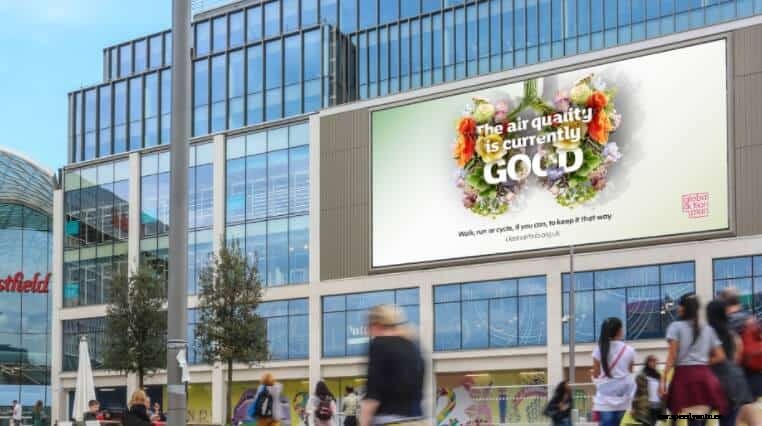
5th Oct 2020 | Air Quality News
A report, including data from the Environmental Research Group now at Imperial College London has revealed that even before lockdown, measures implemented by the Mayor of London since 2016 have significantly improved London’s air quality.
The Mayor of London, Sadiq Khan, said: ‘I’m pleased that Londoners are breathing cleaner air, that we’re saving the NHS billions of pounds and preventing over a million hospital admissions.
‘However, air pollution remains a major public health challenge and it’s time for Government to step up, set ambitious national targets and provide the powers and funding we need to consign air pollution to the history books.
‘We can’t sleepwalk from the health crisis of COVID back into complacency over the major impact of toxic air on everyone’s health.’
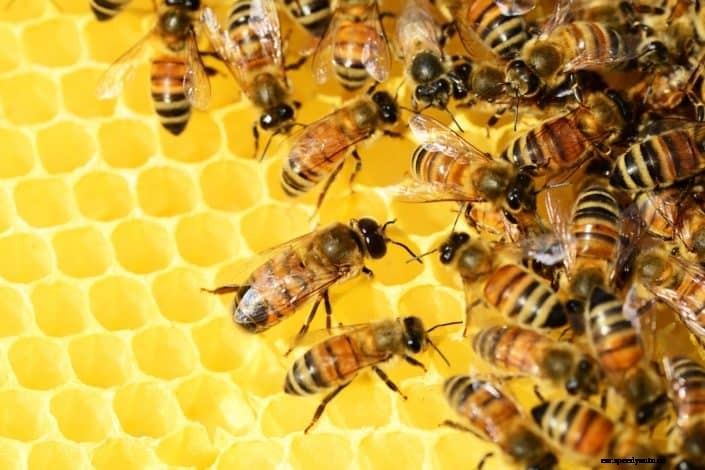
A new study has shown air pollution threatens honey bees. Air quality news reports:
“Whether it’s exhaust fumes from cars or smoke from power plants, air pollution is an often invisible threat that is a leading cause of death worldwide2″
If air pollution can harm human health in so many different ways, it makes sense that other animals suffer from it too. Airborne pollutants affect all kinds of life, even insects. In highly polluted areas of Serbia, for instance, researchers found pollutants lingering on the bodies of European honeybees. Car exhaust fumes are known to interrupt the scent cues that attract and guide bees towards flowers, while also interfering with their ability to remember scents.”
Air Quality News analysed Department for Energy, Food and Rural Affairs (Defra) monitoring data for nitrogen dioxide (NO2) in eight UK cities, comparing March 24th with the same day last year. They found air pollution halved in some UK cities on the first day of the lockdown to tackle the coronavirus pandemic.
Air pollution halved in some UK cities on the first day of the lockdown to tackle the coronavirus pandemic.https://t.co/4Fs03Bk2Mx
— AirQualityNews.com (@airqualitynews) March 25, 2020
Admiral take a look at the effects felt by the motor industry following the Corona virus and our MD Mike made some contributions to this article from an EV sales point of view. The good news is that there are some planet friendly changes on the horizon. We can still look forward to a greener future on our roads as the UK government has pledged to ban the sale of all new petrol, diesel and hybrid cars by 2035.
Mike Potter of DriveElectric is confident that sales of EVs will still recover to hit the 100,000-target forecast in January, despite taking a hit during lockdown. “Actually, I’m still hopeful that 100k is possible – June BEV (battery electric vehicle) registrations were 8,900 and a lot of new product is due,”.
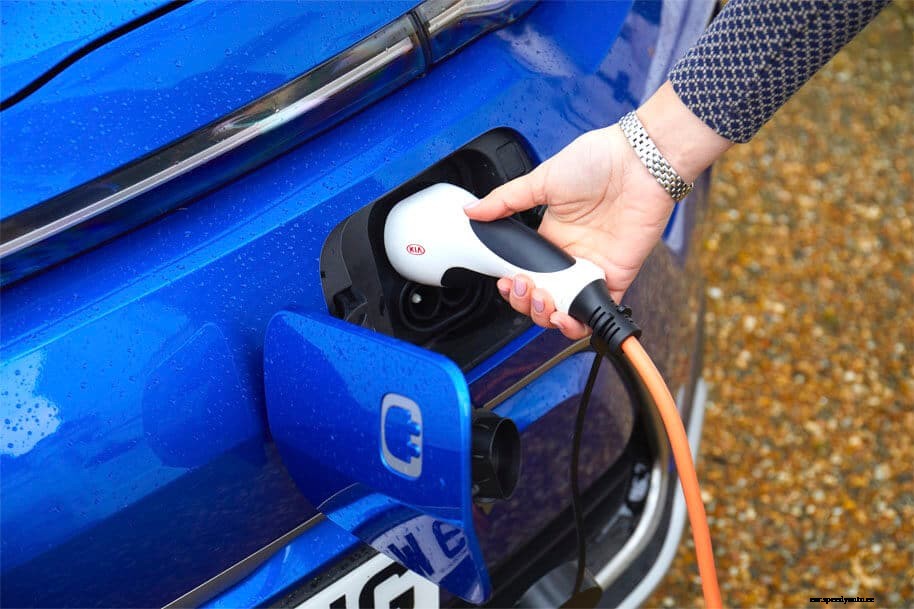
Take a look at what went on last Clean Air Day in our 2019 blog post
Clean Air Day 2019
Take an excursion to our events page to discover upcoming electric vehicle events and things to do… some we will be attending as ‘DriveElectric’ and some we’re heading to just for fun. We also post updates on prize draws and competitions we are running on this page (if you’re feeling lucky).
We’ve always found the EV community warm and welcoming so get involved if you can. As well as physical meet ups there are great EV owners groups on Facebook (the BMW i3 UK group on Facebook is particularly useful and chatty!) and there’s lots of activity on twitter too, so either virtually or ‘in real life’ we hope to see you there.
EV events and things to do