
If you’re looking at electric cars, environmental impact is probably high on your list of priorities. There are plenty of benefits of making the switch to driving an electric vehicle (EV). The positive impact on our environment is one of the biggest and best, especially if you have a business that runs a fleet of vehicles. Here we look at how and why EVs can play a major role in your company fleet.
In short, yes. Right across the world, we’ve finally realised that carbon emissions are harming our planet. That’s why the UK Government has banned the sale of new petrol and diesel cars from 2030. Fully electric vehicles are zero-emission and their batteries can be charged using renewable energy. This is cleaner and better for the environment than producing petrol and diesel. They are also much more efficient with the energy they do use compared to an internal combustion engine (ICE) vehicle.
New EVs are usually brimming with technology such as regenerative braking, which allows them to be more efficient and use less energy. The UK also hopes to connect more and more EVs to the electricity grid to share power at peak times, in something called vehicle to grid charging (V2G). This will allow the grid to draw renewable energy from cars and vans which are plugged in, with their batteries replenished when energy is cleaner at off-peak times.
DriveElectric Dictionary Definition
Regenerative braking is built into all electric vehicles and is a feature that helps you maximise range, and makes the process of braking less wasteful. When you raise or take your foot off the accelerator in an EV the regenerative braking will start to slow the car down before you touch the brake pedal, and harvests the energy from doing so, storing it in your electric car’s (or van’s) battery. In comparison – a combustion engine car’s brakes convert kinetic energy into wasted heat to slow the vehicle.
You quickly get used to ‘regen’ although in some vehicles you can adjust the regenerative braking setting to be more or less restrictive depending on your preferred driving style, the Hyundai IONIQ and Kona for example have paddles on the sides of the steering wheel which adjust this setting.
Business vehicle leasing has become extremely popular. As well as the environmental side, EVs are more sustainable than ever in terms of the economical side of running both large and small companies. Lower leasing costs play a huge role in this, with more competition and higher demand helping to drive down the cost of leasing an electric car or van.
Improved range capabilities have also made EVs much more suitable for companies who need a car or van for business use. Most new electric car models offer a ‘real world’ range of more than 150 miles per charge and some Teslas have WLTP ranges of more than 400 miles, while the Peugeot e-Expert Standard van has a real-world range of 170 miles.
If you or your drivers need to cover greater distances daily, the UK’s ever-improving charging network is on hand to help out. There are now more EV charging stations across the country than there are traditional petrol stations, while faster charging speeds are making those necessary pit-stops shorter.
There are many examples of companies going electric with their fleets. Indeed, we helped last-mile delivery service Gnewt ensure their fleet remained 100% electric so they could continue to be a zero tailpipe mission operation. This London-based firm has delivered millions of parcels across the capital and has done so from the beginning in electric vehicles savings thousands of tons of carbon emissions already. What we need though, is many more companies to go electric.
We also need leading firms with household names to make the change. This is why it’s so encouraging to see companies like Amazon and DHL join movements such as the Corporate Electric Vehicle Alliance. Meanwhile, another London-based firm, vehicle subscription service Drover – which currently has around 30,000 vehicles on its books – has signed up to the Climate Group’s EV100 campaign and committed to going fully electric by 2030.
Helen Clarkson, CEO of the Climate Group, acknowledged the growing desire for ambitious EV policies within the corporate world, saying: “As the UK looks ahead to hosting COP26 in 2021, corporate support for the transition to electric vehicles is more important than ever. Major companies signing up to EV100 send a strong demand signal to the UK government that British business is ready to accelerate the clean energy transition”.
Massive global giants such as the world’s three largest tech companies, Apple, Amazon and Google, have all entered the EV market to eventually produce their own electric cars. While there will of course be profits to be made, these businesses have also enjoyed the positive reputational benefits of being linked to the industry.
Corporate social responsibility (CSR) is a big deal these days. Given how closely linked we all are online, as well as the speed at which news travels, reputations can be quickly built in the modern world. As an example, the new Volkswagen ID.3 has become the leading car maker’s first carbon-neutral vehicle. VW has offset emissions right through the supply chain and production of this car, blazing a trail among manufacturers in terms of CSR. You could tap into this by introducing this model into your company’s fleet.
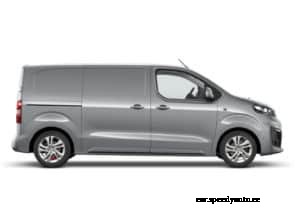
If you’re unsure about making the switch to electric cars, why not try our unique FlexiHire service? With this, you can enjoy shorter-term electric car or van lease rentals where your business can trial different models. Once you figure out which is working best both on the economic and environmental fronts, you can easily extend or terminate your rental.
Find out moreSources:
https://www.automotive-fleet.com/349408/major-companies-accelerate-ev-fleet-transition-through-new-alliance
https://airqualitynews.com/2020/06/05/five-major-companies-commit-to-electricifing-their-fleet-by-2030/
https://newmotion.com/en/knowledge-center/news-and-updates/these-businesses-went-electric-before-you
