
While not all symptoms may threaten the life of your engine, there are some obvious warning signs for engine damage.
So, The engine is the heart of your vehicle, giving your car the necessary power it needs to operate correctly. The engine keeps giving us signs of its gradual deterioration before falling apart completely. We must be aware of such engine damage signs, and one needs to be very conscious.
If you have any engine damage, it will significantly affect your car’s performance. Fortunately, you can save yourself time and money by quickly diagnosing engine problems; before they cause more harm to your vehicle.
The Check Engine Light Turns On
Dashboard warning lights are your car’s way of alerting you about; problems it detects via its On-Board Diagnostics (OBD) system. So, if your Check Engine Light (CEL) turns on, you should not dismiss it.
As, ignoring the problem could cause more damage to your engine (and other parts) over time. Consequently, there are many different things that can trigger a check engine warning light.
Some common reasons for a check engine light appearing include:
Most auto parts stores will read your fault codes for free!
Your Car Is Making Strange Noises
A knocking noise coming from under your hood, is a classic sign of engine damage.
This noise could be caused by wear or damage to your engine’s mechanical parts such as:
If you hear this type of noise, you should take your car to a mechanic; as soon as possible to prevent further damage. Ignoring this problem could result in your car breaking down on the side of the road; and a much greater repair bill (than catching the problem early).
In addition, other noises you should look out for include popping, hissing, spitting and backfiring from your exhaust.
The Engine Is Running Rough Or Inconsistently
Listen to the sound your engine produces while you are driving. Is it consistent? A struggling engine will often stutter, shake or lose power as the revs increase.
A few common solutions for this may be:
Oil Patches Under Your Car

If you notice puddles of oil under your vehicle, this is probably a result of a leak in your engine.
As the oil depletes, more friction and will occur in your engine, generating excess heat.
Oil leaks are common from engine oil seals, and sump plugs / sump plug washers.
This can cause damage to engine components over time.
You Smell Something From Inside The Car
Above all, The smell of a car’s emissions should never be noticeable from inside the vehicle. If you have a strong exhaust smell; of engine fumes or any other strange smell; this could be a sign of engine damage.
Don’t ignore strange engine smells and expect them to go away.
Your Car Is Using More Gas Than Normal
In most cases, a bad oxygen (O2) sensor will trigger a check engine light. P0138 and P0135 are some of the codes you may expect to see; on the OBD-II reader if you have one. Other than that, it’s difficult to spot a failing oxygen (O2) sensor. Hence, it will inevitably lead to decreased gas mileage.
Increased fuel consumption can often be related to; a fault in the way your engine processes fuel. When paired with a visible check engine light and other engine-related symptoms; the problem can be much more serious. If you notice your car is using more fuel, get it checked and fixed by a professional.
This will save you money in the long run.
There are four things a gasoline engine requires to generate power; and almost any engine problem will come down to something relating to one of these four factors:
1-Air:
Dirty Air Filter
Exhaust Restrictions
2-Fuel:
Fuel Injectors
Fuel Pumps
3- Compression:
Worn Out Engine
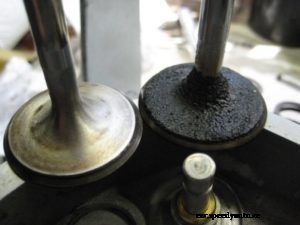
Carbon Deposits On Intake Valves/Valve Seats
4- Spark:
Fouled Spark Plugs
Carbon Deposits On The Piston
There are several reasons why your exhaust could be producing smoke. Consequently, the color of the smoke can give you an idea of what is causing the problem.
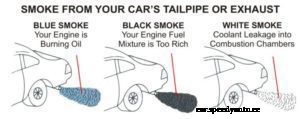
If the smoke is black, it means that your engine is having incomplete combustion; which leads to burning too much fuel.
This could be due to:
Grey smoke can mean several different things, making it difficult to diagnose.
Possible reasons include:
Dark blue smoke means that your engine is burning oil. This is due to oil leaking into your engine’s combustion chamber.
This could be due to:
A driver will often wonder what causes a blown head gasket. The truth is, anything from the coolant system to the combustion chamber could be responsible.
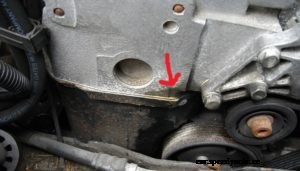
Most confusing is the fact that symptoms which resemble those of head gasket failure; will sometimes originate from other causes. In certain cases, a symptom might show due to multiple failures within the engine.
Examples could include the following:
Symptoms such as these, may or may not be due to the head gasket.
So, spark plugs act as an integral component of a car’s ignition system; and work by receiving high-voltage electrical current from the ignition coils; using it to ignite the air/fuel mixture in the combustion chamber.
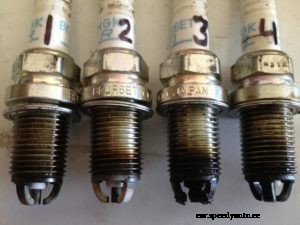
When a spark plug fails to fire, it can cause simple to serious problems.
Here are some warning signs that could mean failing spark plugs:
An engine that misfires gives an instantly-recognizable sensation: it will stumble for a brief period and then regain its pace. Consequently, if this happens, it means the engine is not functioning as smoothly as it should. And, the more frequently this occurs, the more serious the problem. A misfiring engine means the spark plugs are not firing properly. Furthermore, a single misfiring spark plug, can cause a lot of raw fuel to be dumped into the exhaust. Finally, this could cause it to, overheat and damage the catalytic converter.
If you notice a loss of pep in your cars step, take it in for a professional inspection. Chances are your spark plugs are bad.
So, is your car having problems starting correctly? If so, this could be due to worn spark plugs. When spark plugs are overly worn, it can cause a car’s ignition system to work harder. Add in harsh weather conditions and the engine could have trouble starting.
Cars idle all the time – when at a stop light, in traffic, and so on. And, during these times, your car’s engine should be continuous and smooth. So, if spark plugs are not working as they should; the engine will produce a rough, jittery sound, and the engine will stumble.
Filling up on gas more than usual? This could mean spark plug trouble. One of the main duties of spark plugs is to help ensure emissions are kept at a minimum. So, when spark plugs deteriorate, it can cause a decrease in fuel economy.

Consequently, as spark plugs wear, the gap between plug electrodes can expand or close up; both negatively affect engine’s fuel economy and emissions.
So, it is important to be aware of, potentially damaging symptoms. Finally, have the vehicle inspected if something doesn’t seem right.
