
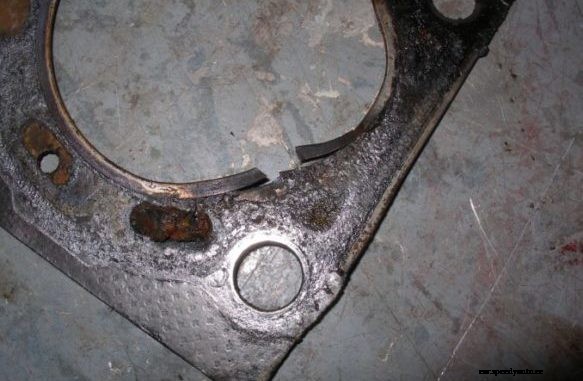
But, if you can learn the common leaking head gasket symptoms, you may save yourself a ton of money.
So, if you suspect that you have a leaking head gasket, you need to have that confirmed. Every modern engine has this gasket, but they vary in their thickness and construction; based on the manufacturer’s design of the engine.
A driver will often wonder what causes a blown head gasket. The truth is, anything from the coolant system to the combustion chamber leaking. Most confusing is the fact that symptoms which; resemble those of head gasket failure will sometimes, originate from other causes. In certain cases, a symptom might show, due to multiple failures within the engine.
Symptoms such as these, may or may not be, due to the head gasket. An accurate diagnosis often depends on the expertise of a skilled technician.
The head gasket seals the combustion chamber; allowing your engine to build the proper compression and contain exhaust gases. The head gasket also, keeps coolant and oil out of the combustion chamber, which is very important.
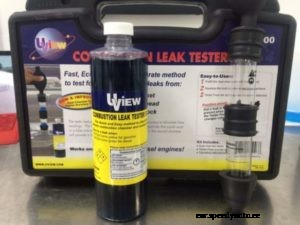
So, a reliable way to determine whether a head gasket is leaking is to test for, carbon dioxide. In this test, the coolant is examined for traces of, combustion gasses.
The test is performed with an apparatus that; utilizes a solution that changes color upon contact with carbon monoxide. You just need to know, what signs to look for.
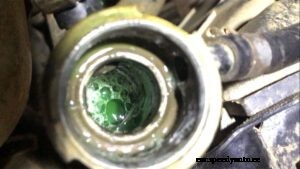
One symptom is a, consistently high temperature of the engine and may show bubbles in the rad. So, this is a symptom, that can be easily checked from the temperature gauge of the car dashboard. Chronic engine overheating, may be both a cause and symptom of a, leaking head gasket.
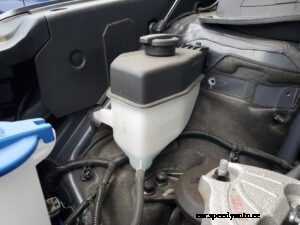
Check the engine coolant level. If it has dropped suddenly, then there is a possibility that the, head gasket is leaking.
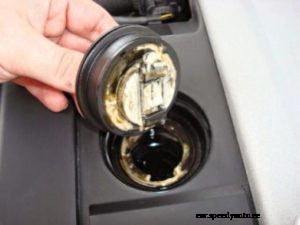
Check out the engine oil of your car. Because, if you notice a frothy formation on the dipstick; coolant and engine oil have gotten mixed.
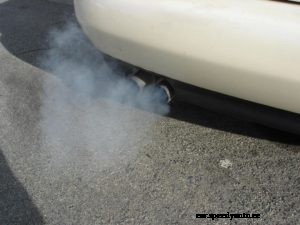
If you notice sweet smelling white smoke, along with water droplets from the exhaust pipe; then you could have a leaking head gasket.
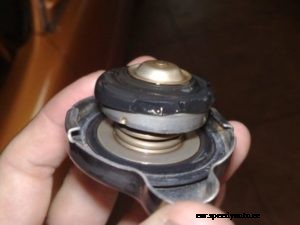
Let the engine rest and cool down for about twenty minutes. Then open the car hood and locate the coolant overflow tank. If you remove the tank cap and it makes a popping sound; that could mean the cooling system is still pressurized, even after engine has shutdown. Consequently, this is a clear leaking head gasket symptom.
So, why is it often hard to get an accurate diagnosis of, a blown head gasket? A lot of the problem is due to the similarity between issues with, head gaskets and other engine components.
Other Possibilities May Include:
In such examples, the only way to really know whether the problems extend directly from the head gasket; is to remove the head and put it to a test.
So, the best way to prevent head gasket failure is; to keep the engine coolant at the proper level, with the correct mixture; according to the manufacturer’s recommendation. Also, make it a habit to keep an eye on your temperature gauge. Finally, if you notice it running hot, have it immediately checked out by your mechanic.
