
Braking performance is critical for every vehicle on the road, yet it is far too often overlooked until something goes wrong. Brake pads wear down, calipers develop leaks and rotors get scarred, all of these can be avoided with some preventative maintenance and paying attention to your brakes. Eventually, however, you will have to replace your braking components.
There are a couple ways to go about replacing these parts – you can buy the original equipment components, or you could do a performance brake upgrade that performs better than factory. Most typical cars use a non-organic metallic (NOM) brake pad, but the best on the market are ceramic pads. Ceramics generate less dust and don’t squeal, plus they slow your vehicle down better and wick away heat quicker. These characteristics mean they last longer and provide better stopping power, why would you not want that? Most people would say that they are too expensive, but in reality, ceramic brake pads for most vehicles are not that much more than the non-organic metallic parts. NAPA Adaptive One Ceramic Brake Pads are an excellent option for just about every make and model on the road.
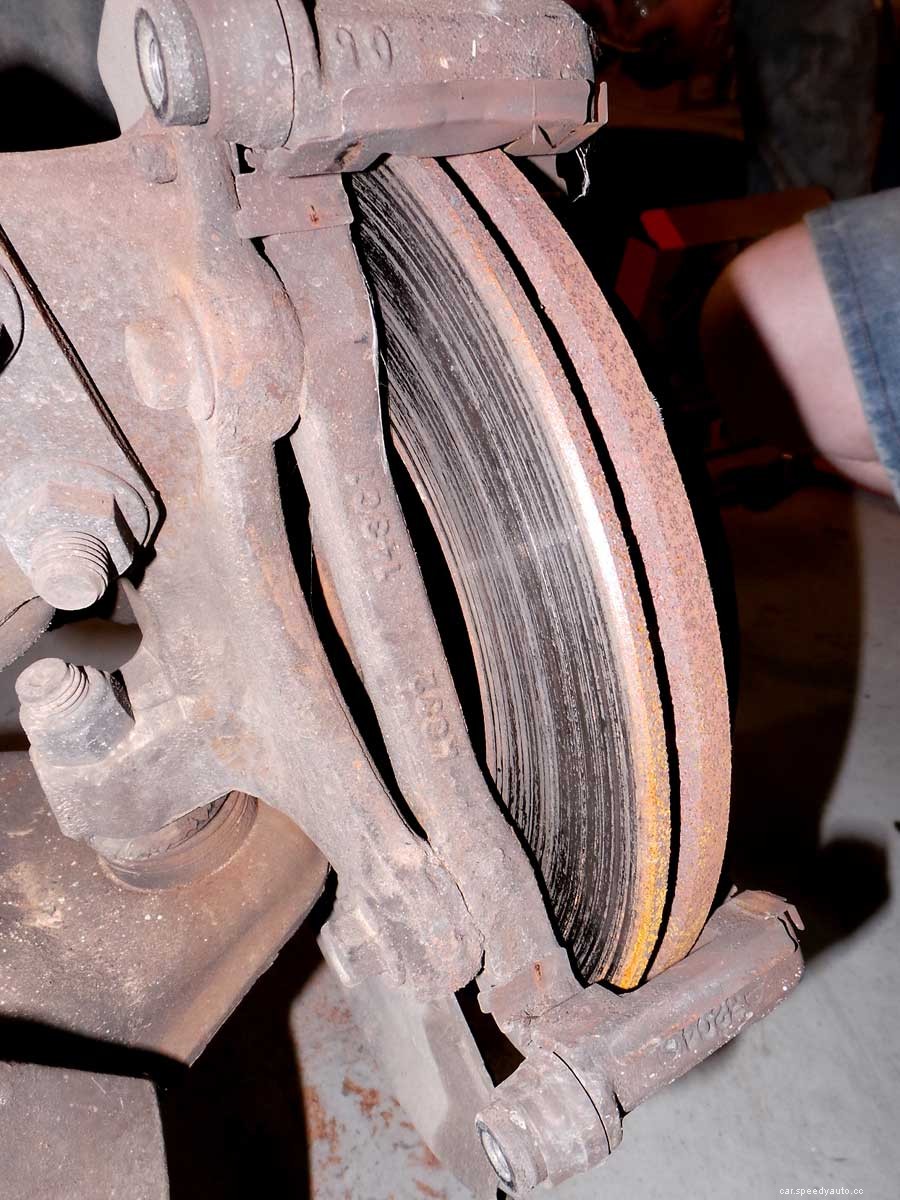
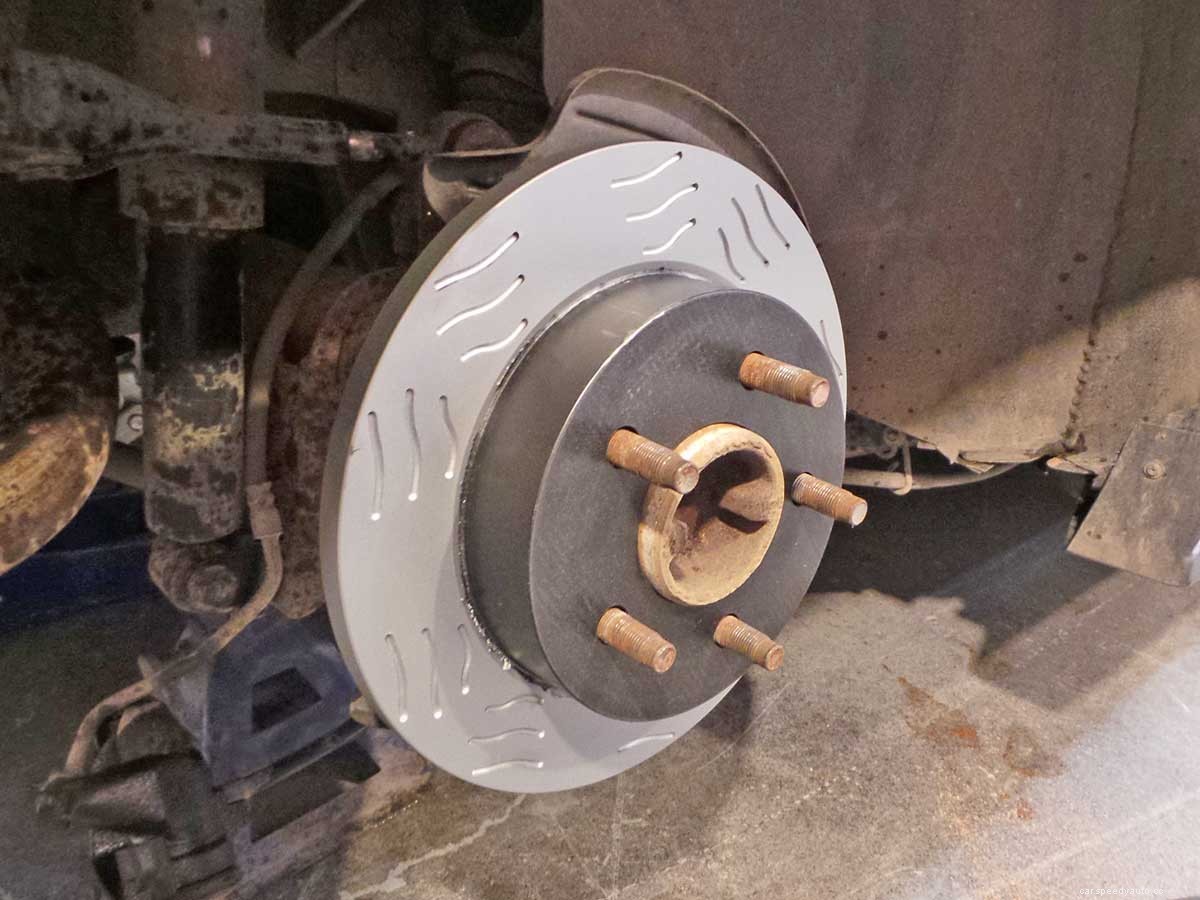
The rotor can also be a performance brake upgrade. A solid rotor retains heat and doesn’t allow any room for the gasses, that are generated by the braking action, to escape. Upgrading your brake rotors to a set of Reactive One slotted brake rotors can provide better braking performance with the OEM fit that you want.
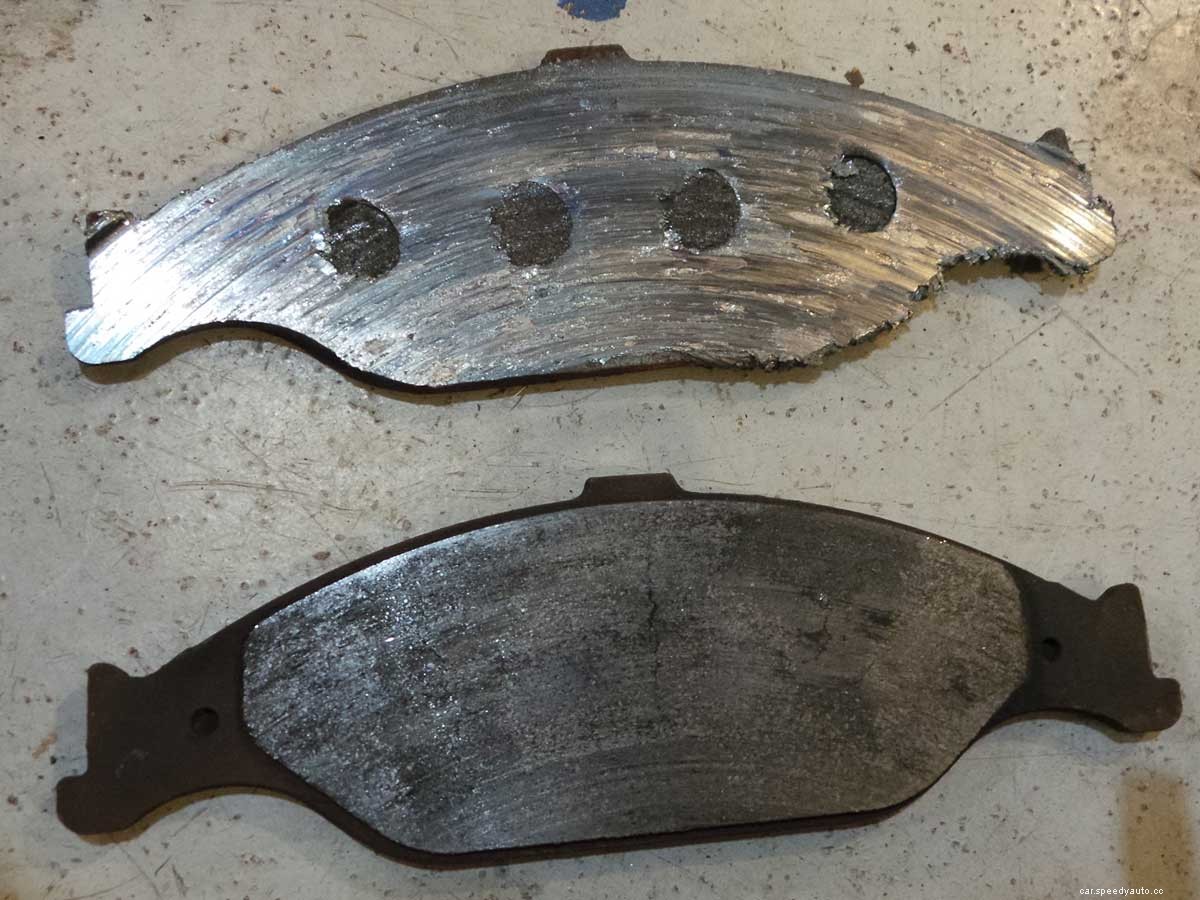
We had a 2004 Ford Mustang in the shop that was in desperate need for a brake job. The owner hadn’t had the car long and the front right pads were worn down the backing steel, eating the rotor with every stop. In fact, when we got the rotor off, it had been worn almost through to the center. While most factory rotors can be turned, this was well beyond the safety limit of turning. We replaced the pads and rotors, front and rear, with NAPA Adaptive One ceramic pads and Reactive One rotors for superior braking performance.
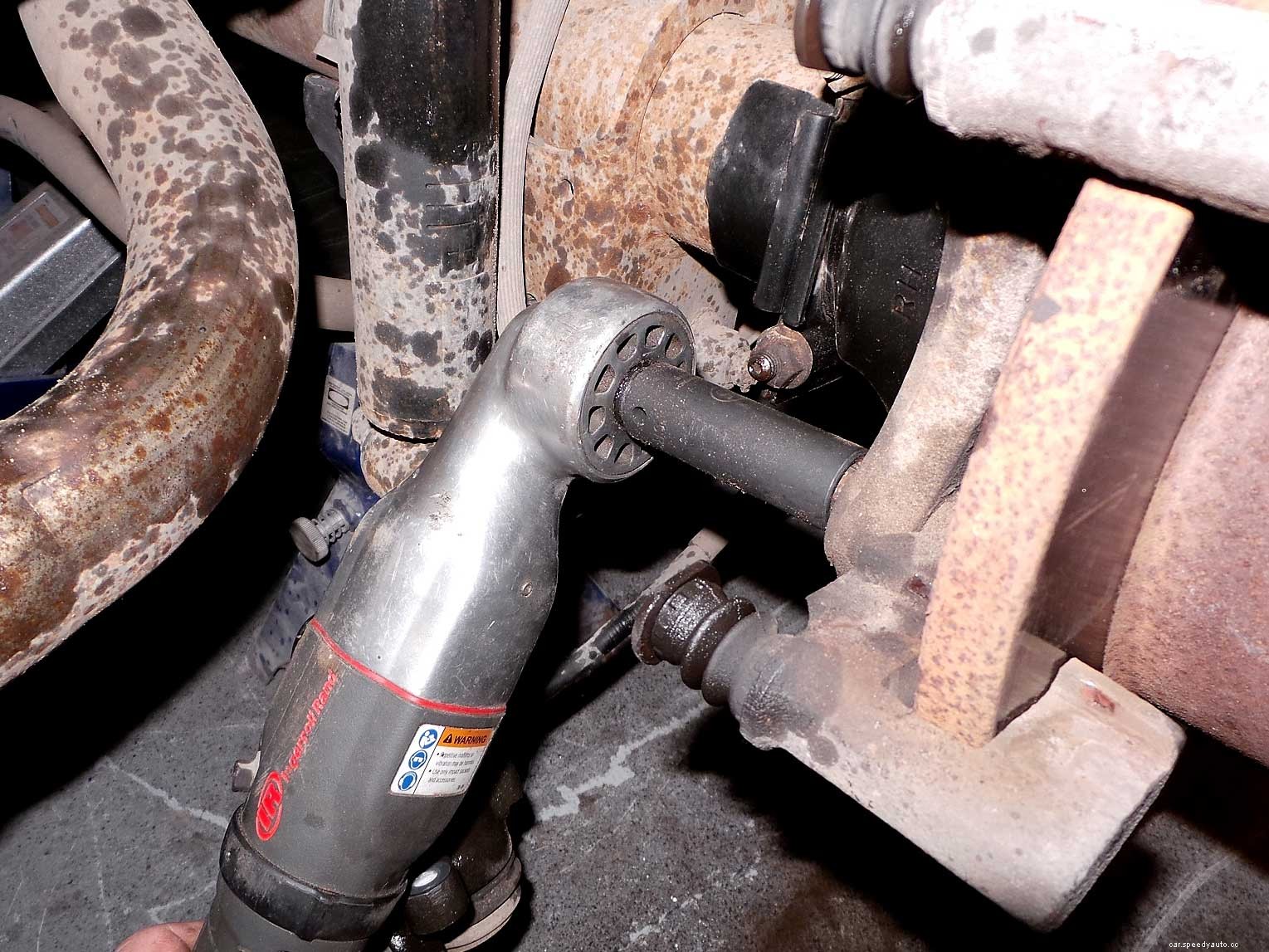
The performance brake upgrade process begins with jacking up one wheel at a time and supporting the vehicle with jack stands. Then the tire can be removed. We used a right-angle impact tool from Ingersoll Rand to take the brake caliper off. The bolts were frozen solid; it took some effort to get them free.
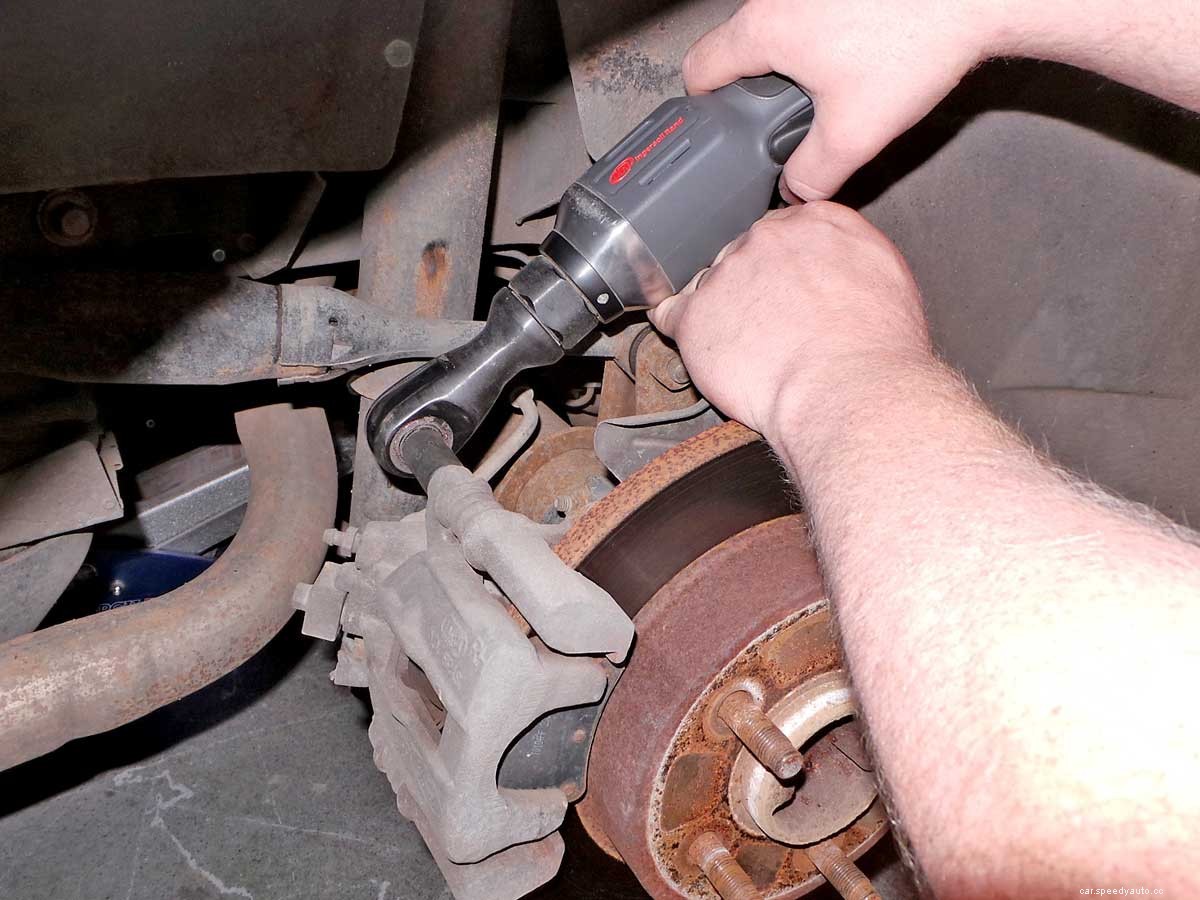
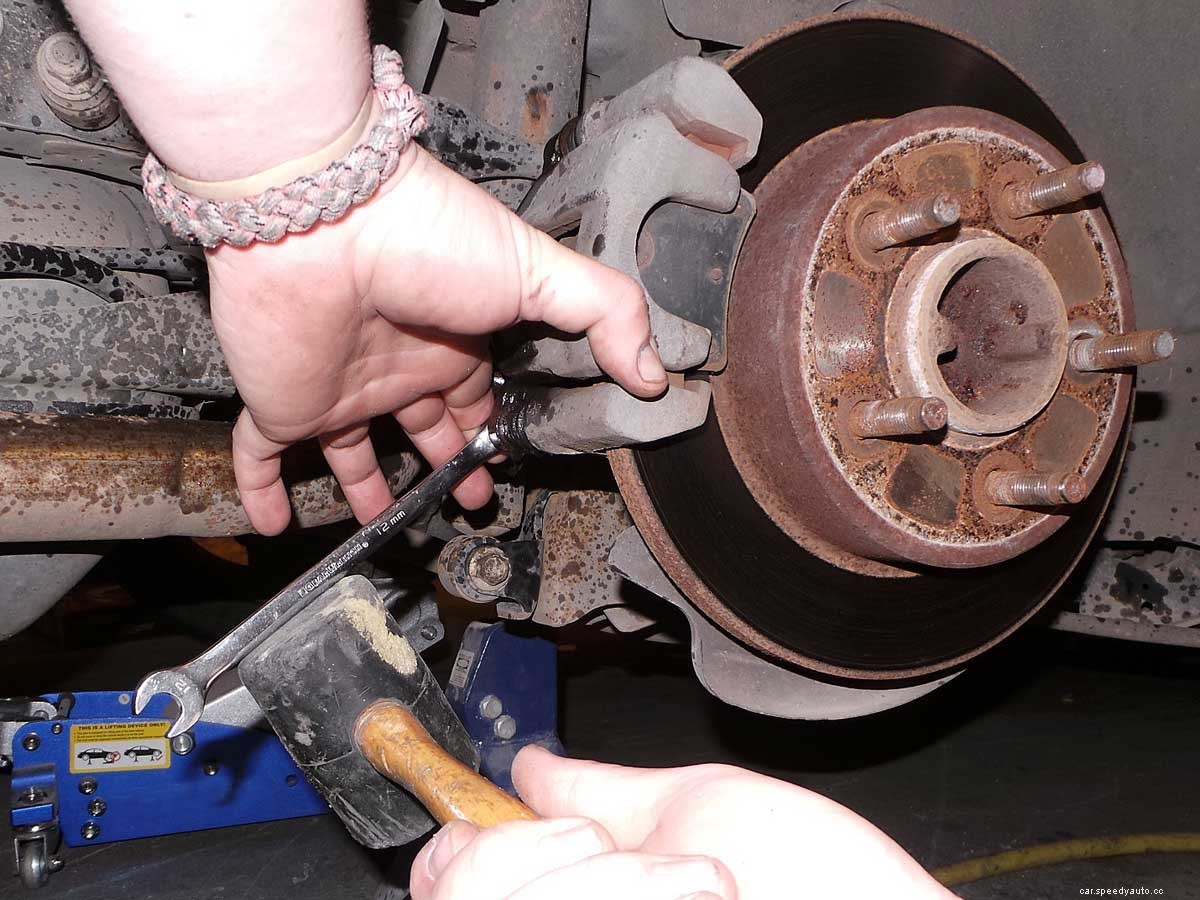
Once the bolts were out, the caliper can come off. The calipers have residual pressure on them, so we used a screwdriver to pry up on the top and then the bottom of the caliper to pry it free.
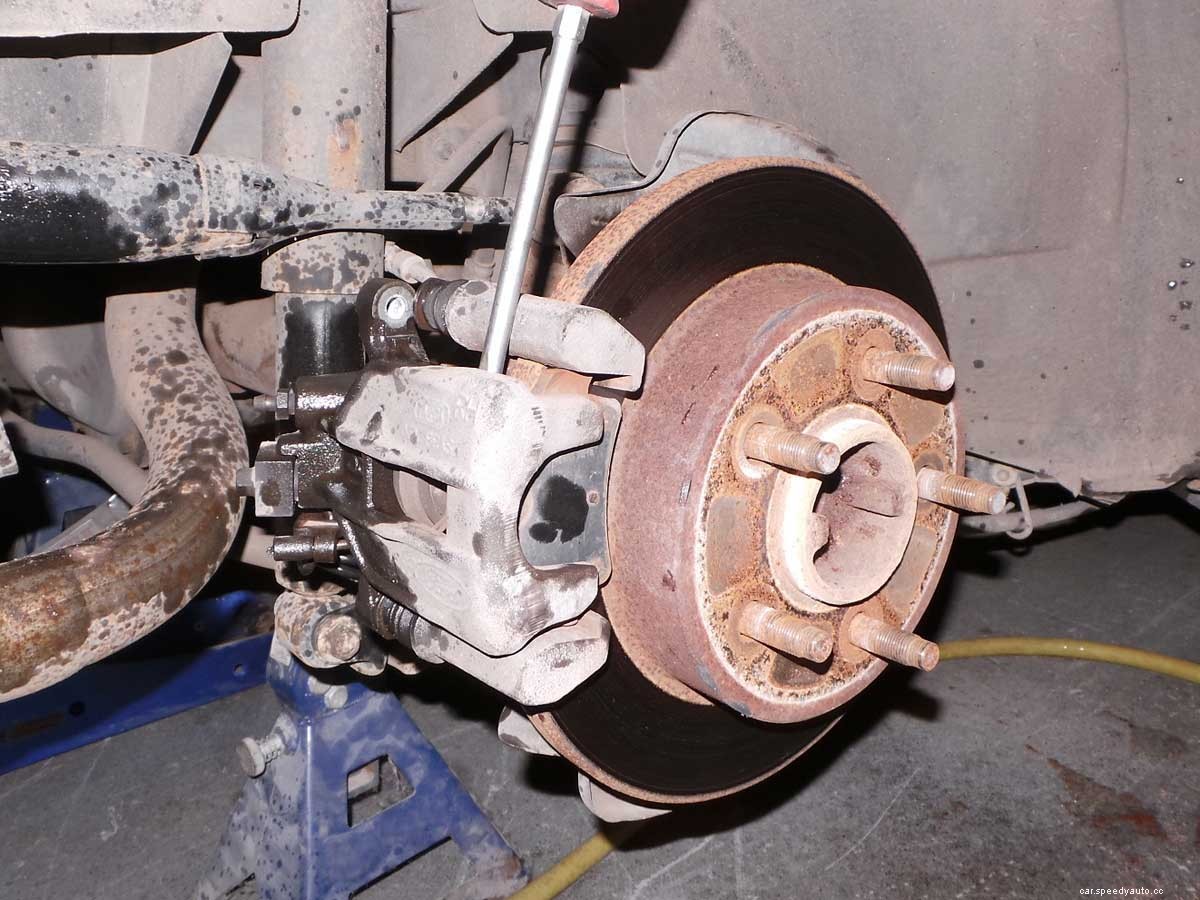
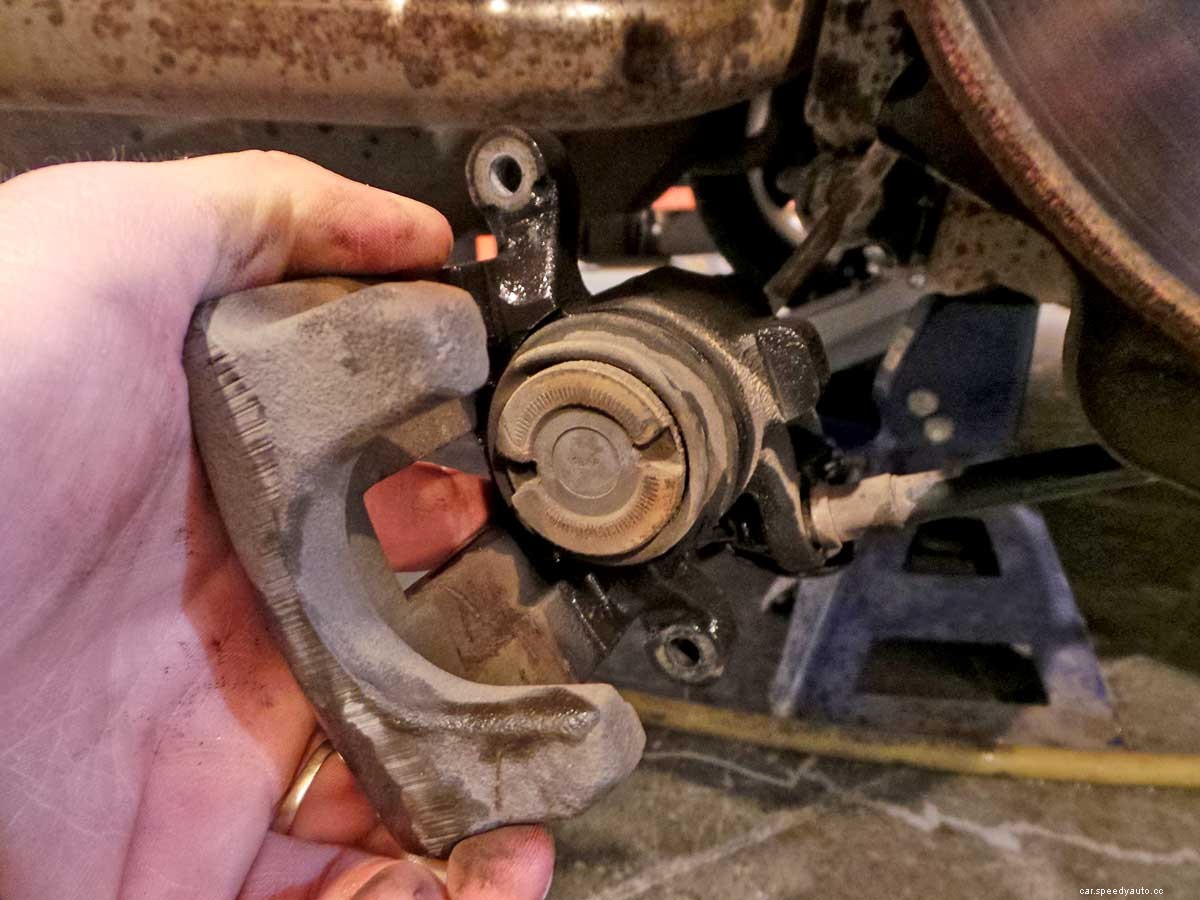
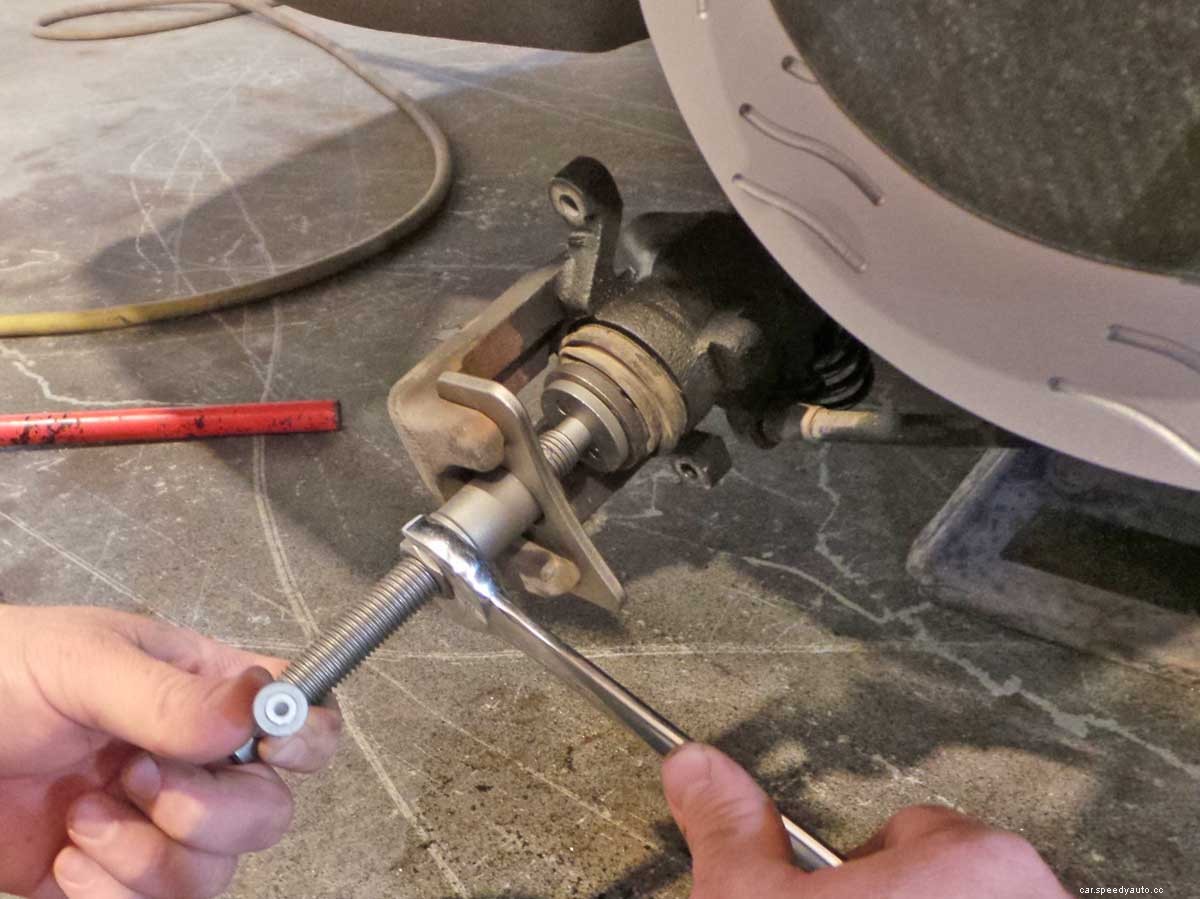
Inside the caliper is the piston. Rear calipers typically have a built-in emergency brake, so these need a special tool to thread the piston back into the caliper body. Most front pistons just need to be pressed back in, but some screw it too. Additionally, some pistons are left-hand thread.
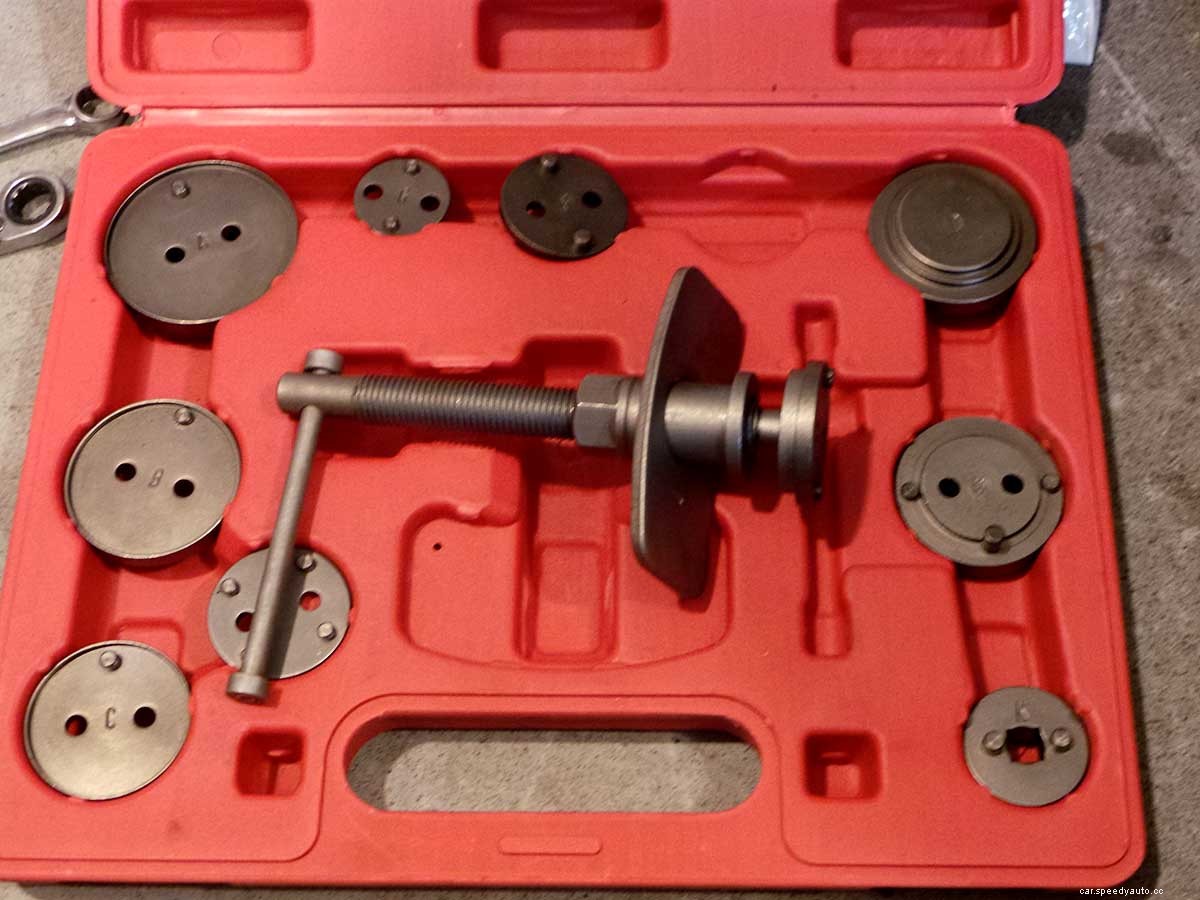
We used this disc brake caliper tool kit, which is available at any NAPA store. It has all the adapters you need to get the job done. It works on both threaded and non-threaded pistons.
To get the rotor off, the caliper bracket must be removed as well.
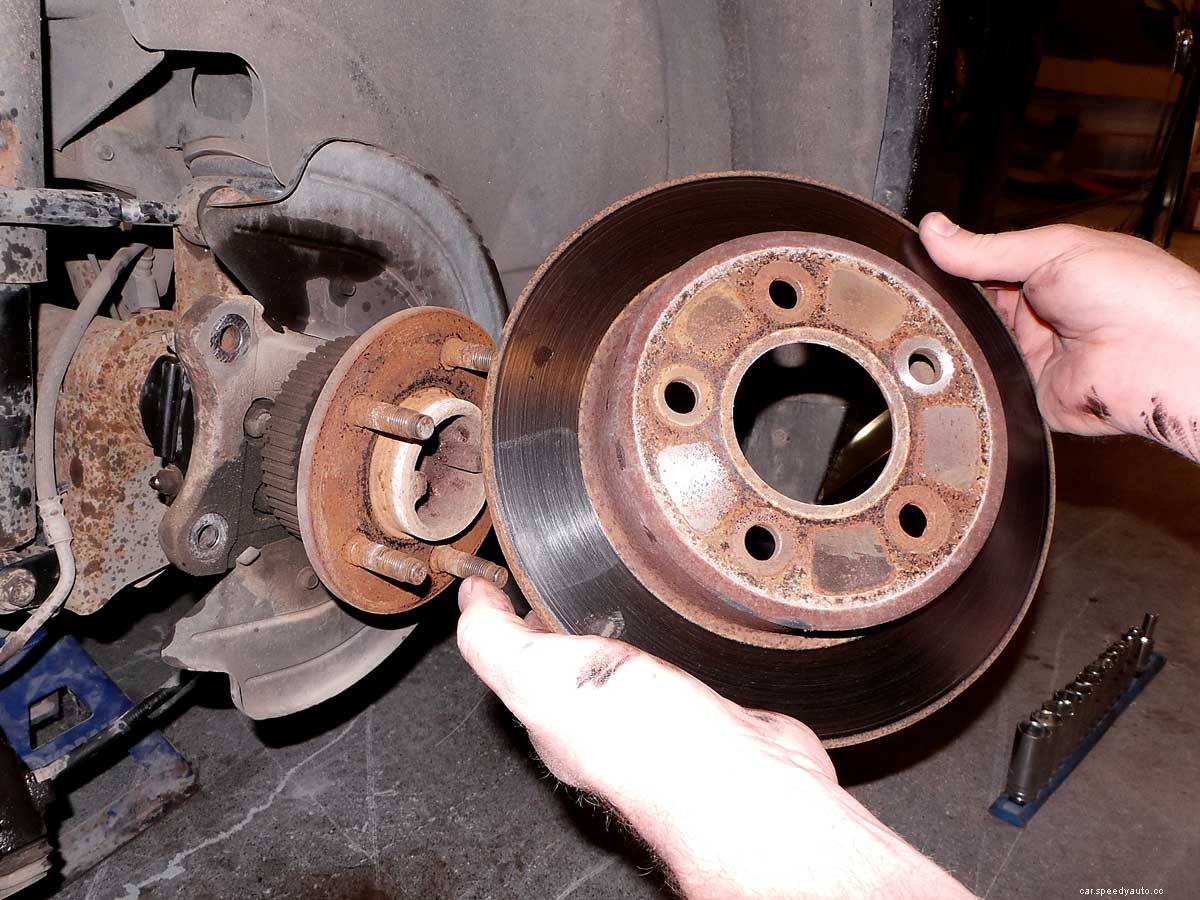
The new Reactive One rotor slips right back into place. These rotors are slotted and have unique wave-shaped slots that are not direction, meaning they fit either side. Some rotors are not universal, they are side-specific.
The Adaptive One brake pads are in and out-specific, meaning one pad goes on the inside of the caliper and one to outside. There are different stresses and pressures on the inner and outer pads. These pads take that into consideration, and are one of the only pads to do so.
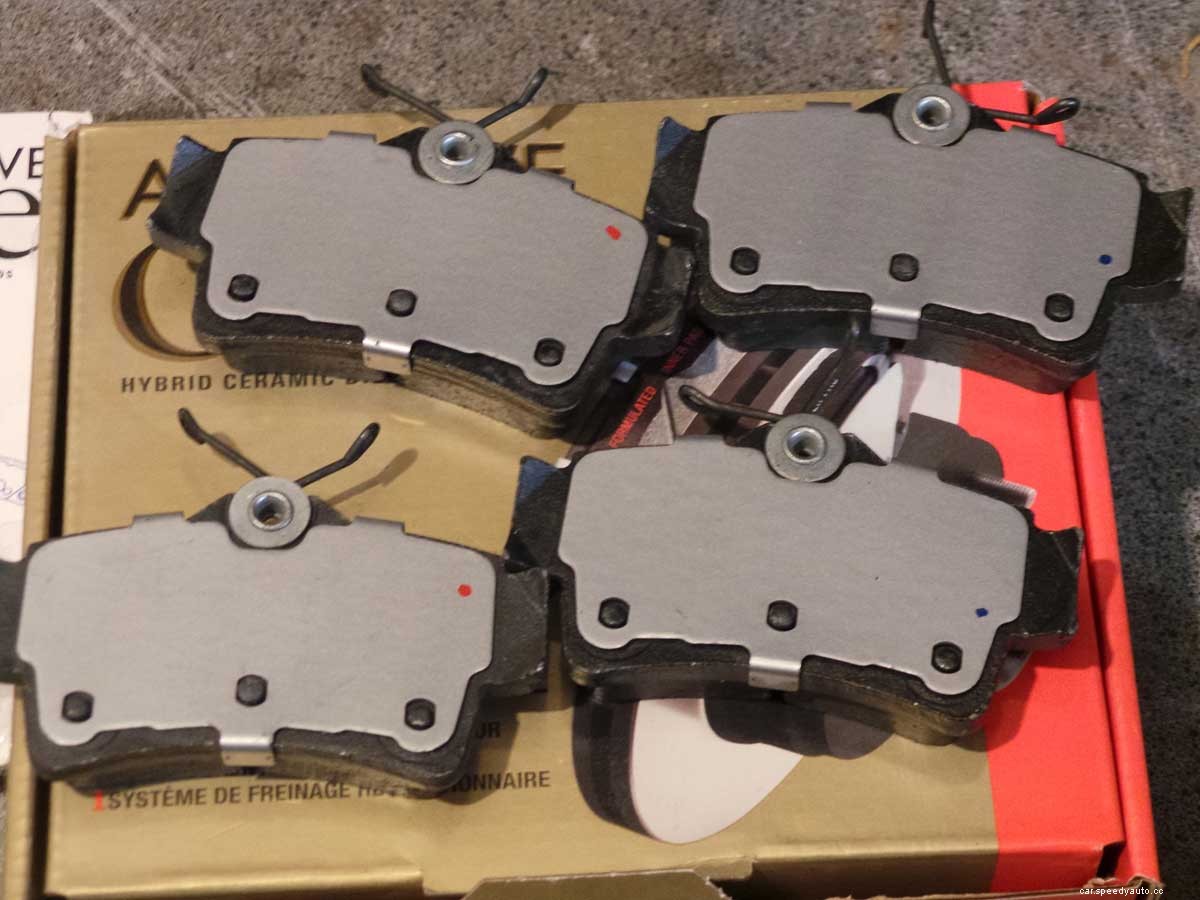
On the Mustang, the pads go into the caliper bracket, the caliper sits over them.
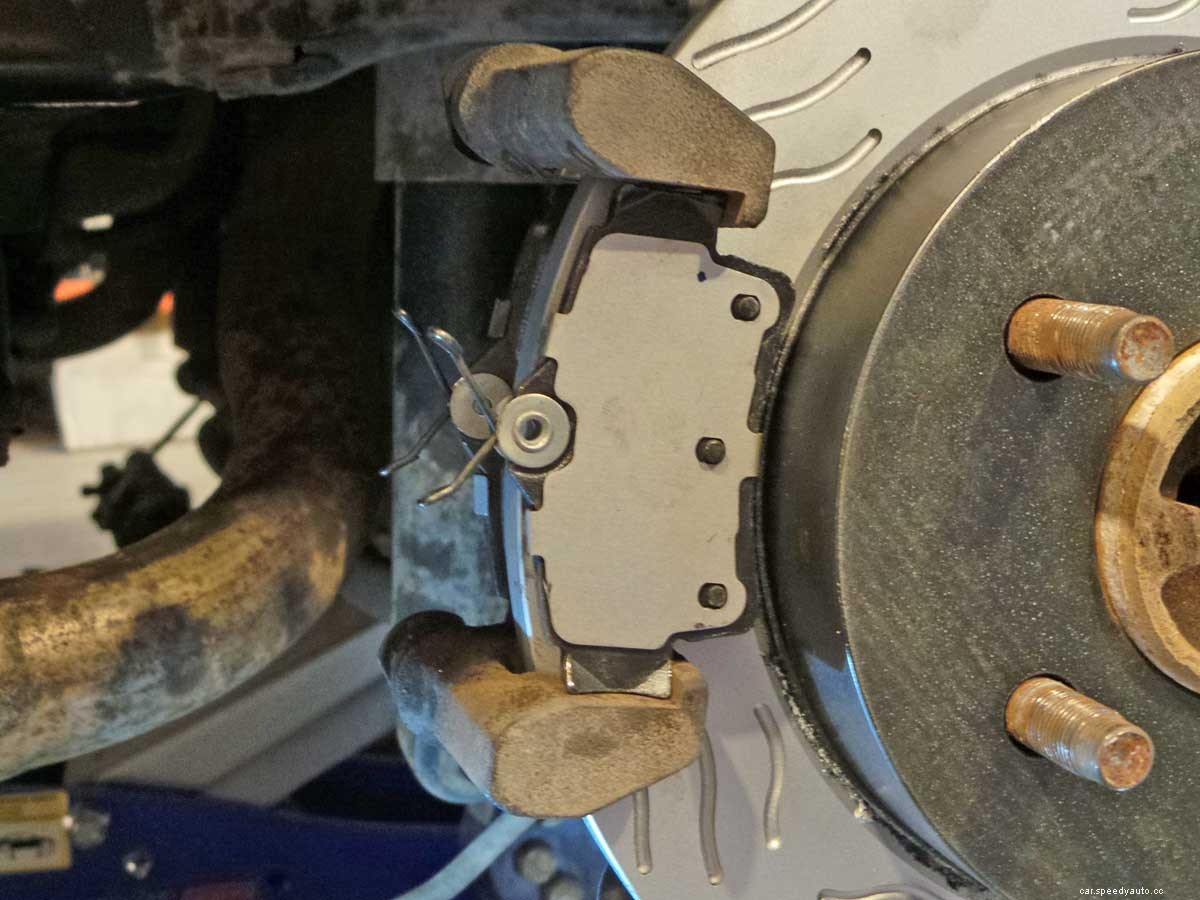
At this point the caliper goes back onto the car.
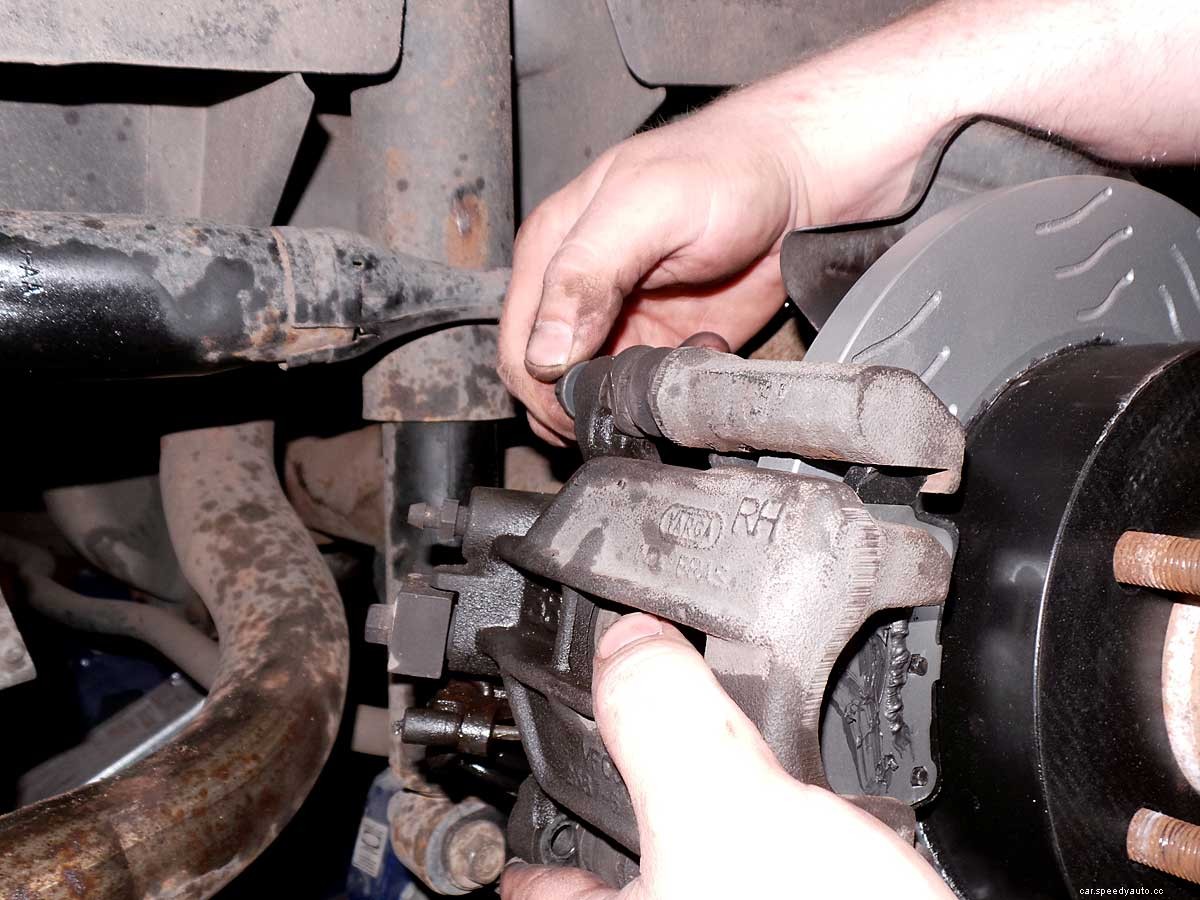
The process is much the same for the front pads and rotors. The Mustang has floating front rotors just like the rear, but some cars require removing the front hub as the rotors are part of the hub itself.
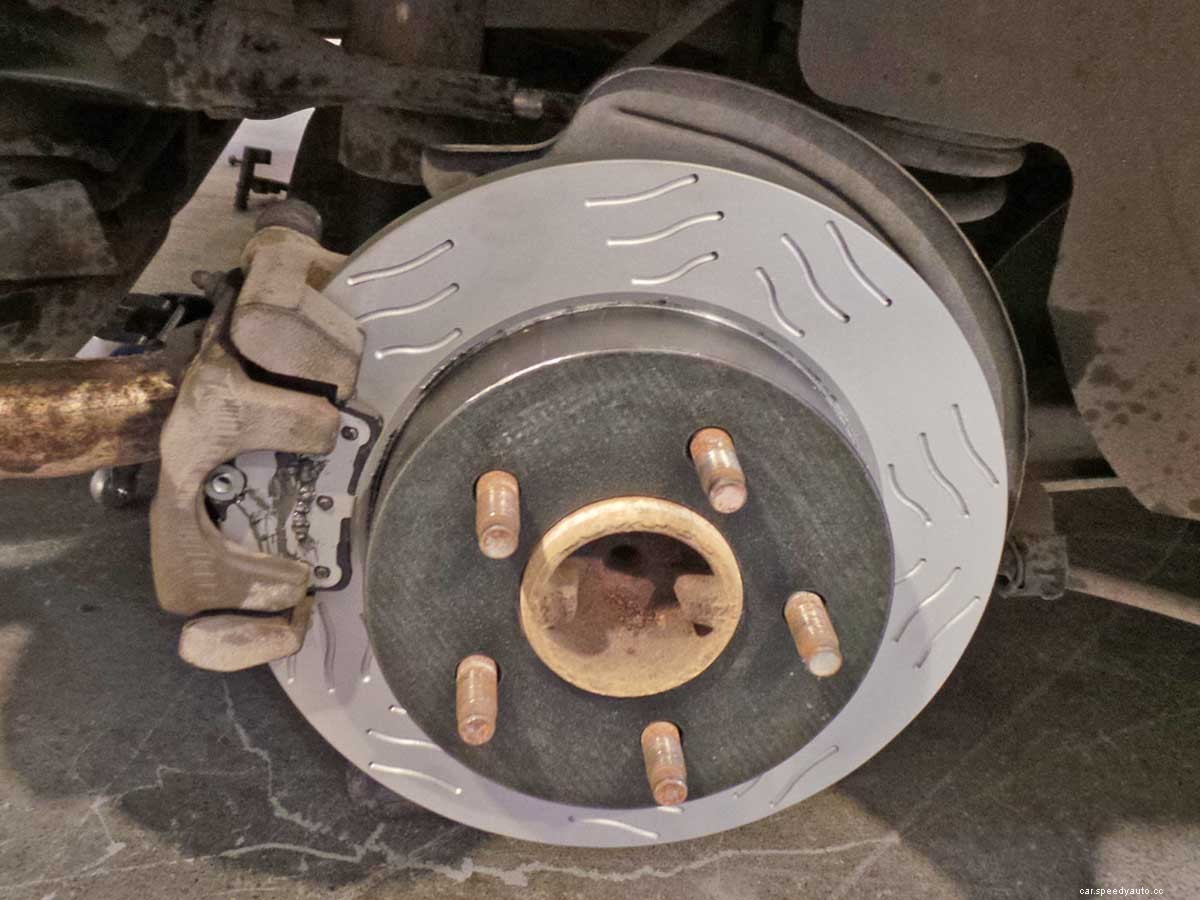
After the brake job was done on the Mustang, the braking performance was significantly enhanced. The car stops quicker and in a shorter distance than before. You don’t have to rely on the OEM-level components, you can upgrade your brakes with NAPA Adaptive One pads and Reactive One rotors. If you don’t feel up to the task of doing the work yourself, visit with your local NAPA AutoCare Center for an appointment. Don’t let your brakes let you down when you need them the most.
