
Whether you do the work yourself or take your vehicle to a shop, keeping an automotive maintenance schedule is a great way to stay on top of what’s needed and when. It just so happens that routine maintenance usually falls into four increments of mileage, so with a simple pen and pad, you can easily keep track of your schedule. Of course this is a generic list, for specific intervals check your vehicle owner’s manual. Here’s a look at what you should be doing and when to do it.
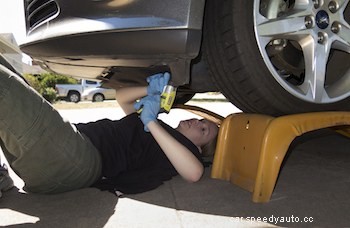
At each 5,000-mile interval, you’ll find the most normal maintenance items. Things like changing the oil and oil filter, checking fluid levels and topping off anything that’s low should all be done every 5,000 miles. Also, while you’re under the hood, inspect the coolant, hoses and brake pads.
Every 20,000 miles, you’ll want to perform the rest of the easy to-do items that tend to take a bit longer. Change the air and cabin filters, as well as the fuel filter and power-steering fluid. Inspect your battery and check all bulbs on both ends of the car to make sure they’re operating.
When your vehicle reaches the 40,000-mile mark, it’s time to start getting a little more mechanical. Up to this point, the most in-depth use of tools has probably been with an oil filter wrench, but now it’s time to replace the spark plugs, wires and battery.
Depending on your mechanical abilities, you may be better off going to a local shop for your 60,000-mile services. At this point, your vehicle should need new brake pads, a brake fluid replacement and a new set of tires. You should also have your vehicle’s hoses, power steering and timing belts inspected, along with the HVAC and tires.
You don’t need a degree in graphic design to create a guide to help you keep track of the work done on your vehicle. Keep a simple spiral pad and pen in your glove box to track the date, mileage and work that was done. If you want to get fancy, you could make a checklist for each maintenance increment.
Creating an automotive maintenance schedule is a great way to keep your car running in top shape for as long as possible. By dividing your services by mileage, you can simply cover everything needed in one shot. Tracking your maintenance will help ensure that everything is up to date and that you avoid breakdowns and trouble down the road.
