
You are reading this because you are looking for information on how to unclog a catalytic converter. Of probably a truth, once you drive a car with an internal combustion engine, you should expect to experience a clogged catalytic converter. Why is that?
Well, catalytic converters essentially convert dangerous exhaust emissions into “safer” gases. Since a lot of smoke passes through the exhaust, it’s only a matter of time before it becomes clogged.
What you are about to read will show you how to keep your catalytic convert functioning optimally. Read on!
Driving a car with a clogged catalytic converter can be a pain in the butt. Besides the environmental pollution issues, you run the risk of damaging your car’s engine. Thankfully, some symptoms pop up when a car has a clogged catalytic converter. Here they are:
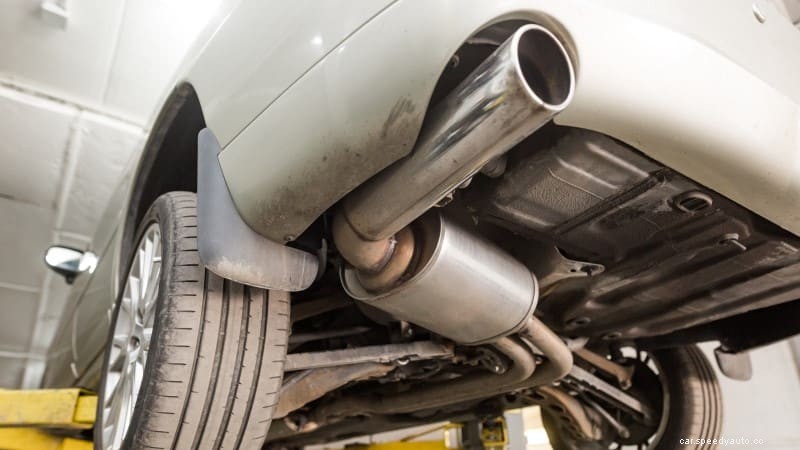
One of the issues with a clogged catalytic converter is exhaust backpressure. This means that the exhaust gases are trapped within the car. Internal combustion engines need the right air-fuel mix to start and run optimally. When a catalytic converter is clogged, the trapped exhaust gases negatively affect the amount of air and fuel in the engine. That is why starting the car becomes difficult. It might eventually start but suddenly the engine stop after sputtering for a bit. You might also notice that your car engine knocking while running slow. Engine performance issues are a symptom of clogged cat-con.
A car with a clogged catalytic converter will become less fuel-efficient than it used to be. Here’s why. The trapped exhaust gases within the engine reduce the amount of air and oxygen that gets into the engine. When this happens, the car engine struggles to accelerate even when you have your foot on the gas pedal. As a result, your car engine consumes more fuel because it is forced to work harder.
This is one of the most prominent signs of a blocked catalytic converter. Clogged catalytic converters have the potential to trigger your car sensors that are designed to deal with any emission issues. For example, bad O2 sensors help you monitor the oxygen to exhaust gas ratio and the fuel-air mix so you can detect any emission issues with your car.
That’s why your car’s dashboard is a good place to look at if you suspect that your catalytic converter is clogged. Except you drive an antique, your car will have a diagnostic system that lets you know when there are issues with your car. So if you notice that the engine overheats the light comes on, then chances are that your catalytic converter has an issue. That’s not to say that your catalytic converter is clogged every time this light comes up. Rather, you’d be better at diagnosing the cause of the light coming up, because it is an indicator that your car engine is has a fault. And a clogged catalytic converter is one of the reasons for this.
The next logical step after observing the check light on is to take a vehicle emission test because nothing is more indicative of a clogged catalytic converter than a failed vehicle emission test. The reason for this is that a functional catalytic converter is a crucial part of your car’s emission control system. If your car fails an emissions test, then it becomes clear as day that your car has a blocked catalytic converter.
A clogged catalytic converter gives off a rotten egg smell which is indicative of the presence of Sulphur. This occurs when the catalytic converter can no longer catalyze pollutants effectively because it is clogged. Bottom of Form
The best way to be sure that your car has a blocked catalytic converter is to diagnose the car based on the symptoms you noticed. Thankfully, you can get some of the diagnostic tools you need online or at offline stores. That said, here are ways that you can diagnose a clogged catalytic converter.
To conduct this test, you will need a vacuum gauge and some help(optional). Here are the steps you should take to conduct this test:
You will need a back pressure gauge for this test, and the site of the test is the exhaust system. Here is how you conduct this test:
To run a temperature test on your car, you will need thermometers (infrared or kitchen). Here’s how to conduct the test.
At this point, you are sure about the state of your catalytic converter, and you are probably looking for a quick fix for the catalytic converter. The good news is that there are two ways for you to unclog your catalytic converter. However, here are some things you need to bear in mind.
It would be best if you ascertained that the catalytic converter is not clogged beyond repair. You also want to be sure that it is not broken. If your catalytic converter is in any of these states, then you might want to get a mechanic’s help because applying a DIY approach might be futile. Once you have cleared that you can opt for any of these methods of unclogging your catalytic converter.
There is a caveat for this method. It only works when the catalytic converter is not seriously clogged. You will need a catalytic converter cleaner.
This method is also great for cleaning your exhaust and fuel systems as well as your oxygen sensors. Here’s how to go about it:
If at the end of the ride you notice that the car accelerates quickly and there is less black smoke from the exhaust, then you might have unclogged the catalytic converter. It is one of the cheapest ways to fix a catalytic converter. You might want to be wary of how you use some brands on which the jury is still out. Say, for example, the seafoam catalytic converter cleaner.
You should only undertake this method when you have tried the first method, and it didn’t work out. Here are the tools you will need:
Yes, but it all depends on the level of clogging. A slightly to the averagely clogged catalytic converter can easily be cleaned. In such an instance, the clogging is mild and can easily be removed by fuel additives or by manually washing the catalytic converter.
However, there are extreme cases where an overly clogged catalytic converter is best replaced because it might be clogged beyond repair. In such a situation, you will find that the exhaust has heated the catalysts to the point that they melt and can no longer catalyze the emissions from the exhaust. Another situation is when the internal parts of the catalytic converter have come apart either because of physical impact or heat.
Replacing a clogged catalytic converter can be quite expensive. Thankfully there are two ways to go about fixing a clogged catalytic converter without having to replace it:
Cleaning It Without Removing It: Here you try to unclog the catalytic converter using a combination of fuel and a catalytic converter cleaner. After mixing both elements in your fuel tank, you drive the car around at a relatively fast spend for an extended period. The fuel and the catalytic converter cleaner circulate throughout the car and flushes out the pollutants.
Cleaning It After Removing It: This is a more complicated method that involves removing the catalytic converter and manually washing it. It is then reinstalled after it has been drained and dried. This method should only be tried as a last resort.
Catalytic converter failure can be troublesome for both you and the car. It hampers the driving experience and can drain your pockets too. It can also lead to engine failure if you don’t manage it on time. Here are the 3 most leading failures of a catalytic converter:
Yes, you can. Part of the diagnostic process will require you to use an unclog catalytic converter hammer to test the structural condition of the catalytic converter. Every catalytic converter contains a substrate that can disintegrate due to physical impact or overheating.
If you hear a rattling sound when you hit the catalytic converter with the hammer, then the substrate has disintegrated, and the catalytic converter should be replaced not unclogged.
Not if you want to get the best outcome. For one, putting some Cataclean in a full tank will cause the tank to overflow. Secondly, the mixture of fuel and Cataclean will not be “strong” enough to clear the pollutants. To get the best results from using a Cataclean catalytic converter cleaner, you do not want to put it in a full tank of fuel. The recommended quantity of fuel for best results is about 15 litres.15 liters of fuel will allow just the right concentration of Cataclean that is required to unclog your catalytic converter.
You need not worry too much about catalytic converter-related issues once you know how to unclog a catalytic converter. You could easily apply any of the two methods described in the article to unclog your catalytic converter. Unclogging your catalytic converter without removing it is the more manageable, and cheapest way to fix a catalytic converter. However, it is just a quick fix for a catalytic converter and is not as effective as unclogging the catalytic converter after removing it.
Both methods are great for unclogging catalytic converters for different reasons. However, there are scenarios where catalytic converters cannot be unclogged because of the level of damage. When this happens, your best bet is to replace the catalytic converter.
