
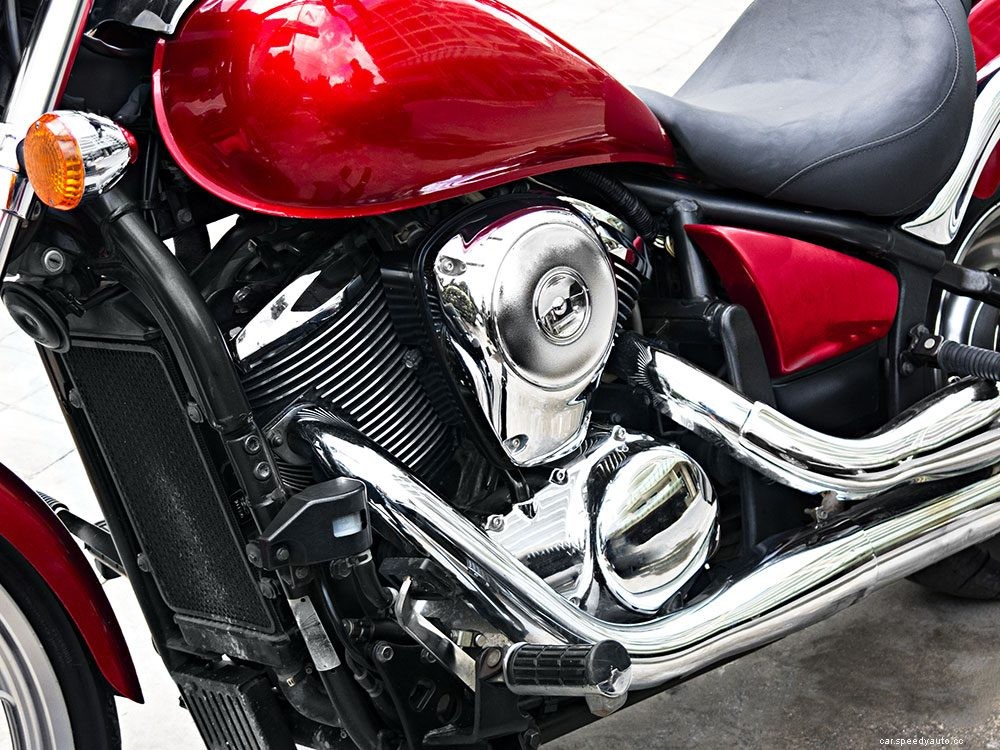
Getting your bike professionally detailed can cost a bundle, from $200 all the way up to $600 for a complete job with the optional protectant package. So it makes sense that you’d want to do it yourself to save the dough.
To learn the right way to detail a bike, we consulted Renny Doyle, owner of Attention To Details, a school for professional detailers. Renny walked us through his step-by-step tips for detailing a motorcycle. His motorcycle cleaning technique may seem like overkill, especially his recommendation for multiple rinse/dry cycles, but that’s how he achieves perfection. He can detail a bike in less than four hours. But you’d better plan on a full day. And, you probably won’t save any money on the first round because of the investment in cleaners and tools. But after that, you’ll detail like the pros and save money every time. (Check out 100 more maintenance tasks you can do on your own.)
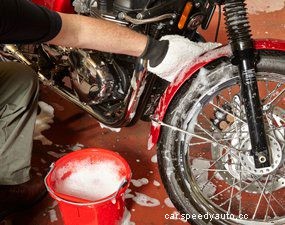
Work in a shaded area and don’t start cleaning until the engine is cool to the touch. Remove the seat and leather saddlebags and set them aside. Then cover the battery with plastic sheeting and seal off the exhaust pipe (or pipes) with plastic wrap and a rubber band. (Don’t miss these other clever uses for plastic wrap.)
Next, do a pre-rinse with plain water to remove surface dust and grit. A fireman’s-style garden hose nozzle works great because you can dial in a different spray pattern for each area of the bike. You can also use a pressure washer to rinse the bike, but dial down the pressure to its lowest setting and maintain a healthy distance from the bike to avoid damaging the softer metal and plastic parts. Use a gentle stream around wheel hubs to avoid forcing water into the bearings.
Follow the rinse with a prewash (above). Use a gentle car wash soap (Meguiar’s Gold Class Car Wash Shampoo and Conditioner is one choice), a microfibre wash mitt, and separate soap and rinse buckets. The prewash is just to remove the light road dirt and mud. So don’t go scrubbing the really dirty and greasy areas with your mitt. Save those for the special cleaners you’ll use later on. Rinse off the suds and dry the bike right away to prevent water spots. Rather than hand-wiping the entire bike, use a power blower (such as the Metro SK-1 Motorcycle Dryer) or compressed air, keeping the pressure under 70 psi. Wipe off any remaining water with a waffle-weave microfibre towel.
Here are five clever air compressor uses you never thought to try.
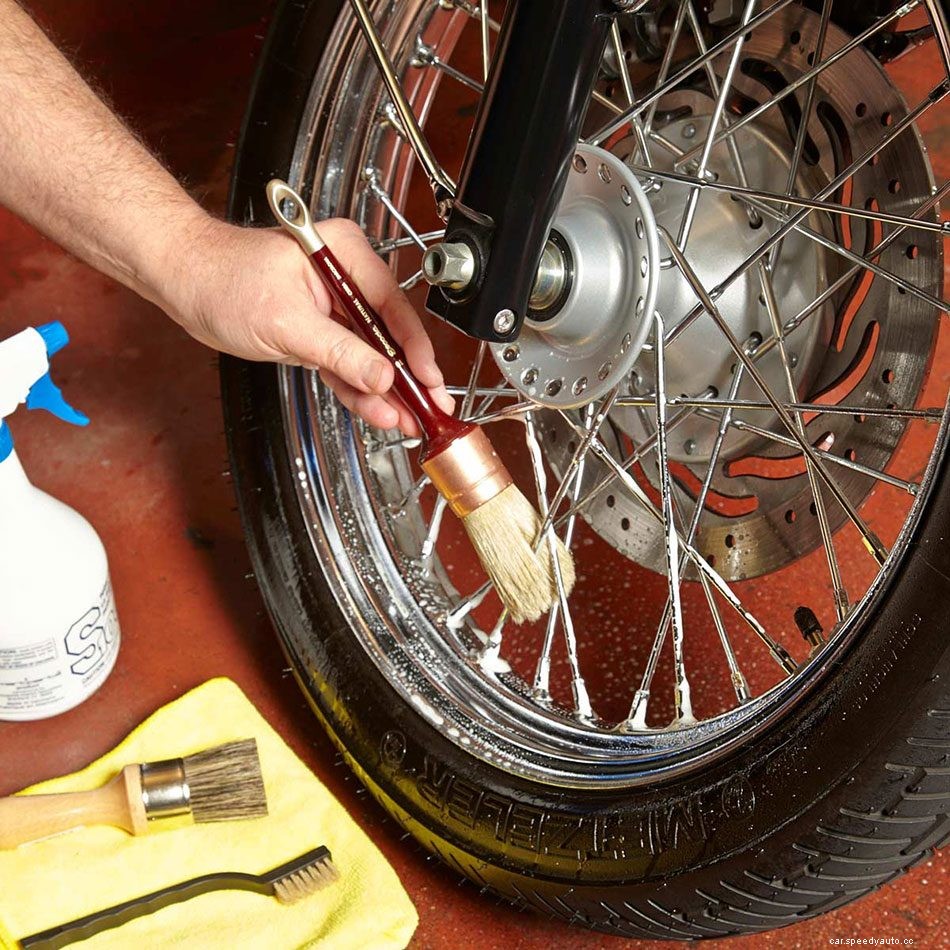
Spray the wheels and spokes with wheel cleaner and let it soak for about 30 seconds. Then brush the rim and spokes with a boar-bristle brush. Rinse everything with water and dry with the blower and towel.
These car cleaning accessories can also help restore your ride.
4 / 12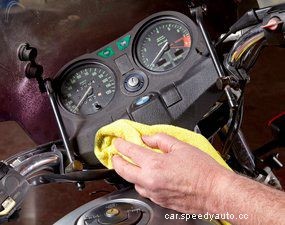
Squirt a small dollop of polish onto a microfibre towel and work it into the dash using a random circular motion. Continue wiping until the haze is almost gone. Then wipe off the remaining product with a clean towel.
We asked our readers to confess how clean their cars really were—you won’t believe their responses!
5 / 12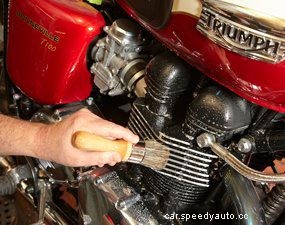
Spray cleaner on all engine and drivetrain components and let it penetrate for about one minute. Brush the greasy areas with a boar-bristle brush. Rinse off the cleaner. Blow dry. Repeat if necessary.
Here’s how to clean a car engine, step by step.
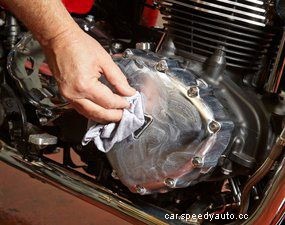
Before you polish the chrome, switch out your microfibre towel for a smooth 100 percent cotton rag. You can use an old T-shirt or dish towel as long as you cut off the seams first. Seams that are stitched with synthetic thread can scratch chrome, and the seams can retain grit.
Apply the same polish you used on the dash to the cotton rag and polish the chrome until the haze almost disappears. Wipe off any remaining haze with a clean section of the rag.
Ever considered rust-proofing your ride? Here’s what you should know about four of the most popular rust-proofing methods.
7 / 12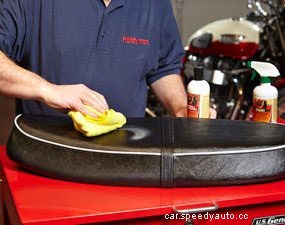
Apply the leather cleaner to a sponge and gently work it into the leather. Then wipe dry and apply the conditioner with a different sponge. Wipe with a rag and let dry. If you need to repair the leather, try out these leather repair tips.
8 / 12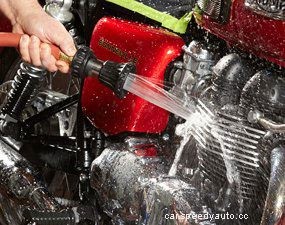
Rinse again with water and blast off the final rinse with a blower or compressed air. Wipe off any remaining water drops to prevent spotting.
Spot a flaw in your bike’s finish? Check out this quick fix for paint chips.
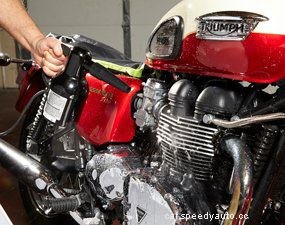
Starting at the top, blow the water down and to the front and back. Use a compressor set to 70 psi or less, or use a power blower like the one shown.
This is how often you should really clean the inside of your car (hint: it’s more than you think!).
10 / 12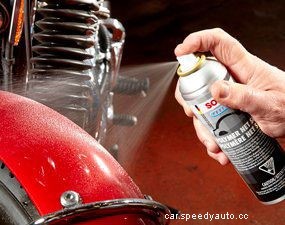
Spray sealant onto the paint and spread evenly with a wax applicator sponge, working in small sections. Immediately buff the paint with a microfibre towel. Don’t let the product dry before buffing.
Our auto experts weigh-in: Is car paint sealant really worth it?
11 / 12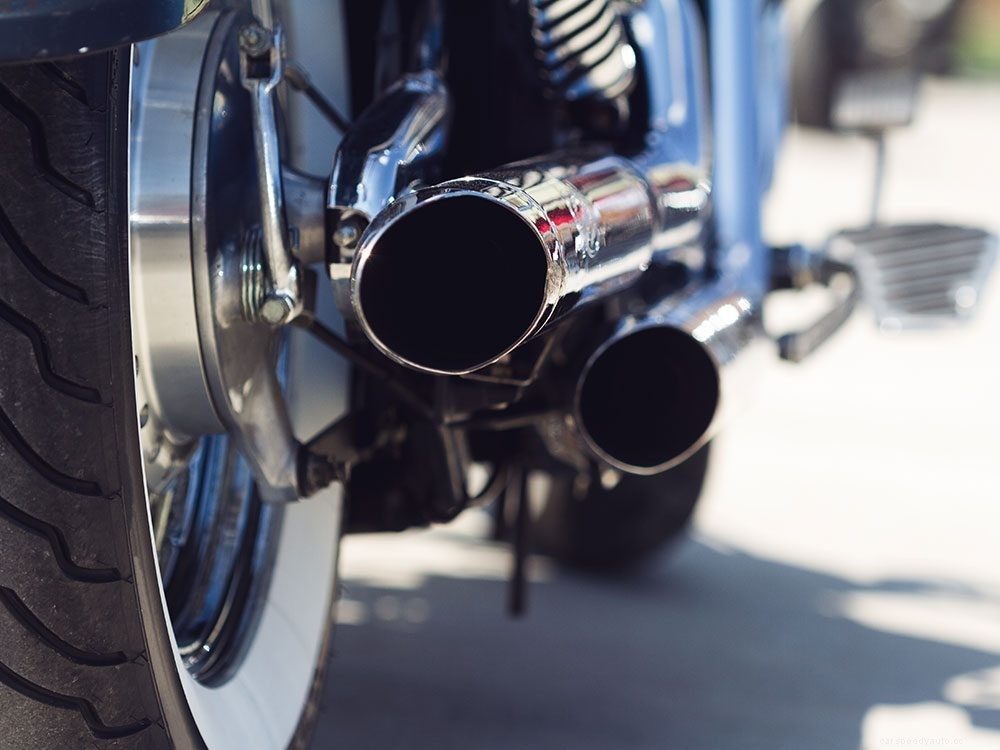
Use household oven cleaner to remove melted boot heel residue from hot exhaust pipes. Test it first on your bike by spraying it in an inconspicuous spot on the chrome. If it doesn’t discolor the chrome, run the bike until the pipe is warm. Then spray the oven cleaner directly onto the melted rubber and let it soak in for a few minutes. Wipe it off with a cotton towel.
Check out more brilliant car wash hacks here!
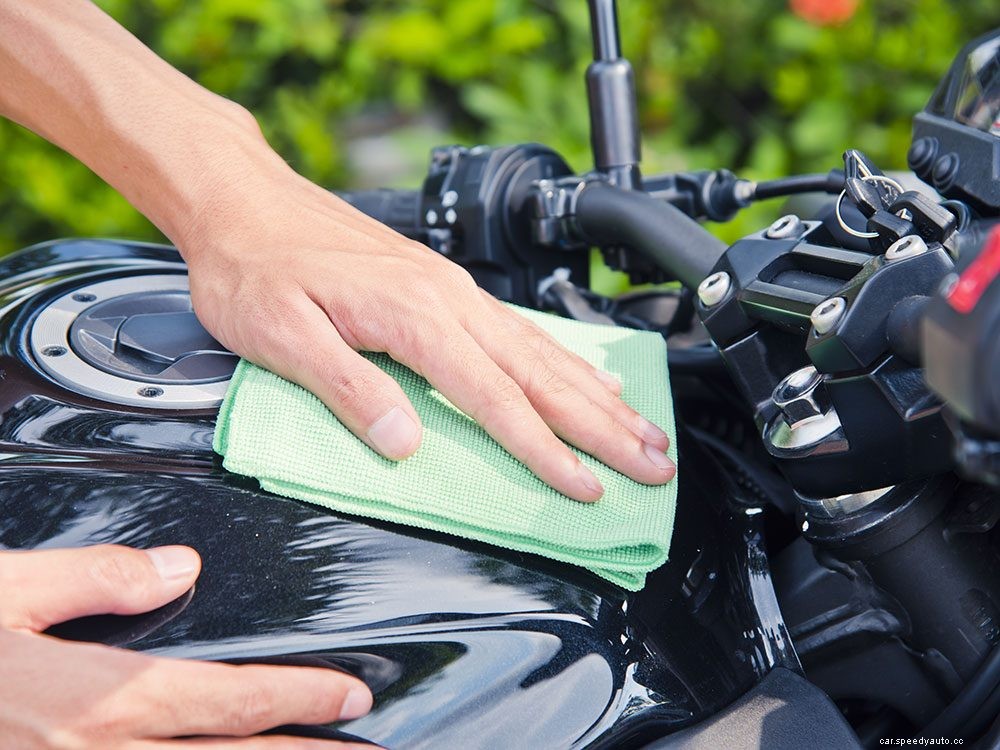
Next, find out our best car cleaning tips and tricks.
