
If you’ve ever driven a car, whether it’s an older stick-shift or a newer model with paddle shifters, you’ve already felt the influence of the transmission, even if you didn’t quite realize it. That slight tug as your car surges over a hill or glides down a highway? That’s the transmission functioning properly. And when it malfunctions, well, things can get pretty messy pretty quickly.
So the car transmission is like the mediator between your engine and your wheels in many respects. It controls power and torque, and your vehicle’s operating performance greatly relies on this unit. Without it, your engine wouldn’t know how and when to apply power.
Now, most transmissions come in a few familiar types. The manual transmission, which requires that the driver use a clutch pedal to shift gears and is the “classic” version, has been steadily going the way of the dodo. Some drivers still swear by it, perhaps due to the connection they feel with the road, or maybe they just like the control.
Then, there’s the automatic transmission, the most prevalent type in today’s technology. It requires no clutch and shifts gears on its own, depending on the engine’s load and speed. Most people who drive today have probably never touched a clutch pedal or dealt with manual shifting. And that’s fine. But it’s interesting to know how these systems evolved.
The initial automatic transmission wasn’t the sort of automatic that’s under the floorboards of cars today. It was clunky, not especially efficient, and somewhat unreliable. Yet it set the stage for what would one day be the world’s first truly automatic transmission; a far superior version that would provide smoother gear changes, better fuel efficiency, and improved overall reliability.
What is also interesting is the types among the automatics themselves. Consider the continuously variable transmission, or CVT. Instead of relying on a multi-gear system, a CVT uses a belt-and-pulley setup to maintain optimal power at a wide range of speeds/loads. No gear ratios, fixed or otherwise. It just flows. In theory, that helps in fuel consumption, and practice, it frequently does. But some drivers wish it had a little more of that tactile feel; there’s no sense of the car changing gears, and that disconnect can feel odd.
And then there’s the dual clutch: a hybrid between manual and automatic. It employs a pair of clutches , one-third gear, and the other even. Done well, as in some performance cars, it delivers gear changes as quick as a flash, but not at the expense of smoothness. It’s sometimes referred to as a twin-clutch transmission, or double-clutch transmission, and while the terms are interchangeable, all of them describe a very similar idea.
A second deviation is the semi-automatic gearbox. Instead, it permits drivers to change gears manually, often with the help of steering wheel-mounted paddle shifters, without having to use a clutch pedal. The same is true for the sequential manual transmissions used in some race cars. They provide quick and accurate gear changes with very little effort from the driver, offering high performance for high-speed applications. But in regular street driving? They can also be kind of grabby or jerky.
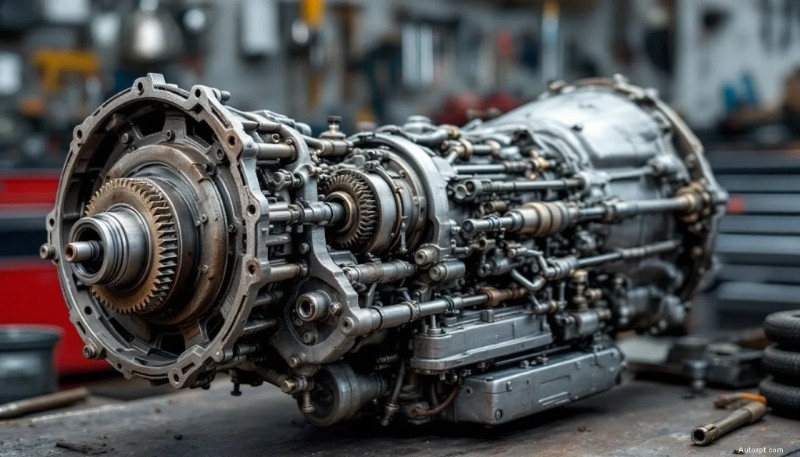
Whether manual or automatic, the transmission in your motor vehicle is an important piece. And when it begins to go, you’ll probably know, not necessarily all at once, but gradually. Some early signs? The engine roars, but the car doesn’t lurch the way it’s supposed to. The transition could be harsh or delayed. In automatics, you can get a slip, as though the car can’t quite make up its mind in which gear it wants to be.
In manuals, you could experience difficulty in selecting the right gear, a clutch pedal that feels funny, stiff, spongy, or just off. Low oil pressure, worn clutch plates, or issues with the output shafts might cause these. Whatever its cause, it’s not something to take lightly. Transmissions do not miraculously fix themselves.
The fix might be a simple one; perhaps all your car needs is a fluid change or a new sensor, particularly in the case of electronic transmission systems. Other times, though, you’re probably staring down a rebuild or a new transmission altogether. And that’s not cheap. In fact, for your make and model of car, it might be one of the highest repair costs your car could experience.
Then, how do you help to keep your transmission healthy? Well, regular maintenance is key. This includes checking your fluids, paying attention to the way you drive (especially in manual cars), and not over-burdening your vehicle. Hot liquid, overstrain, or sudden changes can also wear parts out faster than you’d expect.
One thing to keep in mind. Different types of transmission behave differently under stress. For example, CVTs can be more prone to overheating, or traditional automatics may have problems with the torque converter. And in the manuals, you know, a bad habit like riding your hand on the shifter? That puts unnecessary stress on the shift forks and can lead to wear and tear. These are little things, sure. But from thousands of miles, they accumulate.
Nowadays, cars can have technology systems that try to counteract what goes wrong, too. A lot of modern models have a manual mode in their automatics, so you can manually shift if you like, or leave it to the car if you don’t. The idea is flexibility, a little bit of control, a little bit of convenience.
It’s also worth mentioning that electric motors are changing the transmission game entirely. Some EVs have no use for traditional transmissions at all. They can make torque from zero speed without a gearbox multiplication. Which could translate to simpler drivetrains, fewer parts, and maybe even fewer things to break. But, on the whole, we’re not quite there yet.
For the time being, the vast majority of drivers still sit behind the wheels of cars powered by traditional transmissions, whether they be manual, automatic, semi-automatic, or any of the other varieties that vie for market share. And each has its quirks.
If there’s one lesson to take from all this, it’s that transmissions, even if often out of sight, are at the heart of how your car feels and works. They also cushion your engine’s speed, your drivers’ input, your terrain, and your intent. They help you speed up, climb, coast, and they have even helped save gas. And nearly all of this they do invisibly, until something goes awry.
And that brings us back full circle: when a transmission goes bad, it’s rarely quiet. Grinding noises. Burning smells. Gear slippage. These are all indications that something is off. And the longer you wait, the worse (and more costly) it can become.
It doesn’t matter whether you’re piloting a car with a sequential manual transmission or a semi-automatic, or a continuously variable transmission, though, is the way that it feels. Is it smooth? Responsive? A little sluggish? A little too noisy? These small cues matter.
Ultimately, no two cars are the same. Every driver has preferences. Some covet the precision of a manual, others the ease of an automatic, and still more are on the hunt for the next big leap in fuel-efficient, smartly designed transportation. Yet all of them depend on one thing: a well-functioning, healthy transmission.
Because without it? The journey’s not going anywhere.
Experiencing transmission trouble? Trust the experts at C & S Auto Repair for reliable Idaho Falls transmission service. Call now or schedule your appointment online to keep your vehicle running smoothly!
