
Owning a BMW X5 in Dallas isn’t just about enjoying the performance and prestige that comes with the brand—it’s about maintaining that performance year-round in a climate and road environment that puts your vehicle to the test. Whether you’re commuting through North Dallas traffic or taking your SUV out for a Hill Country road trip, regular maintenance is essential for preserving the long-term value and safety of your BMW X5.
At Autoscope European Car Care, we specialize in luxury vehicle maintenance with decades of experience servicing BMWs. In this guide, we’ll walk you through what BMW X5 maintenance involves, when to schedule service, how Dallas conditions impact your vehicle, and why trusting an independent European specialist can save you time and money.
Dallas drivers face a combination of high heat, unpredictable storms, and heavy commuter traffic—all of which can accelerate wear and tear on your BMW X5. Here are some key factors that make routine service in Dallas even more critical:
BMW’s Condition-Based Service (CBS) system will alert you when your X5 needs attention, but it helps to understand the general service intervals so you can plan ahead.
By sticking to these intervals and responding to CBS alerts promptly, you ensure your BMW X5 runs smoothly, safely, and efficiently throughout its lifecycle.
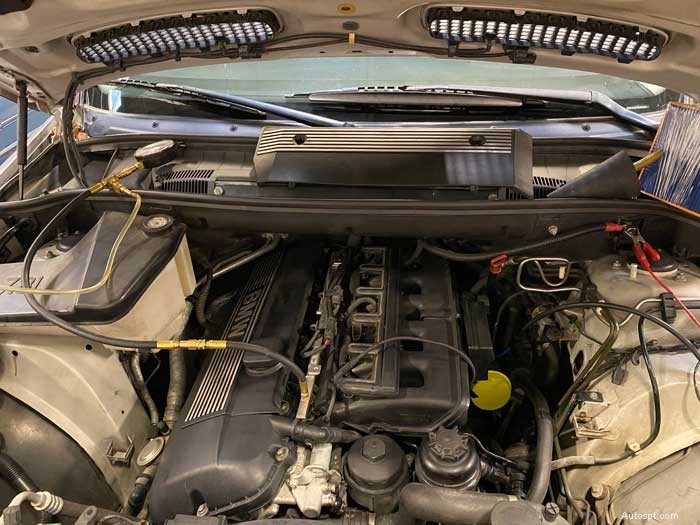
While the X5 is known for its reliability, certain repairs tend to be more common over time—especially in Texas driving conditions. Below are some frequent issues our technicians at Autoscope see and repair on a regular basis.
BMW engines, including those in the X5, are prone to developing oil leaks around 60,000 to 90,000 miles. These leaks can worsen in high-heat environments like Dallas. Left unchecked, they can damage surrounding components.
The X5’s adaptive suspension provides excellent comfort and handling, but the components—especially control arms, bushings, and air springs—wear over time. Dallas roads with occasional potholes and sharp transitions can shorten their lifespan.
Coolant hoses, water pumps, and radiators take a beating in the Texas summer. Preventative cooling system inspections are key to avoiding overheating.
Between stop-and-go traffic and high-speed driving on the Dallas North Tollway, brakes wear faster than in more suburban areas. High-quality pads and rotors are essential for safety and performance.
Modern BMWs have complex electronics. From power tailgates to advanced driver-assistance features, modules may need resetting or replacement—especially after battery issues or extreme temperatures.
BMW’s all-wheel-drive system requires fluid changes and inspection to maintain peak performance. This is especially true if the vehicle is driven aggressively or sees a lot of highway mileage.
BMW’s onboard diagnostics system is highly advanced, but it’s not the only way your X5 may tell you something’s wrong. Drivers in Dallas should be especially aware of subtle (and not-so-subtle) indicators that a visit to your trusted service shop is overdue. Ignoring early signs can lead to costly repairs down the road.
If you notice a sharp, burnt-oil smell—especially after stopping your vehicle—it could indicate a valve cover gasket leak or oil dripping onto a hot engine component. This is common in high-mileage X5 models and is made worse by high Texas temperatures.
A shaking steering wheel or pulsing brake pedal when you slow down can signal warped rotors or worn-out brake pads. Dallas traffic causes frequent braking, so this is one of the more common warning signs we see.
If your BMW X5 starts idling unevenly, hesitates on acceleration, or shows reduced power, it may be due to ignition coil failure or spark plug wear. These problems are common after 60,000 miles and can be quickly diagnosed with a scan and visual inspection.
While this one seems obvious, many drivers ignore or delay action when lights like the check engine light, brake system warning, or drivetrain malfunction indicator appear. Even if the vehicle seems to drive normally, these lights are there for a reason and should never be overlooked.
Any grinding, knocking, whining, or clunking sounds—whether from under the hood or the wheels—should be inspected right away. Common culprits include worn suspension components, faulty wheel bearings, or low transmission fluid.
Whether it’s a spot in your driveway or visible drips under the car, any fluid leak (oil, coolant, transmission, or brake fluid) deserves immediate attention. Texas heat can accelerate gasket and seal deterioration, making leaks more likely.
With Dallas summers routinely pushing into triple digits, a malfunctioning air conditioning system is more than just uncomfortable—it may indicate a compressor issue, refrigerant leak, or electronic fault. Don’t wait for a total failure to get it checked.
If your tires are wearing more on one side than the other, or if you feel the car pulling to one side, it may be time for an alignment. Poor alignment can affect fuel economy, safety, and long-term tire life.
If your X5 hesitates or jolts when shifting gears, especially in stop-and-go traffic or during highway acceleration, it may indicate issues with your transmission fluid, mechatronic unit, or drivetrain software. Early detection is key to avoiding costly transmission rebuilds.

The local climate and terrain play a direct role in how often your X5 requires maintenance. Here’s how Dallas drivers should adapt:
At Autoscope, we often get asked: “Why choose an independent shop over the dealer?”
Here’s how we provide more value:
Unlike dealership service departments that often operate like assembly lines, our technicians take time to understand your driving habits and tailor your BMW X5 maintenance accordingly.
Dealerships come with higher labor rates and overhead costs. We offer the same or better quality parts and diagnostics at a fraction of the price—up to 40–50% less in some cases.
Autoscope uses the same factory tools and software that BMW dealers use, including BMW ISTA and ISID systems. That means you never have to compromise on accuracy or performance.
We stand behind every service with a robust warranty. You’ll receive transparency, peace of mind, and long-term protection—without the inflated dealership invoice.
BMW recommends 10,000-mile intervals, but in Dallas heat and stop-start conditions, many owners opt for a 7,500-mile interval to protect engine longevity.
While BMW calls its transmission fluid “lifetime,” experienced technicians and long-term owners know that replacing the fluid around 60,000 to 70,000 miles helps avoid costly issues down the road.
Use synthetic 5W-30 or 0W-40 oil that meets BMW LL-01 or LL-04 specifications. At Autoscope, we only use approved synthetic oil tailored to Texas climate and BMW performance standards.
If your BMW X5 is equipped with air suspension, it should be inspected annually. Look for signs like sagging when parked or uneven ride height. These systems are serviceable and repairable—no need for panic when issues arise.
For over 40 years, Autoscope has helped North Texas drivers keep their European vehicles running at their best. Our team of factory-trained technicians, BMW-specific tools, and performance-minded service approach make us a trusted partner for local BMW X5 owners.
Whether you’re visiting our Dallas, Plano, or White Rock location, you’ll receive:
We don’t just service vehicles—we help our customers become smarter owners.
Maintaining your BMW X5 isn’t just about ticking boxes on a service sheet—it’s about protecting an investment in luxury, performance, and safety. Dallas driving conditions can push your vehicle harder than you think, so partnering with an experienced European service provider makes all the difference.
By choosing Autoscope for your BMW X5 service needs, you’ll receive expert care, accurate diagnostics, and long-term peace of mind. Whether you drive a brand-new model or an X5 with over 100,000 miles, we’re here to help you get the most out of every mile.
