
April 18, 2018
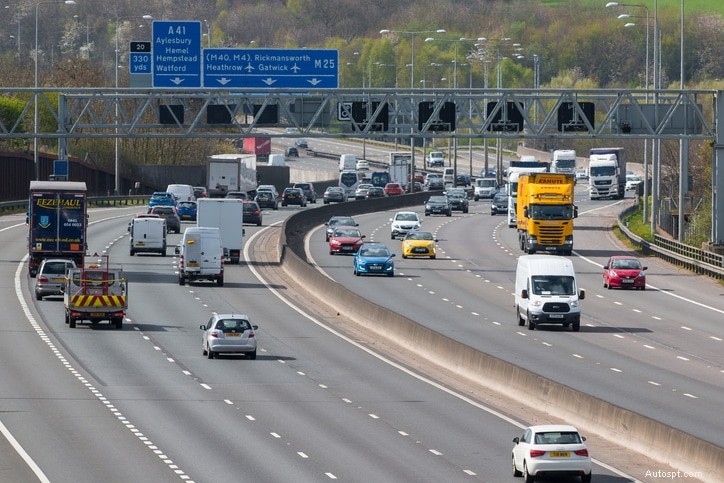
Smart motorways are growing more common, with local authorities identifying them as a major solution for congestion issues and traffic accidents. But, what makes a motorway smart? And how do they affect your daily commute?
In basic terms, a smart motorway is a technology-led road system designed to control the flow of traffic on some of the UK’s busiest motorways. They employ real-time traffic management techniques to alleviate congestion, increase driver safety and improve journey times. Using digital signs on overhead gantries, state-of-the-art speed cameras and CCTV, smart motorways can vary the speed limit, open extra lanes during peak times and issue penalties for driving offences.
There are currently three different versions of smart motorways operating in the UK. These are:
When you’re on a controlled motorway, you’ll have 3 or more lanes and a normal hard shoulder for emergencies only. The difference is there’ll be signs overhead which will tell you what the speed limit is, as these will change depending on the conditions.
These are like controlled motorways, but when traffic’s very heavy they can open up the hard shoulder to use as an extra lane. A solid white line separates the hard shoulder from the rest of the carriageway and overhead signs will let you know when it’s open to traffic. Make sure you don’t drive in it unless the signs clearly tell you to, and then keep an eye on them in case it closes.
On these types of motorway, you can use the hard shoulder permanently as an extra lane. On these particular stretches of road, the hard shoulder is effectively the same as any other lane on the carriageway, with broken white lines rather than solid. Look out for the overhead signs still, as these will tell you about speed limits and lane closures, especially if it’s closed to allow emergency services through.
You need to be extra vigilant when you’re travelling on a smart motorway. Speed limits are fluid, and can vary depending on weather, time of day, accidents and traffic flow. Speeds fluctuate between 40, 50 and 60MPH and are displayed inside a red ring on the overhead gantry signs. When no speed limit is shown, stick to 70MPH.
Speed cameras are in operation on all smart motorways, as well as CCTV, so you need to keep an eye on your speed or you could face a penalty. Smart motorways generally use HADECS 3 cameras, which some people call stealth cameras because they’re small and hard to spot.
Speed limits can change in an instant on a smart motorway, and the cameras adjust too so they’re always tracking the right speed. This is why you need to keep an eye on the overhead gantries.
Lane closures are indicated by a red X symbol on the overhead digital signs. These can appear at any time. A red X could mean there’s been an accident or breakdown up ahead, the lane is being kept clear for emergency services, or there’s something or someone in the road. When you see a red X you should exit the lane as soon as it’s safe to, or you could get a fine.
If you’re unfortunate enough to break down on a smart motorway, here’s what you need to do:
Highways England first trialled smart motorways more than a decade ago in response to mounting traffic and shrinking budgets. Introduced on one of the UK’s busiest roads, the M25, in 2014, there are around 400 miles of smart motorways criss-crossing the map.
Smart motorways are seen as a more cost-effective, environmentally-friendly alternative to digging up roads and adding extra lanes to busy roads. While Highways England claims that safety and good traffic management are at the heart of the new road systems, for the average driver smart motorways can be a frustrating and sometimes confusing experience.
At Holts, our DIY car maintenance products are perfect for keeping you on the road. Find out more by visiting the homepage today.
