
Did you know that oil consumption is a normal occurrence in your vehicle’s engine? Each time your vehicle is in operation some of the heated motor oil will naturally “evaporate” or burn off within parts of your engine. Oil’s ability to evaporate through gases is dependent on its volatility. The higher the volatility, the greater the amount of overall oil consumption. Oil consumption may also be the result of a leak within the parts of your engine.
This blog examines the importance of oil and the effects of oil consumption on all of the mechanical systems in your vehicle. We look at a specific case involving a failed transfer case for a BMW that was brought in to Shade Tree Garage for repairs.
Engine oil is a critical fluid that serves many purposes for your vehicle, including:
When your engine is deprived of oil, failure is imminent. Let’s examine a specific case involving a vehicle transfer case that was handled by the service professionals at Shade Tree Garage.
What is the transfer case? The transfer case is situated next to your vehicle’s transmission and is responsible for sending power to the front and rear drive shafts to make all-wheel drive work in your vehicle. Depending on your vehicle, it may be controlled manually or electronically.
Engines and transmissions have rather large oil capacity, usually on the order of five or six quarts of oil. This means that some natural oil consumption is usually not a problem for them. Differentials and transfer cases, on the other hand, have very low capacity. These parts typically have less than a quart and some as low as a single pint.
There are two reasons why the transfer case has less oil capacity – cost and weight. Manufacturers try to make vehicles as economical as possible for owners when it’s maintenance time and only make cursory recommendations on servicing gearboxes or drive line components. So, they build some engine parts with less oil capacity. Also, less oil capacity means that overall weight of the vehicle is lower.
In the interest of keeping the perceived maintenance expenses low, manufacturers have opted not to change the capacity. For service professionals, we see the cars as they get older while the dealers service newer vehicles almost exclusively. Technicians sometimes miss the low fluid because they do not see any leakage. This leads to an assumption that it must still be full. Transfer cases need to breathe because of the heat that builds up when the vehicle is operating. In essence, you have hot oil just slowly cooking off over years of service.
The transfer case pictures below reveal that this unit which is seven years old with around 90k miles was bone dry and that is why the bearing failed. The manufacturers no longer sell internal parts which means the entire unit must be replaced, often for thousands of dollars.
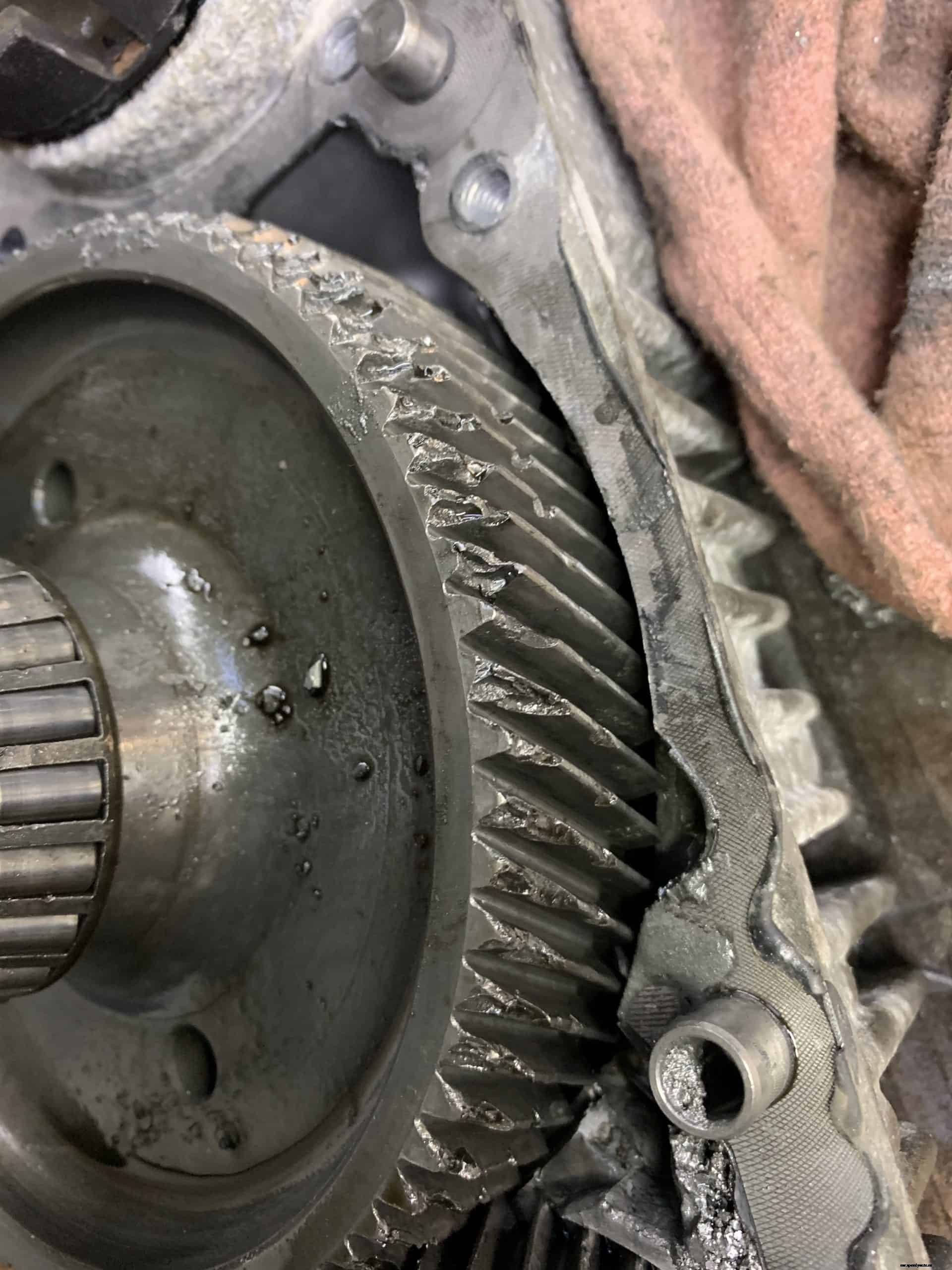
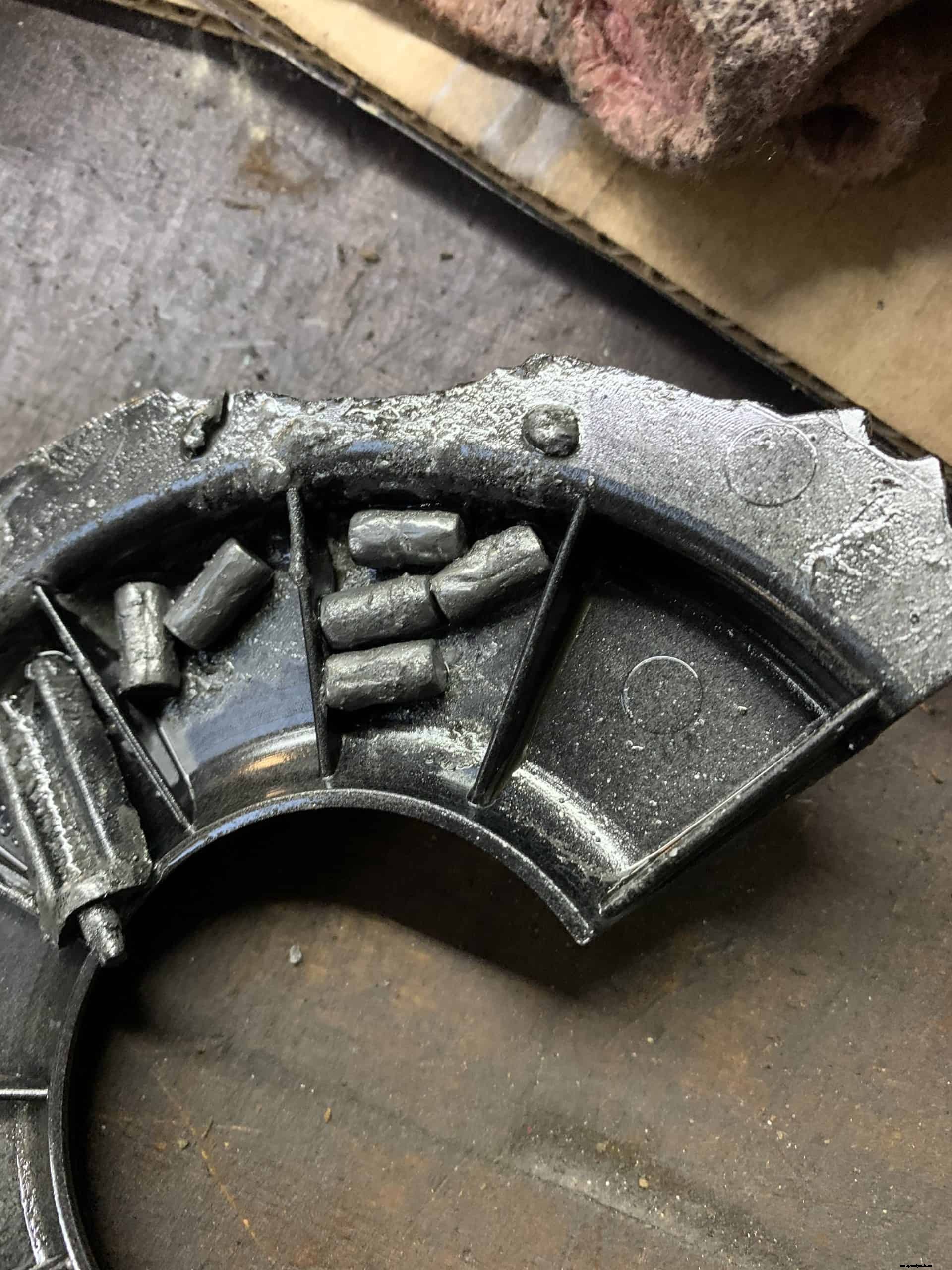
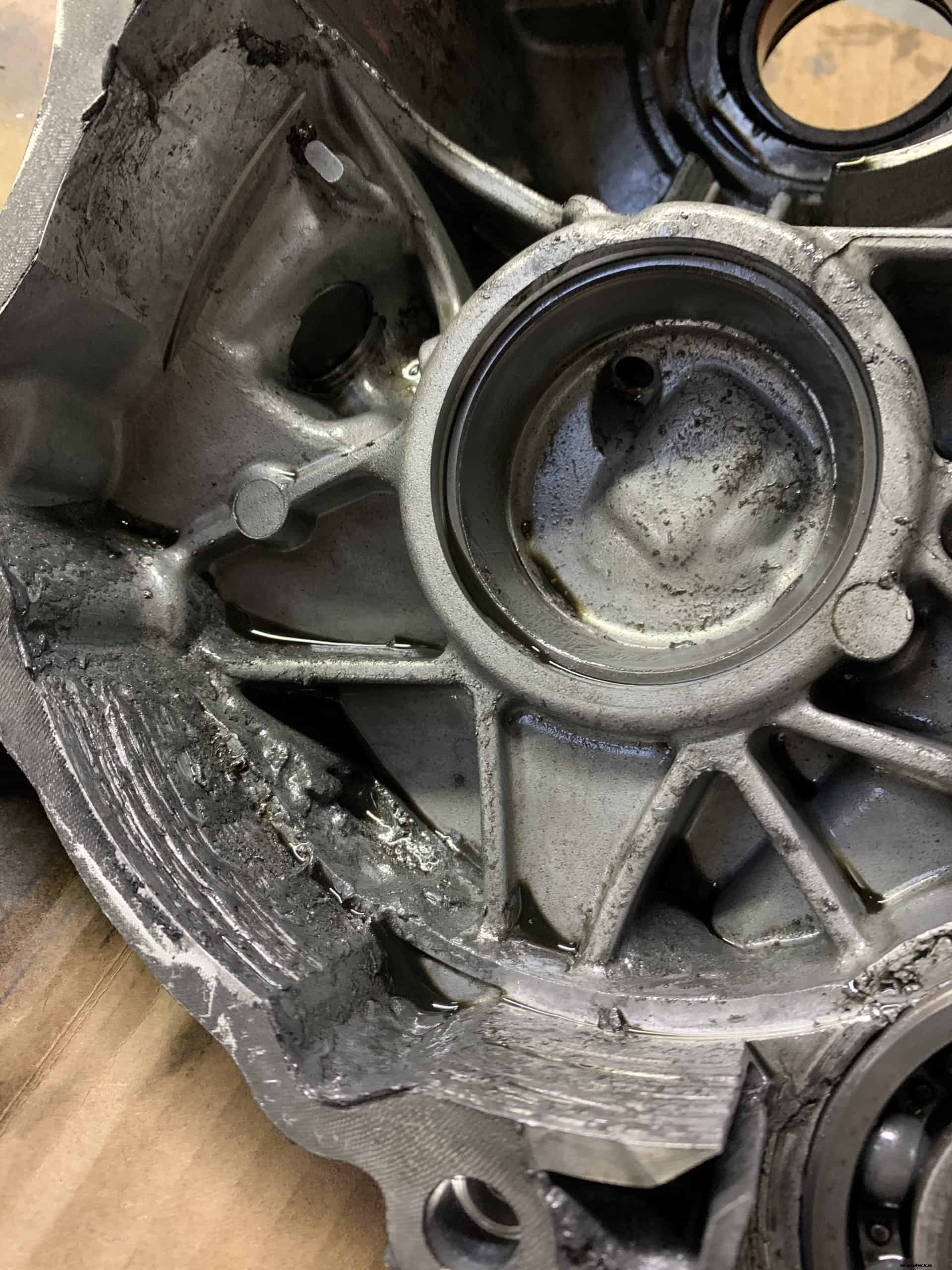
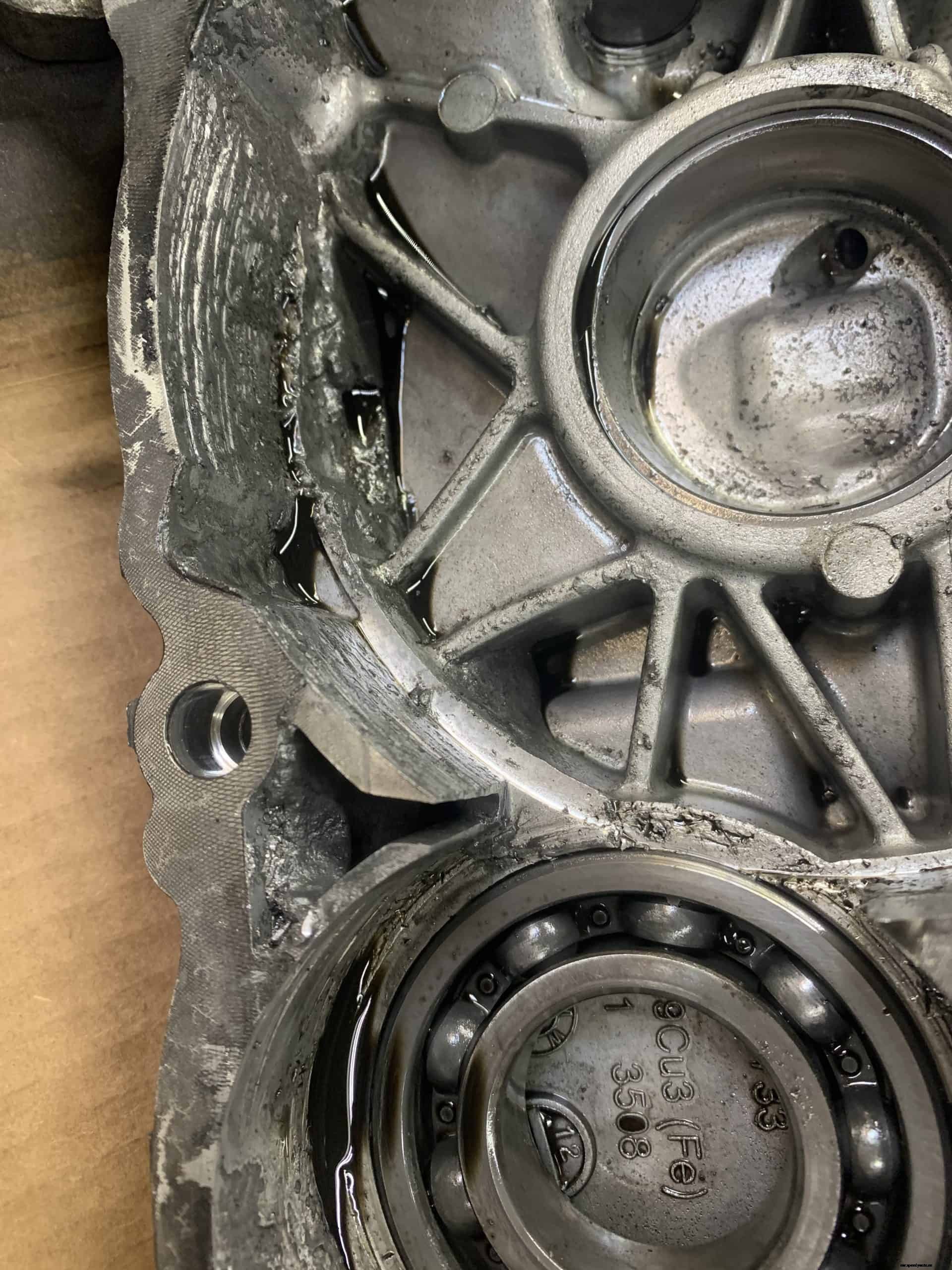
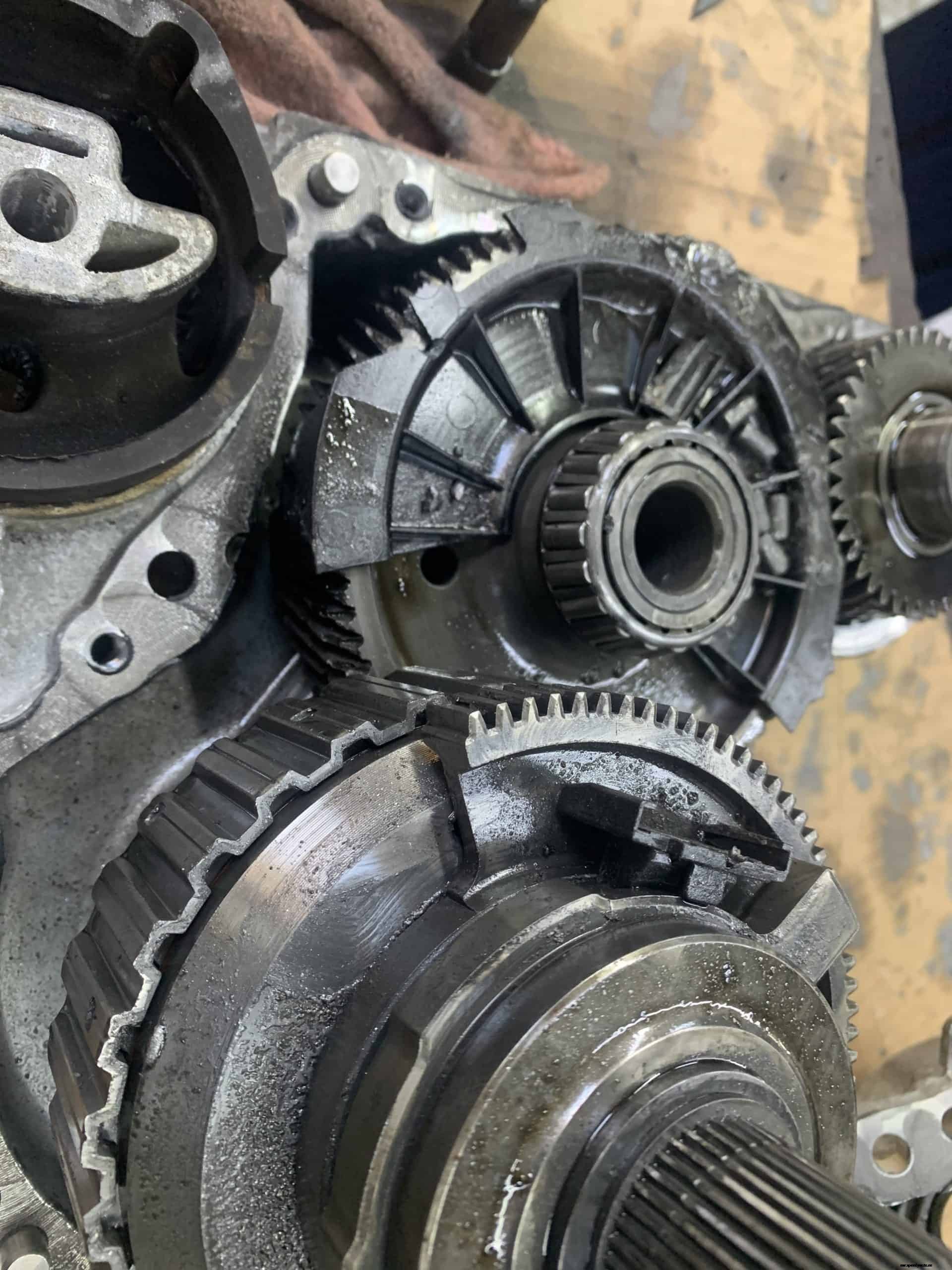
The moral of the story is this. Always make sure to get regular oil maintenance as well as having your service professionals inspect your vehicle for possible oil consumption issues not related to leaks. Investing in ongoing maintenance over time can save you a lot of money and inconvenience of major repairs in the end. Talk to us at Shade Tree Garage about developing a vehicle life plan to improve the reliability and service life of your car.
