
Do you hear that squeaky noise in your brakes? Sure, it can be annoying and you keep thinking about what you can do to remove the noise. But don’t head over to the workbench for the WD40. That can be the worst mistake you make. Before, you make an uninformed decision, first find out why the brakes are squeaking and what you can do about them.
Most modern cars have disk brakes, however, some still use drum brakes on rear wheels. Drum brakes need lubrication and there is a special brake lubricant you can use for this. Despite the type though, there are times when you may need to lubricate brake rotors due to rust, dirt, and debris. This rust can cause squeaking, but there are also other reasons for brake squeaking such as:
Many brakes squeak after the car sits overnight. This is usually caused by dew or moisture in the air that condenses in the brakes. It can be caused by rust and dirt. So when the pads scrape the rust, particles get stuck on the pad and cause the sound. You can prevent this noise by putting your car in the garage or in a climate-controlled storage area.
Brake pad wear is another reason for brake squeaking. The sound starts when the brake pads wear out and become thin. This is a dire warning to get the pads replaced. At the end of the brake pad are little metal parts that begin to hit the rotor before the pad is totally gone. This offers a warning and is a tell-tale time of a need for brake pad replacement.
This happens prior to having a metal to metal friction which you don’t want because it means bad braking and the scratching of the rotor. In turn, this creates the need for a more expensive rotor replacement.
When there is rust on the rotors or in the case of rear drum brakes, you may need to lubricate the contact points where the metal meets. This area can lose lubrication and cause a squeaking sound when the wheels rotate, but there is a special brake lubricant you want to use. You don’t want to use regular WD40.
WD40 is a general lubricant appropriate for home use. However, the petroleum distillates it contains may attack the rubber car brakes are made of. That being said, in all likelihood a light spray of WD40 will not cause serious damage.
While WD40 is a lubricant, it is not a very good one. It is made of a light petroleum oil mixed with a solvent. The solvent evaporates and may only leave a very slight oily film behind. So if you use WD40 to get rid of squeaky brakes, you are only masking the problem for a short time.
If the brakes are worn, you continue to risk your car and your life because poorly performing brake pads can cause the driver to lose control. At any rate, WD40 will usually wear off after the initial drive.
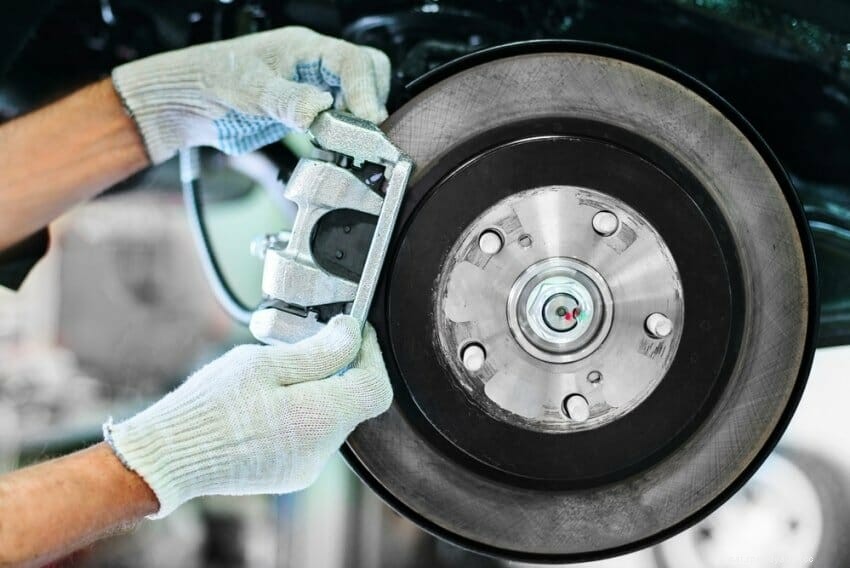
WD40 is not very effective as a brake lubricant and if you happen to use the whole can on your brake system, you might risk getting it behind the pad and on the boot. If it is already in bad shape, it could infiltrate into the caliper sea and the hydraulic system which could cause problems with the caliper seals and cause them to leak.
An alternative to WD40 is to use brake system lubricant which is specifically made for this type of problem. If you do decide to lubricate rear drum brakes, you want to do it properly.
You never want to place lubricant on the part where pads contact. This could stop the pads from working and can be dangerous because it causes the brakes to slip. Instead, use brake lubricant on the backing plate. Locate the small ridges where the shoe sits. You can sand these slightly to remove rust and then lubricate.
You also want to use a lubricant on the adjustable star-wheel (the area that separates the pads) as this area is prone to freezing.
Keep in mind that the parking brake usually uses the rear drum brakes so lubricating the cable and moving parts can keep them from rusting. You also want to use brake lubricant on any brake parts where there is metal-to-metal contact as this will prevent rusting. Avoid over lubrication as you don’t want it to drip into plastic parts.
If your rotors are rusty, they can squeak when you hit the brakes. Again this can be solved by cleaning and lubricating the rotors with an appropriate cleaner. You can remove rust or at least get rid of the noise, by spraying the rotor with brake cleaner.
Before applying brake cleaner, make sure the rotor is dry and clean it with a dry rag. Apply brake cleaner and work the surface with steel wool or a wire brush. Spray some more cleaner on the rotor, if there is still rust after the first cleaning. Wipe off the rotor when finished.
Whatever the reason for your squeaky brakes, it is something you need to address. Noisy brakes are an indication of a problem. Like in all things, it is always best to address small problems before they become major issues that result in costly repairs.
Discover related topics that you may enjoy reading:
Will WD-40 Hurt Car Paint?
How To Clean Headlights With WD40, Toothpaste, and Baking Soda
How To Keep Dust Out Of A Car – Keep That Dashboard Dust Free!
